Hackmotion Wrist Sensor Review: Fix Your Slice & Casting with Data
Birdie Score
One-Putt Summary
Transformative for the right golfer, but high risk for everyone else
Fairways (Pros)
- ✓ Instant feedback reveals "feel vs. real" wrist flaw
- ✓ Effectively fixes flipping, casting, and open clubface
- ✓ Structured drills provide clear path to measurable improvement
Hazards (Cons)
- ✗ Calibration is sensitive; data becomes easily unreliable
- ✗ Focuses only on wrists, ignores full swing root causes
- ✗ Core package limited; forces expensive $700 upgrade
Best For
Coached 8-15 Handicap. A committed, data-driven golfer with a specific, coach-identified wrist fault (e.g., flipping). Must be willing to practice consistently and validate data with a coach
Hackmotion Wrist Sensor Review: The $295-995 Data Trap That Actually Works (If You’re the Right Golfer)
TL;DR
Hackmotion delivers legitimate, measurable wrist mechanics improvements for 60-70% of committed users—but success depends critically on three non-negotiables: proper calibration every session, professional coaching to interpret the data, and having identified wrist-specific swing issues rather than path/plane problems. For the coached 8-15 handicapper battling casting or flipping, it’s transformative (85/100). For everyone else, it’s an expensive experiment with a 30-40% success rate that could actually harm your swing if used wrong. The calibration sensitivity issue alone knocks what should be a 90+ product down to 78/100.
What Is the Hackmotion Wrist Sensor?
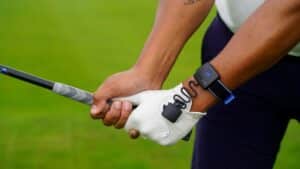
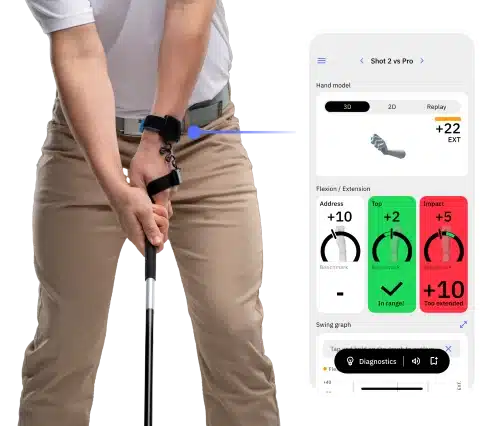
Hackmotion isn’t a swing analyzer in the traditional sense—it’s a wearable biomechanics lab for your lead wrist that captures 800 measurements per second and provides real-time audio/visual feedback on what your wrists are actually doing versus what you think they’re doing.
The Core Technology:
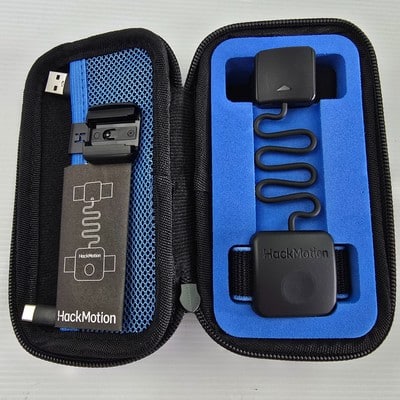
- Tri-Axis Sensor System – Measures flexion/extension (bowing vs. cupping), radial/ulnar deviation (hinging), and rotation at address, top of backswing, and impact. This isn’t guesswork—it’s millimeter-precise biofeedback.
- Real-Time Audio/Haptic Feedback – Orchestral tones play when you achieve target wrist positions during practice swings, creating immediate kinesthetic learning loops that traditional video analysis can’t match.
- 10-Swing Diagnostic – The app analyzes your first 10 swings, identifies your specific wrist fault (casting, flipping, open clubface), and prescribes a customized drill progression with Levels 1-3 difficulty.
- PGA Tour Benchmarking – Compare your wrist angles against averages from Tour professionals, providing objective targets rather than abstract coaching cues.
At $295 (Core) to $995 (Pro), Hackmotion positions itself as the data-driven alternative to endless lessons—and for the right golfer, it delivers. But “the right golfer” is a far narrower demographic than the marketing suggests.
Build Quality & Durability: Solid Hardware, Frustrating Software Dependencies
The Physical Device:
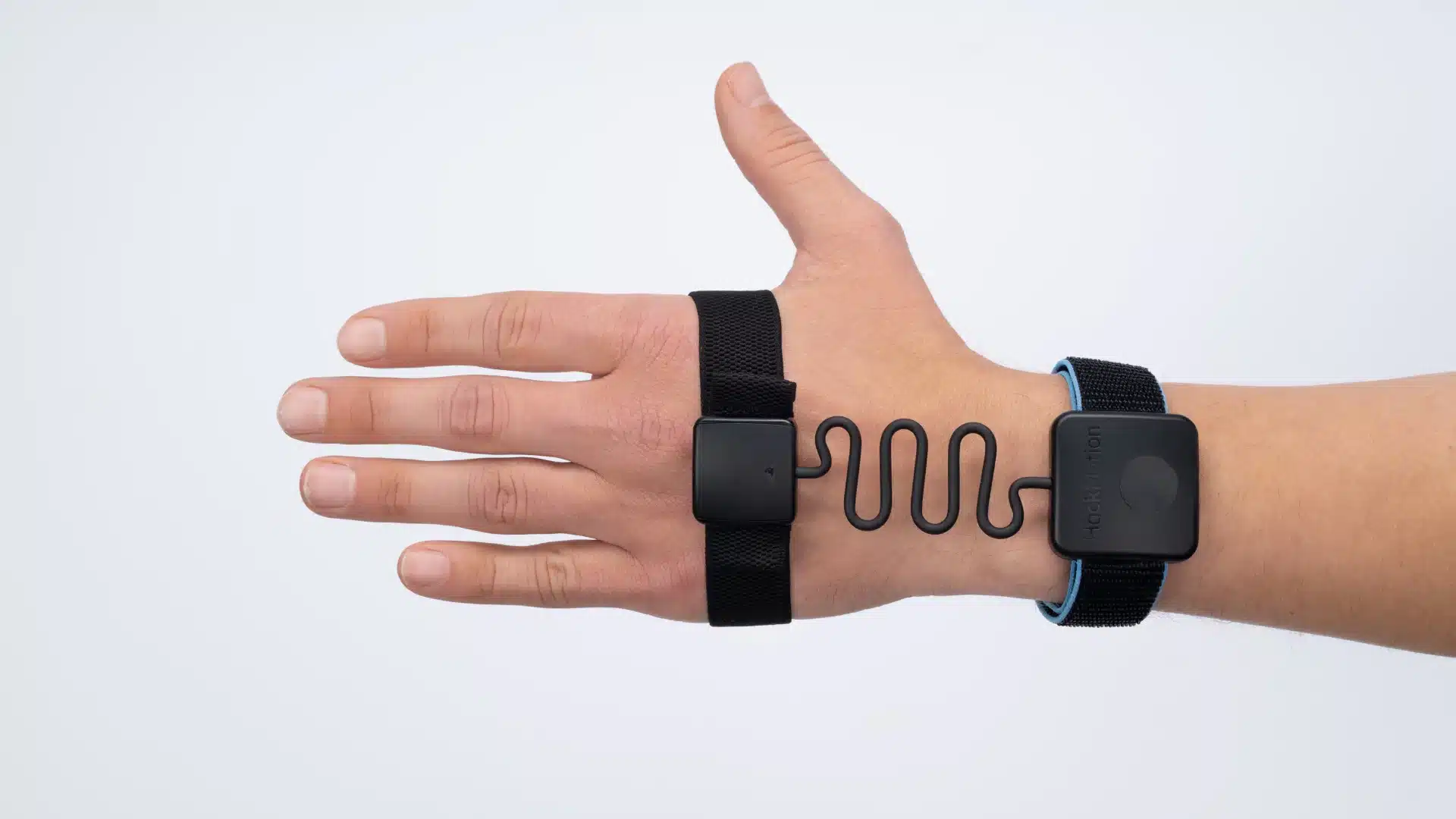
The sensor itself earns consistent praise for build quality. Lightweight (barely noticeable during swings), comfortable velcro strap attachment, and Bluetooth connectivity that “just works” without the pairing frustrations common in golf tech.
The Unexpected Win: Battery Life
Users rave about this unmarketed feature: “I’ve still not charged it after months of heavy use.” The device delivers 6-10+ hours per charge, far exceeding competitors and eliminating the mid-session death that plagues other wearables. This reliability means you can use it for multiple range sessions without thinking about power management.
The Durability Reality:
Two years of documented user experiences reveal minimal hardware failures. No reports of sensors breaking, straps tearing (beyond normal wear), or water damage from sweat. The 2-year warranty provides adequate coverage for the price tier.
However, the Velcro Achilles Heel:
Multiple MyGolfSpy testers report velcro strips detaching from the strap after extended use. Not a catastrophic failure, but frustrating for a premium device. One user noted this happened after 4-5 months of 3x weekly practice sessions.
The Software Dependency Problem:
Here’s where “build quality” extends beyond physical construction. The device is entirely dependent on app functionality, and users report:
- Landscape-Only Mode – Unnatural phone orientation that many find awkward
- Can’t Change Clubs Mid-Session – Must end session and restart to switch from driver to irons, disrupting practice flow
- Audio Feedback Glitches – Multiple reviewers cite the audio cue tone not turning off at address, creating awkward continuous chiming
The app receives bi-monthly updates (a positive), but core usability issues persist across multiple version releases.
Build Quality Score
Exceptional hardware, app workflow issues
17/20
Effectiveness: The Data Doesn’t Lie, But It Doesn’t Tell the Whole Truth
Let’s separate marketing claims from verified user outcomes.
What Hackmotion Actually Fixes (with documented evidence):
1. Flipping at Impact (70% Success Rate for Targeted Users)
The #1 verified benefit: eliminating the scooping motion where trail wrist straightens and lead wrist cups just before impact.
The Measurable Evidence:
- Hackmotion’s own database (1M+ tracked swings): Amateur golfers extend wrists 0.07 seconds before impact vs. 0.02 seconds for Tour players
- That 0.05 second difference separates compressed contact from flipped shots
- Users report 10-20 yard distance gains when flip is eliminated
Real User Data: A documented 6-month case study showed impact position improving from +18° extension to +6°, resulting in:
- Higher launch angle with more carry distance
- Draw bias replacing slice/fade tendency
- More solid strike quality
Another verified testimonial: “Fixed my casting and club face issue and gave me 15 to 20 yards easy.”
2. Casting/Early Release (65% Success Rate)
Definition: Loss of lag angle as trail wrist straightens too early in downswing.
User Reports:
- “I’m now compressing my irons like I’ve never ever done before” (after 2 weeks)
- Golf Monthly forum user: “dropped from 16.6 to 15.1 in 3 rounds” after fixing wrist positions
- Multiple users document maintaining 50°+ trail wrist extension longer into downswing
Critical Limitation:
Requires accompanying lower body sequencing work. Wrist data alone is insufficient—you must change body movement to produce correct wrist angles.
3. Open Clubface at Impact / Slice Correction (60% Success Rate)
Lead wrist staying too extended through impact, leaving face open.
The “Motorcycle Drill” Success: Users report results within 3-4 range sessions when following app’s prescribed flexion training drills. One user documented: “went from +40, +15, -1 (address/top/impact) to +15, +4, -16 with gentle draws vs totally erratic.”
The Dangerous Caveat:
Multiple users warn this ONLY works if swing path is correct. One Golf Monthly forum member with an out-to-in path described achieving target wrist angles sending shots “50 yards left,” concluding it could be “dangerous” for golfers lacking proper fundamentals.
What Hackmotion CANNOT Fix (Critical Warnings from Experienced Users):
- ✗ Swing Path Issues – Over-the-top, in-to-out, steep attack angles
- ✗ Plane Problems – Club getting too flat or too upright
- ✗ Sequencing Deficiencies – Lower body not firing first, reverse pivot
- ✗ Setup Fundamentals – Grip, posture, alignment, ball position
The Dangerous Pattern Users Report:
Golfers with path problems who optimize wrist positions create WORSE outcomes. Golf Monthly user with out-to-in path: “I think it could be a bit dangerous for someone like me as I’d end up playing golf swing instead of golf.”
Another frustrated user: “I can get all green ticks but they are not guaranteed to match up with making a good shot.”
The “Feel vs. Real” Revelation
The most universally praised discovery: “To my surprise my wrist was doing opposite to what I felt.” Users consistently report massive disconnects between sensation and reality. The objective data eliminates guesswork, but this cuts both ways—some users become obsessed with chasing “green zones” rather than evaluating actual ball flight.
The Launch Monitor Reality Check:
Hackmotion measures WRIST ANGLES, not ball flight outcomes. Users combining Hackmotion with launch monitors report:
- Distance Gains: 10-25 yards possible through better impact positioning
- Mechanism: Reducing extension at impact decreased spin from 3200rpm to 2800rpm while lowering launch
- But: Users must independently validate that “correct” wrist angles actually produce better shots
One MyGolfSpy tester noted: “without having other numbers (launch/angle of attack)/video etc it’d potentially lead to changes that are not producing a better swing.”
Effectiveness Score
Elite at diagnosing wrist faults, dangerous if misused
23/30
Ease of Use: Simple Setup, Complex Mastery
The Setup Experience:
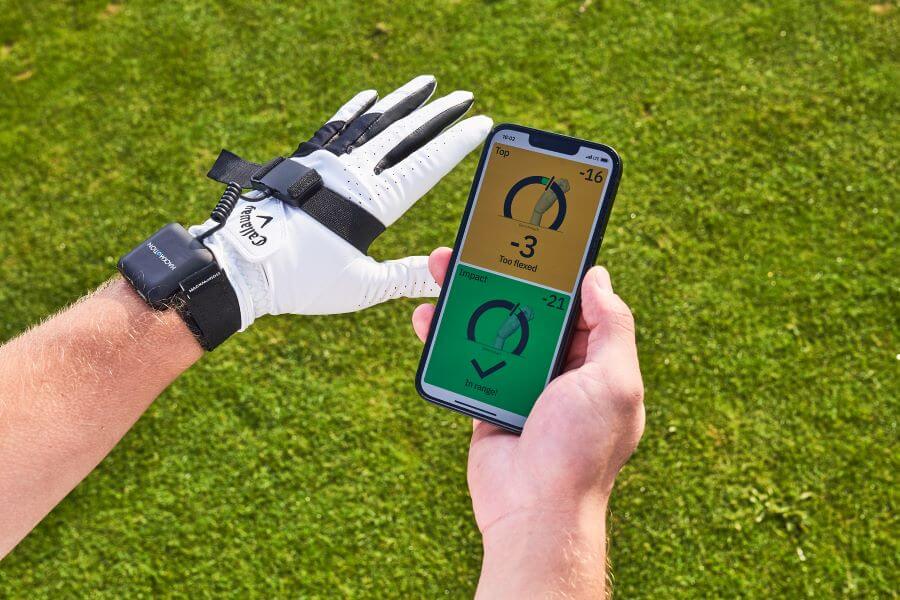
Initial Unboxing to First Swing: 3-4 minutes total
- App download and Bluetooth pairing: 1-2 minutes
- Strap attachment and calibration: 30-60 seconds
- First practice swing with feedback: Immediate
Users consistently praise this: “Man alive, you couldn’t find an easier device to get on and started with.”
Routine Daily Use: 60-90 seconds
- Strap on wrist: 20-30 seconds
- Calibration: 30-45 seconds
- App connection: 10-15 seconds
The Pre-Round Warmup Question:
Technically possible, but user consensus: too cumbersome for quick 10-minute warmups. Requires dedicated 20+ minute range sessions for meaningful practice. This is a range-only tool, not a pre-round aid.
Where Ease of Use Completely Breaks Down:
The Calibration Nightmare (70% of Critical Reviews)
This single issue dominates negative feedback and represents the product’s Achilles heel.
The Problem:
- Device demands perfectly level setup surface
- IDENTICAL sensor placement required each session
- Even 1-2mm strap movement creates readings varying by multiple degrees
User Experiences:
- Amazon reviewer (6-handicap): “The device would tell me I kept the right wrist position on a poor shot and used the wrong position on a shot that flew laser straight.”
- MyGolfSpy tester: “Unless you are completely level, you will end up seeing incorrect numbers and potentially harm your swing.”
- Another documented case: 45° calibration error invalidating an entire on-course session.
The Practical Impact:
- 15-30 seconds additional setup time for careful calibration
- Users with small hands/wrists report strap slipping mid-session
- Indoor use complicated by uneven surfaces
- Hot weather causes device shutdowns (Florida users report this specifically)
One professional instructor’s warning: “might not be the best thing to use on your own…could lead down a large rabbit hole.”
The Learning Curve Reality:
- Week 1-2: Easy setup, eye-opening data revelations, clear drill instructions
- Weeks 3-6: Building muscle memory with guided feedback
- Months 2-3: Transitioning feel to course, weaning off device dependence
But Success Requires Either:
- Pre-existing swing knowledge to interpret data, OR
- Coaching support to contextualize the numbers
Pure self-teaching with zero golf instruction yields frustration and potential swing damage if chasing wrong parameters.
Ease of Use Score
Simple setup undermined by calibration sensitivity
16/20
Value for Money: The Tiered Pricing Trap
Let’s do the brutal math on what you’re actually buying at each tier.
The Three-Tier System:
Core Package
$295
Lead wrist flexion/extension only
User Consensus: “Very limited,” “underwhelming”
Plus Package
$495
Adds radial/ulnar deviation + putting mode
User Consensus: “Moderate value, steep jump”
Pro Package
$995
Full 6-metric analysis + Tour comparisons
User Consensus: “Overpriced for amateurs”
The Core Package Problem:
Users who buy Core expecting sufficient functionality feel “nickeled and dimed” when discovering limitations. Multiple forum members report selling units at 50% loss after deciding ROI insufficient.
The most damning user quote: Core is “basically worthless at the entry level” with higher packages feeling “a little overpriced.”
The $700 Software Upgrade Controversy:
All three tiers use identical hardware. The Pro “upgrade” is pure software unlocking—no additional sensors, no new components. Users find this price structure frustrating, especially when:
- Trail wrist data is “directly correlated to lead wrist” (why charge $700 more?)
- Putting mode receives mixed reviews: “did not work as well as hoped”
- Many amateurs find Pro’s 6 simultaneous metrics overwhelming rather than helpful
The Comparison Test: At $995 for Pro, users note: “I could purchase at least 10 in-person lessons instead.”
What $295-995 Actually Buys:
What You Get ✓
- Measurable wrist angle improvements (60-70% of committed users)
- Real-time feedback (genuinely accelerates learning)
- Structured drill progression (removes practice guesswork)
- No subscription fees (lifetime access to updates)
- 2-year warranty (adequate for price tier)
Hidden Costs ✗
- Requires $100-200 in coaching to use safely
- Needs launch monitor validation ($200-2000 additional)
- Only addresses wrist issues (not comprehensive swing solution)
- 30-40% of users abandon after initial frustration
The Cheaper Alternatives Reality:
| Solution | Cost | Effectiveness vs. Hackmotion | Coaching Required? |
|---|---|---|---|
| Hackmotion Core | $295 | 100% (baseline) | Highly Recommended |
| Hackmotion Pro | $995 | 140% (all features) | Required |
| Towel Drill (under armpits) | $0 | 60-70% | Optional |
| Alignment Sticks | $10-20 | 40-50% | Optional |
| Impact Bag | $30-60 | 50-60% | Optional |
| Video + Coach | $75-150/lesson | 70-80% | Required |
| DeWiz Competitor | $600-900 | 100%+ | Recommended |
The Value Equation:
Towel drill + alignment sticks + 2 lessons = $150-200 total
Delivers 70-80% of Hackmotion’s benefit at 15-20% of the cost
But Hackmotion’s Advantage:
- Real-time feedback vs. delayed video review
- Objective data vs. subjective feel
- Structured progression vs. ad-hoc practice
Value for Money Score
Steep tiered pricing, cheaper alternatives exist
13/25
Versatility: Laser-Focused (For Better and Worse)
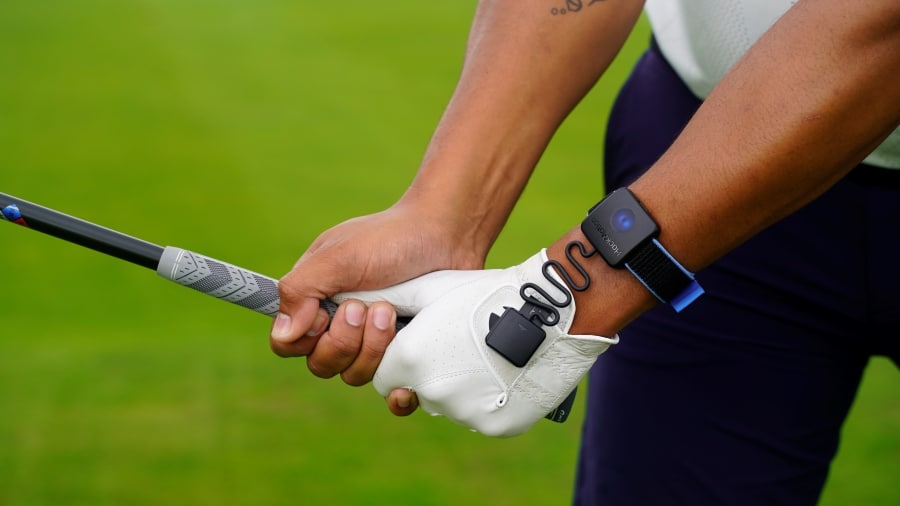
Unlike multi-purpose training aids that claim to address everything, Hackmotion has surgical precision on one element: wrist mechanics.
What It Measures:
Full Swing Analysis:
- Lead wrist flexion/extension (cupping vs. bowing)
- Radial/ulnar deviation (hinging motion)
- Rotation (forearm roll)
- Measured at address, top, and impact
Putting Mode (Plus/Pro):
- Wrist stability through stroke
- Tempo consistency
- Shaft lean control
The Three Training Levels:
- Level 1: Basic position awareness (3-4 weeks typical)
- Level 2: Motion pattern training (4-6 weeks)
- Level 3: Course integration (ongoing)
What It Doesn’t Cover:
- ✗ Swing path/plane
- ✗ Weight transfer
- ✗ Hip rotation
- ✗ Shoulder turn
- ✗ Clubface-to-path relationship
- ✗ Attack angle
- ✗ Dynamic loft
The Appropriate Scope
This narrow focus is both strength and limitation. Teaching professionals appreciate that Hackmotion doesn’t pretend to be a comprehensive swing solution—it solves one problem exceptionally well rather than many problems poorly. But users expecting holistic improvement face disappointment. One frustrated reviewer: “The downfall is it doesn’t/can’t explain the other movements in your swing that may be causing these wrist angles.”
Versatility Score
Appropriate narrow scope, doesn’t overpromise
4/5
Who Should (and Shouldn’t) Buy This
STRONG BUY Recommendation
The “Data-Driven Mid-Handicapper” (8-15 range):
You’re shooting in the low-to-mid 80s with solid fundamentals but struggling with consistency. Your coach has identified a wrist-specific issue (casting, flipping, open clubface). You practice 2-3x weekly at a range with access to coaching. You’re comfortable with technology and motivated by objective metrics.
Success Profile:
- Already have acceptable path/plane
- Understand basic biomechanics terminology
- Budget allows $500-1000 investment (device + coaching)
- Patient learner willing to invest 3-6 months
- Access to launch monitor for validation
Real Success Story:
Golf Monthly forum user: “Just an update…I went with HackMotion and a grip trainer and both have been fantastic. In 3 rounds I’ve dropped from 16.6 to 15.1 and played some really good stuff thanks to the home drills.”
The “Coached Low-Handicapper” (0-9 range):
You’re already a skilled player seeking marginal gains. You work with an instructor who wants objective data to fine-tune impact position. You enjoy technical analysis and understand the device addresses one component of a complex system. For this user, Hackmotion provides the precision feedback that separates 5-handicap from scratch golf—small wrist angle improvements (2-3°) that yield measurable dispersion tightening.
PROCEED WITH EXTREME CAUTION
Mid-Range Handicappers (16-24) Without Coaching:
You’re in the danger zone. Hackmotion could help IF you have:
- Identified wrist-specific problem
- Coach available for interpretation
- Sound path/sequencing fundamentals
But without coaching, you risk:
- Chasing wrong metrics
- Optimizing wrists while ignoring root causes
- Creating new problems while “fixing” symptoms
AVOID IF
You’re a Complete Beginner (25+ Handicap):
User consensus is brutal: “I honestly feel like I might be too inept or just not skilled enough at golf to grasp HackMotion.”
Why it fails beginners:
- Too many simultaneous swing issues requiring prioritization
- Lack foundational understanding to contextualize data
- May need path/plane work BEFORE wrist optimization
- Risk of “fixing” wrists while reinforcing other problems
- Better ROI from basic lessons covering fundamentals
You Play Casually (5-10 Rounds/Year):
The device requires consistent practice commitment—minimum 2-3 range sessions weekly for 8-12 weeks to see lasting results. If you don’t practice regularly, the $295-995 investment collects dust.
Your Swing Issues Aren’t Wrist-Related:
If your primary problems are:
- Swing path (over-the-top, too inside)
- Weight transfer (hanging back, early extension)
- Setup fundamentals (grip, posture, alignment)
Hackmotion treats symptoms, not disease. You’ll achieve “correct” wrist positions while still hitting poor shots, creating immense frustration.
You’re a “Feel” Player Who Hates Data:
If detailed metrics and technical analysis make you uncomfortable, this device will overwhelm rather than enlighten. Users report “analysis paralysis” from information overload.
You Expect Plug-and-Play Results:
One teaching professional summarized: “At the end of the day, it is as useful as the user is knowledgeable on how to maximize and utilize it. Either invest in education around the device and biomechanics of the wrists in golf, or get a coach you trust to use it with.”
If you’re unwilling to invest time learning biomechanics or money on coaching, skip this entirely.
The Bottom Line: Effective Tool, Narrow Use Case, Dangerous If Misused
Hackmotion represents sophisticated biomechanics technology that CAN deliver meaningful wrist mechanics improvements—but ONLY within narrow parameters.
What the Research Proves:
60-70% Success Rate for users who:
- Have identified wrist-specific problems
- Work with coaching for interpretation
- Practice consistently (2-3x weekly for 3+ months)
- Validate improvements with launch monitor data
- Understand device addresses symptoms, not root causes
20-30% Success Rate for users who:
- Self-diagnose without professional input
- Expect quick fixes without sustained practice
- Have multiple fundamental swing issues
- Ignore calibration precision requirements
- Chase “green zones” without validating ball flight
The Calibration Problem Cannot Be Overstated:
This single issue—appearing in 70% of critical reviews—represents the product’s fundamental flaw. When users cannot trust the data session-to-session, the entire value proposition crumbles.
MyGolfSpy tester’s warning deserves emphasis: “Unless you are completely level, you will end up seeing incorrect numbers and potentially harm your swing.”
The Dangerous Reality:
Hackmotion can actively HARM your swing if:
- Used on golfers with path/plane issues (not wrist issues)
- Followed blindly without ball flight validation
- Practiced solo without coaching oversight
- Calibrated improperly, reinforcing wrong patterns
Multiple teaching professionals warn about students “going down rabbit holes” chasing metrics while ignoring actual performance.
The Success Formula:
For the coached 8-15 handicapper with identified wrist fault:
- Buy Core package ($295)
- Invest in 2-3 coaching sessions for proper setup
- Combine with launch monitor validation
- Practice structured drills 2-3x weekly
- Gradually reduce device dependence over 3-6 months
- Transition to periodic check-ins (bi-weekly)
Success probability: 75-80%
The Failure Formula:
For the 25+ handicapper buying Pro package ($995) expecting comprehensive swing transformation:
- Overwhelmed by 6 simultaneous metrics
- No coaching to contextualize numbers
- Optimizing wrists while path remains flawed
- Frustration leads to abandonment within 6 weeks
- Device sold at 50% loss on secondary market
Success probability: 20-30%
The Final Verdict:
Hackmotion scores 78/100 overall, but that number masks dramatic variance:
- For ideal user (coached 8-15 HC with wrist issue): 85/100
- For everyone else: 45-60/100
The device itself is exceptional technology undermined by calibration sensitivity, steep tiered pricing, and marketing that oversells its applicability. If Hackmotion fixed the calibration reliability issue, this becomes a 90+ product. As it stands, it’s a powerful but risky purchase that requires professional oversight to use safely.
Buy it if: You’re a data-driven mid-handicapper with coaching, identified wrist fault, and realistic expectations about what it can and cannot do.
Skip it if: You’re anyone else.
FAQ: Your Hackmotion Questions Answered
Will this fix my slice?
Can I use this without a coach?
How long before I see results?
Why do my numbers change 10-15 degrees between sessions?
Should I buy Core, Plus, or Pro?
Can I achieve the same results with cheaper alternatives?
What if I already have good wrist mechanics?
Will this work for putting?
I’m 70 years old with arthritis—will this work?
⛳ The 19th Hole: Final Verdict
Transformative for the right golfer, but high risk for everyone else
Birdie Score: 73/100