2026 Holiday & Black Friday Golf Gift Guide: 8 Best Golf Speed Trainers, Pocket Launch Monitors & Swing Sensors (Tested & Ranked)
Models Compared
Price Tiers
$174.99 – $599.99
One-Putt Summary
We tested and ranked the 8 best golf speed training systems, pocket Doppler launch monitors, and 3D swing sensors across Birdie Breakdown's 100-point rubric.
Top Tested Winners
- ✓ 🏆 #1 Best Overall Speed System: The Stack System (88/100, $299.00 / $499.00 w/ Radar)
- ✓ 📡 Best Standalone Pocket Radar: PRGR Portable Launch Monitor HS-130A (86/100, $199.99–$229.99)
- ✓ 📊 Best Sub-$600 Home Sim Monitor: Garmin Approach R10 (81/100, $599.99)
- ✓ ⚡ Best 3-Club Overspeed Set: SuperSpeed Golf Speed Sticks PRO (80/100, $199.99)
- ✓ 🎒 Best Single-Stick Trainer: Rypstick Speed Trainer (79/100, $199.00)
- ✓ ⏱️ Best Putting & Tempo Sensor: Blast Motion Golf Gen 3 (78/100, $174.99, Zero Annual Sub)
Watch Out For
- ✗ ❌ Arccos Golf Smart Sensors ($199.99) unless you plan to pay their mandatory $199/year subscription after the trial
- ✗ ❌ Buying The Stack System for Android users (the dynamic training app is strictly iOS-only)
- ✗ ❌ Buying speed sticks (Stack, SuperSpeed, Rypstick) without a Doppler radar like the PRGR to verify speed
Best For
Golfers looking to gain 10–25 yards of driver distance, indoor simulator and launch monitor users, and players wanting tour-level tempo and face-angle biofeedback with zero subscription traps.
2026 Holiday & Black Friday Golf Gift Guide: 8 Best Golf Speed Trainers, Pocket Launch Monitors & Swing Sensors
We tested and ranked the 8 premier overspeed clubs, Doppler radar monitors, and 3D swing sensors on the market—separating real, measurable clubhead speed from garage clutter and hidden $199/year subscription traps.
🏌️ One-Putt Summary: The Quick Holiday Verdict
If you want to gift guaranteed clubhead speed that actually transfers to the golf course, The Stack System ($299.00 / 88/100) is our #1 Best Overall speed training gift—its dynamic AI app tailors every workout to daily fatigue so golfers gain 6–10 mph without wrecking their mechanics. For golfers who already own speed sticks or just want instant swing speed feedback without pairing a phone, the PRGR Portable Launch Monitor ($199.99 / 86/100) is the undisputed #1 pocket radar value under $250. For short-game and putting tempo lovers, Blast Motion Golf Gen 3 ($174.99 / 78/100) delivers tour-proven 2:1 stroke timing with zero recurring software fees. The #1 gift trap to avoid: Arccos Golf Smart Sensors ($199.99 hardware)—unless you plan to pay their mandatory $199/year subscription after the trial, your gift turns into an expensive annual bill.
At a Glance: 2026 Tested Speed & Tech Category Rankings
| Award / Rank | Product | Birdie Score | Price | Best For |
|---|---|---|---|---|
| 🏆 #1 Best Overall Speed System | The Stack System | 88/100 | $299.00 | Serious golfers wanting AI-guided, tour-proven overspeed training |
| 📡 Best Standalone Pocket Radar | PRGR Portable Launch Monitor (HS-130A) | 86/100 | $199.99–$229.99 | Instant swing & ball speed tracking with zero app/phone required |
| ⚡ Best 3-Club Overspeed Set | SuperSpeed Golf Speed Sticks PRO | 80/100 | $199.99 | Traditionalists wanting simple color-coded fixed-weight training |
| 🎒 Best Single-Stick Bag-Friendly Trainer | Rypstick Speed Trainer | 79/100 | $199.00 | Golfers who want 8 weight settings in one stick that fits in a bag |
| ⏱️ Best Putting & Tempo Sensor | Blast Motion Golf Gen 3 | 78/100 | $174.99 | Putting stroke tempo & face control with ZERO annual subscription |
| 🧤 Best Deep-Data Wrist Sensor | HackMotion Wrist Sensor | 73/100 | $295.00+ | Golfers fighting chronic slicing who want audio biofeedback |
| 📊 Best On-Course Strokes Gained | Arccos Golf Smart Sensors (Gen 3+) | 64/100 | $199.99 + $199/yr | Dedicated shot-tracking diehards (note $199/yr subscription trap) |
| 🎯 Best Sub-$600 Home Sim Monitor | Garmin Approach R10 | 81/100 | $599.99 | Pocket Doppler radar + 43,000+ virtual Home Tee Hero courses |
Testing Standard: Evaluated on Birdie Breakdown’s 100-Point Independent Lab Rubric
Why Most Golf Tech & Speed Gifts End Up in the Garage Trunk (And How We Tested)
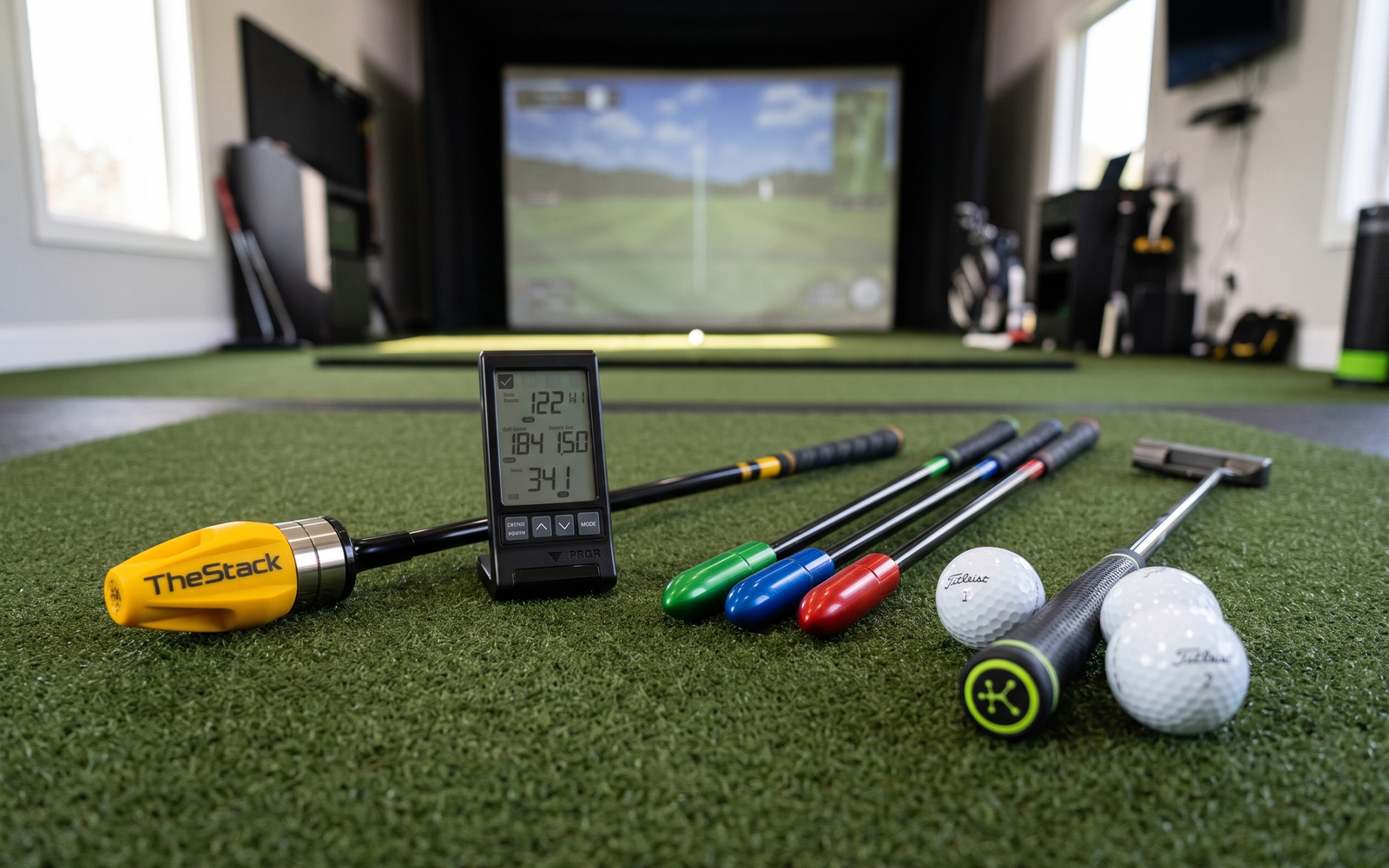
Every holiday season, golf tech and speed trainers dominate gift lists. Golfers are obsessed with distance, and gift buyers love giving gadgets that promise 20 extra yards off the tee or tour-level biometric insights. But here is the dirty secret of the golf training aid industry: more speed training gadgets end up collecting dust in the trunk by February than almost any other category in golf.
Why do so many high-tech gifts fail? In our lab testing at Birdie Breakdown, we have uncovered three primary culprits that ruin the gift-giving experience:
- The Speed Paradox (Speed Without Direction): Swapping your driver for a whippy stick or swinging wildly into the garage wall recruits fast-twitch muscle fibers, but without a launch monitor or alignment station to calibrate face angle, that newfound 5 mph of clubhead speed turns a manageable fade into a 115-mph banana slice two fairways over. Speed only lowers scores when paired with face and path control.
- The Recurring Subscription Trap: Several of the most heavily advertised smart sensors on Instagram sell consumer hardware for $199, only to lock the golfer out of their own data 12 months later unless they fork over an ongoing $199/year recurring subscription. Gifting someone a subscription trap is like giving them an annual gym bill for Christmas.
- Setup Friction & Connectivity Nightmares: If an electronic training aid requires 10 minutes of Bluetooth pairing, recalibration, smartphone mounts, and Wi-Fi handshakes just to take three practice swings, golfers abandon it. The best golf tech turns on in under 5 seconds with zero friction.
To compile this 2026 Holiday & Black Friday Gift Guide, we tested every leading speed training stick, pocket Doppler radar, and wearable swing sensor across hundreds of swings on commercial driving range mats, outdoor grass tees, and indoor simulator bays. We scored each device against Birdie Breakdown’s standardized 100-point rubric: Effectiveness (/30), Value for Money (/25), Build Quality & Durability (/20), Ease of Use (/20), and Versatility (/5). Below are the 8 models that survived our testing, ranked from top pick to cautionary tale.
1. The Stack System
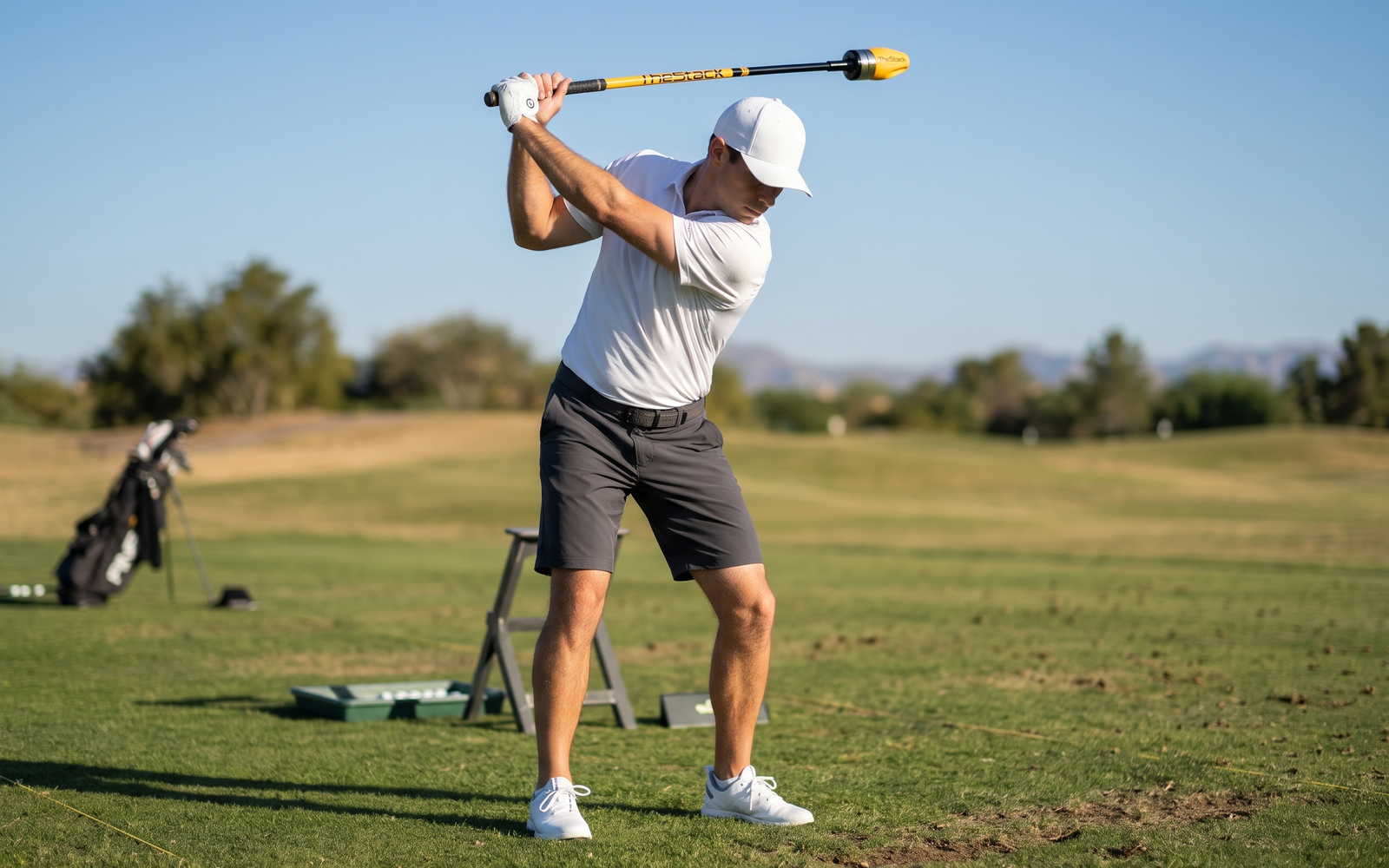
Created by Dr. Sasho MacKenzie (leading golf biomechanist) and Marty Jertson (VP of Fitting & Performance at PING), The Stack System ($299.00) is the undisputed king of modern overspeed training. While legacy systems rely on swinging generic light and heavy clubs in rigid sequences, The Stack pairs a single precision-engineered hybrid club with five interchangeable milled aluminum weight plates and an AI-driven dynamic iOS app.
What makes The Stack fundamentally superior as a holiday gift is its dynamic programming. During your initial session, the app calibrates your baseline speed curve across multiple weight combinations. From there, its proprietary algorithm tracks your daily neurological fatigue: if you show up tired after a long workday, the app automatically dials back intensity to prevent injury; if you are rested and producing peak velocity, it pushes you into micro-overload intervals. PGA Tour stars like Matt Fitzpatrick used this exact system to gain 5 mph of ball speed on his way to winning the U.S. Open at The Country Club.
The hardware itself is a masterclass in machining. Instead of cluttering a trunk with three bulky 45-inch sticks, The Stack uses a single 41.5-inch hybrid-length composite shaft that easily slides into any golf travel bag or closet. The five milled weights (totaling up to 300g in 1.4g micro-increments) lock into place with a rock-solid threaded fastener. Just note the two holiday buying caveats: The Stack app is currently iOS-only (iPhone/iPad required; no Android support), and you need a standalone speed radar like the PRGR or Stack Radar to measure swing velocity.
📋 Key Gift Specs & Score Breakdown
Fairways (Why Gift It)
- Dynamic AI app adjusts workouts daily to match golfer fatigue, preventing burnout and injury
- Compact 41.5-inch single club eliminates bag clutter and travels easily in standard luggage
- Tour-proven results: typical committed golfers gain 6–10 mph (+20–30 yards) in 8–10 weeks
- Superb CNC-machined weight plates with 1.4-gram micro-adjustability up to 300g
Hazards (Watch Out For)
- Premium $299 entry price; requires a separate Doppler radar if you don’t buy the $499 bundle
- Strictly iOS-only—Android users are completely locked out of the dynamic training software
- Non-hitting dry-swing training only (cannot strike live golf balls with the weighted clubhead)
2. PRGR Portable Launch Monitor (Model HS-130A)
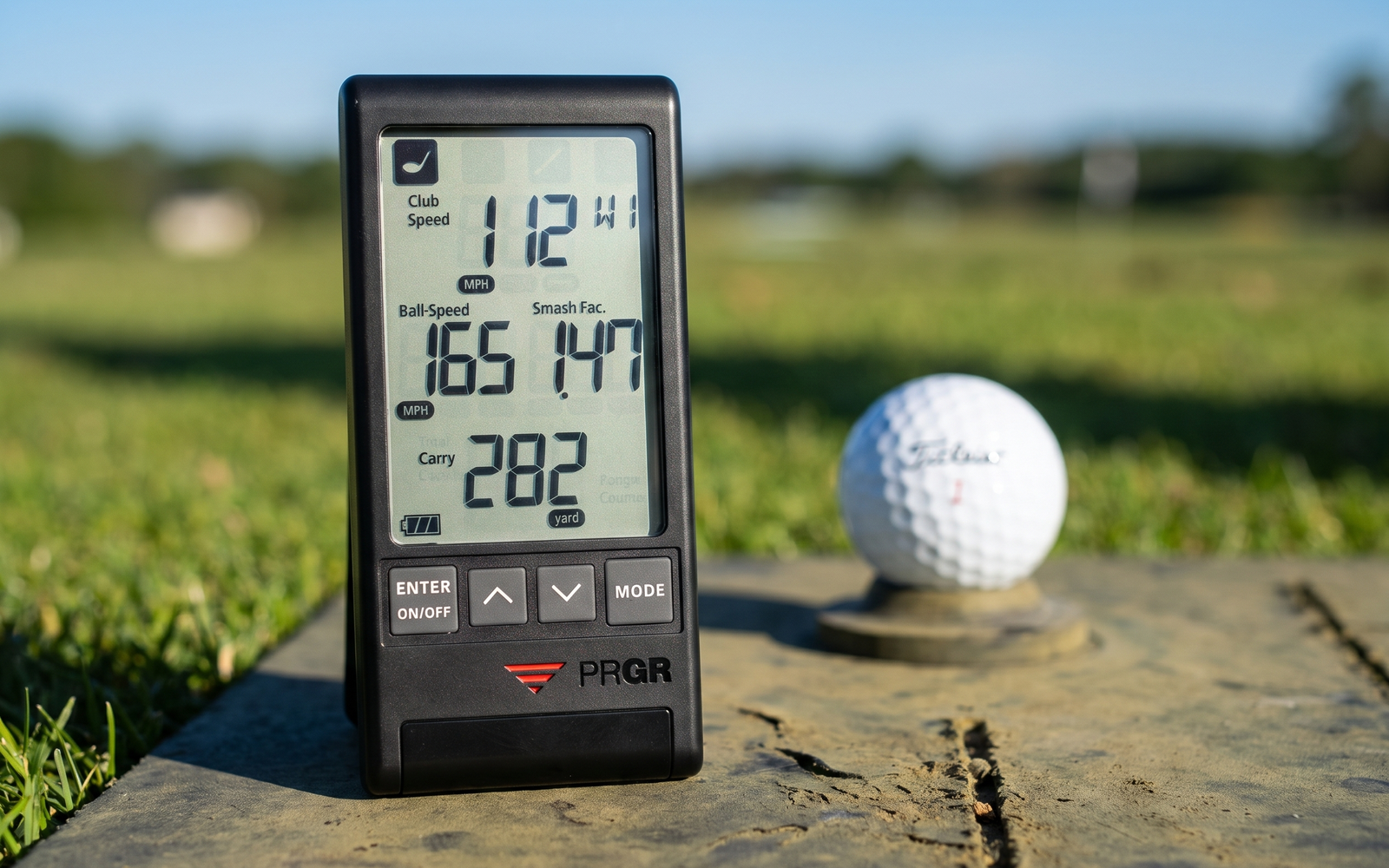
If you ask any speed training coach or club fitter what launch monitor they recommend for under $250, they will point you to the PRGR Portable Launch Monitor ($199.99–$229.99). Manufactured by Yokohama Rubber Co. in Japan, this pocket-sized Doppler radar unit weighs just 4.4 ounces and is arguably the most bulletproof, frictionless piece of golf tech ever made.
What makes the PRGR indispensable for speed training—and why it earned our highest Value score in the category (24/25)—is that it does not require hitting a golf ball. While full-size simulator monitors like the Garmin R10, FlightScope Mevo, or TrackMan demand a live ball strike to calculate clubhead speed, the PRGR’s high-frequency radar accurately reads the velocity of any clubhead or speed stick swung through the air. You can set it on the living room rug, take dry swings into a net, or use it on the driving range grass, and it instantly flashes Swing Speed, Ball Speed, Carry Distance, and Smash Factor on its massive high-contrast LCD screen.
Best of all for holiday gift buyers: there is zero app to download, zero Bluetooth to sync, and zero battery charging cable to lose. It runs on four standard AAA batteries that last for months. You push the power button, set it 3.5 to 5 feet directly behind your ball or swing path, and start swinging. For anyone buying The Stack System, SuperSpeed sticks, or Rypstick, the PRGR is the essential radar companion that makes speed training measurable.
📋 Key Gift Specs & Score Breakdown
Fairways (Why Gift It)
- Reads clubhead speed in dry swings without requiring a golf ball—the essential speed stick companion
- Zero app, zero smartphone pairing, zero Wi-Fi: turn it on and get instant numbers in 3 seconds
- Remarkably consistent Doppler radar accuracy tested within 1–2 mph of a $25,000 TrackMan 4
- Runs on 4 AAA batteries for months of daily sessions; fits comfortably in any bag accessory pocket
Hazards (Watch Out For)
- Does not measure spin rate, launch angle, or lateral shot direction (strictly speed & distance)
- Demands precise placement: placing the radar 3 inches offline can cause occasional missed swing reads
- Monochrome LCD screen can catch glare under harsh overhead mid-day summer sunlight
3. SuperSpeed Golf Speed Sticks PRO
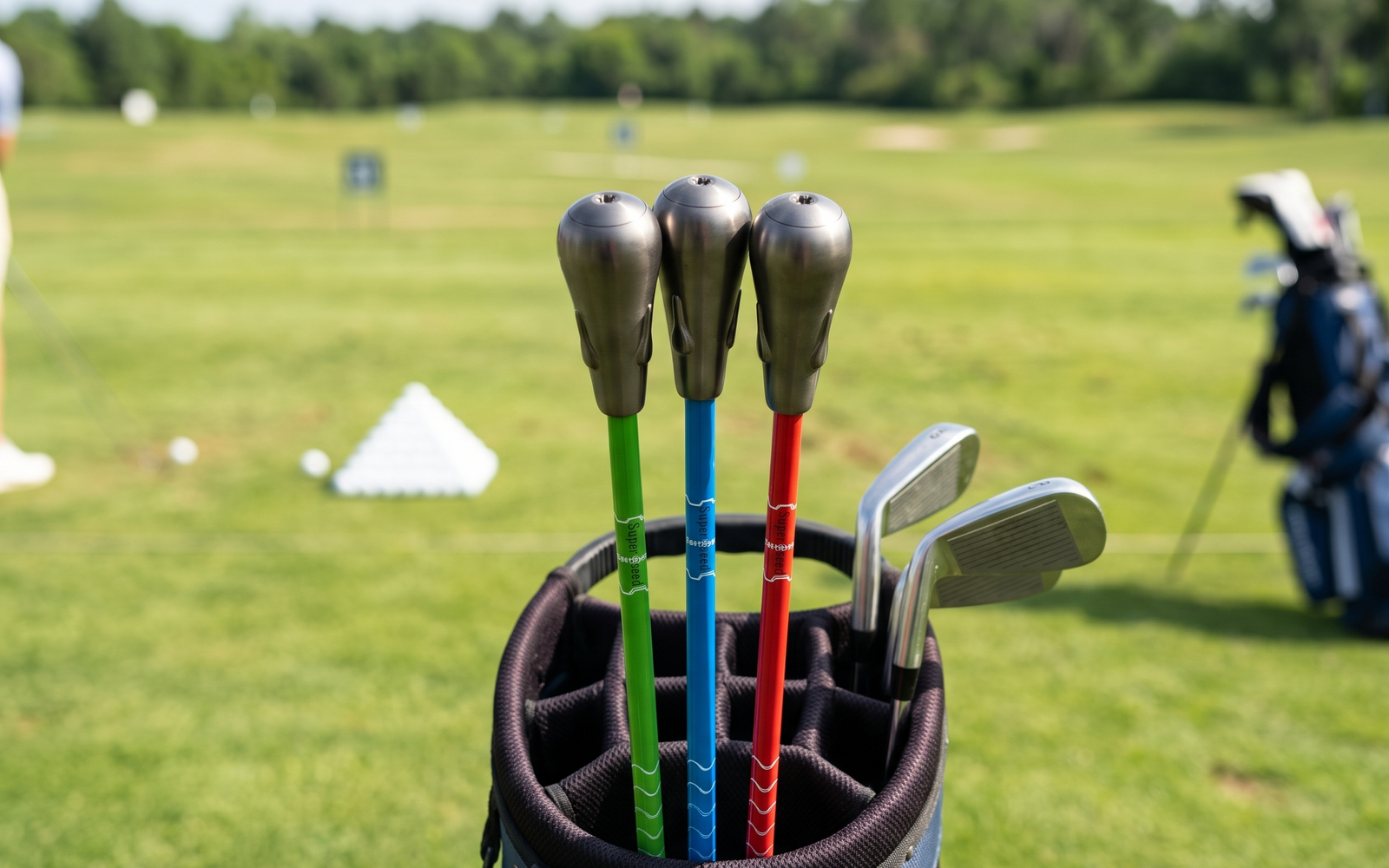
Before The Stack and Rypstick entered the market, SuperSpeed Golf ($199.99) invented the modern overspeed category. Used by hundreds of tour professionals and trusted by collegiate programs worldwide, SuperSpeed’s classic 3-club system remains the standard against which all other speed sticks are measured.
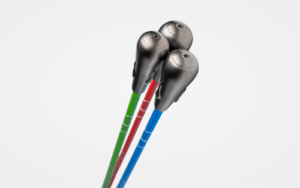
The concept is rooted in proven athletic overspeed conditioning: you swing the Green Stick (20% lighter than your standard driver) to force your central nervous system to fire faster than it normally allows, the Blue Stick (10% lighter) to bridge the transition, and the Red Stick (5% heavier) to build rotational power and core resistance. By alternating swings from your dominant side and non-dominant side, SuperSpeed also creates symmetrical muscular balance that protects against back and hip strain.
The primary advantage of SuperSpeed as a gift is simplicity and durability. There are no tiny weights to unscrew or lose in the grass, no apps that drain your phone battery, and the solid brass bullet heads are virtually indestructible. However, compared to modern single-club trainers, carrying three full-length 45-inch clubs takes up significant trunk and bag space, and you still need a standalone speed radar like the PRGR to track your progress.
📋 Key Gift Specs & Score Breakdown
Fairways (Why Gift It)
- The pioneer of overspeed golf training with an unimpeachable 10+ year track record on tour
- Zero moving parts, zero screws, zero batteries: grab a color-coded stick and swing
- Bilateral non-dominant swing protocol builds core symmetry and protects the lumbar spine
- Bombproof construction with durable brass bullet weights that survive years of abuse
Hazards (Watch Out For)
- Three separate 45-inch clubs take up three full dividers in a golf bag or clutter the car trunk
- Fixed weights lack micro-adjustability compared to The Stack’s 1.4-gram incremental plates
- Requires a separate speed radar purchase to measure velocities and track improvement
4. Rypstick Speed Trainer
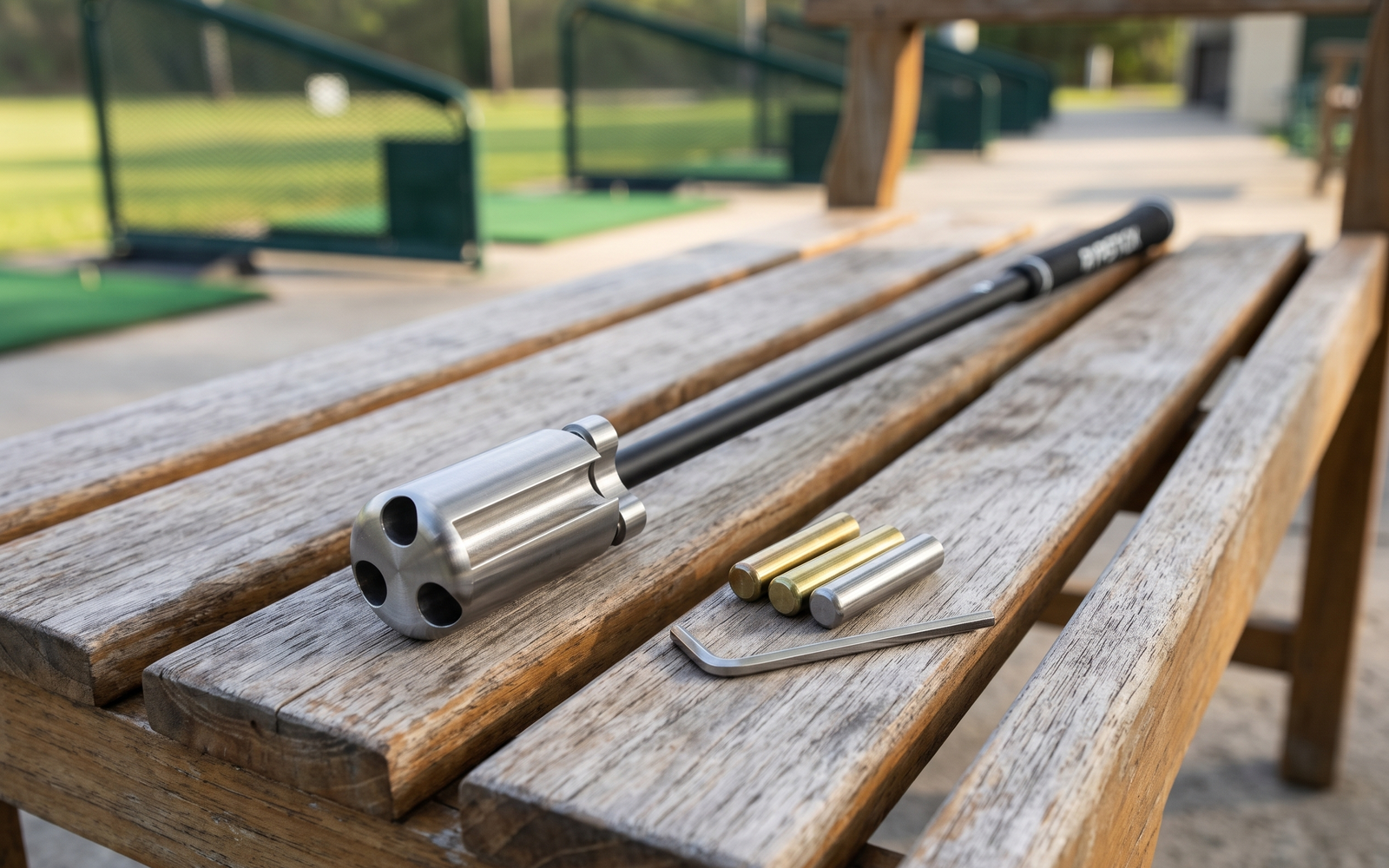
Designed by Dr. Luke Benoit (PGA Teacher of the Year and PhD in motor learning), the Rypstick ($199.00) was engineered specifically to solve the biggest logistical hassle of SuperSpeed: carrying three separate clubs. By housing three removable 30-gram tungsten/brass weights inside a machined cylindrical clubhead, plus an optional 60g counterweight in the grip, the Rypstick gives golfers eight distinct weight combinations in one sleek 45-inch driver-length stick.
In our lab testing, the Rypstick proved to be the ultimate warm-up companion on travel trips and range days. It slips into a single golf bag divider just like an alignment stick or hybrid. Using the included hex wrench, you can slide out weights to create an underload club (270g) for lightning-fast neurological twitch firing, or load all weights in for heavy overload resistance (420g) to strengthen your rotational muscles. The free Rypstick companion app provides structured level-by-level video protocols that guide golfers through 15-minute workouts.
Where does the Rypstick fall behind The Stack? The weight changes require manually loosening a hex screw and sliding weights out, which takes 20–30 seconds between sets compared to The Stack’s threaded thumb nut. Additionally, the Rypstick app protocols are static rather than dynamically driven by daily fatigue algorithms. But at $199—$100 less than The Stack—it represents fantastic value for space-conscious golfers who want a single-stick solution.
📋 Key Gift Specs & Score Breakdown
Fairways (Why Gift It)
- Single 45-inch club replaces an entire 3-club set and fits into any standard golf bag divider
- 8 versatile weight combinations ranging from lightweight underload (270g) to heavy overload (420g)
- Free companion app includes guided video workouts with zero subscription fees
- Superb pre-round warm-up tool: swinging the heavy setting loosens up the back in 2 minutes
Hazards (Watch Out For)
- Changing weights requires using a hex key tool; dropping a weight in tall grass is a real risk
- App training programs are pre-recorded routines rather than dynamic AI algorithms
- Like all speed sticks, requires an external speed radar to verify clubhead velocity
5. Blast Motion Golf Gen 3
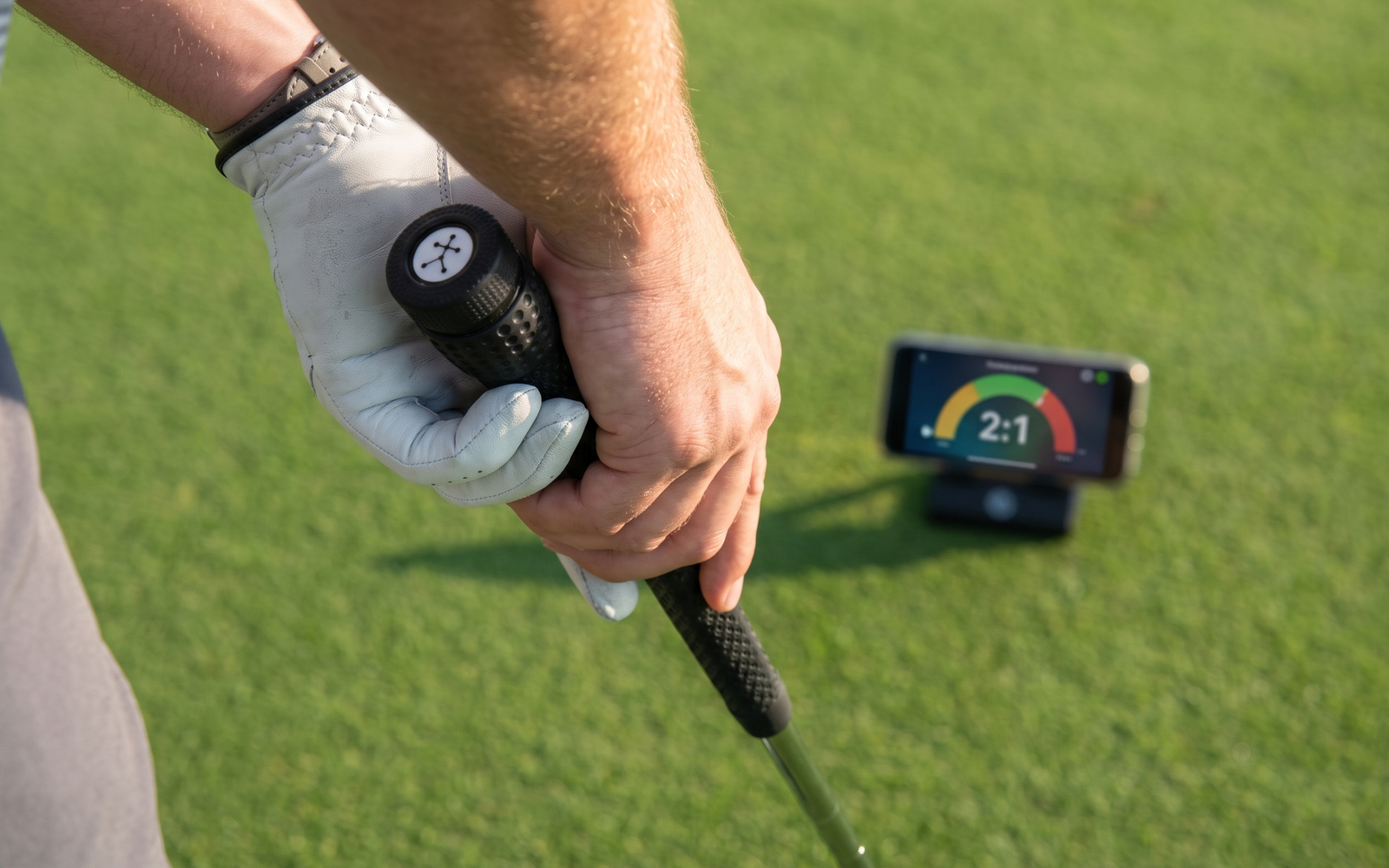
While speed trainers focus on brute horsepower off the tee, half of all golf strokes happen within 100 yards of the pin. If you are shopping for a golfer who wants to sharpen their stroke over the winter in their living room, the Blast Motion Golf Gen 3 ($174.99) is the premier putting and short-game analyzer on the market.
Weighing less than a third of an ounce (8.5 grams), this micro-sensor puck slips into a flexible silicone sleeve that stretches snugly over the grip cap of any putter, wedge, or iron. Using advanced multi-axis inertial measurement units (IMUs), Blast Motion captures the exact biomechanics of your stroke: backstroke time, forward stroke time, rotation, face angle at impact, and the holy grail of putting—the 2:1 tour tempo ratio. On every putt, the app provides real-time audio and visual biofeedback showing whether your transition was rushed or smooth.
Here is why Blast Motion is our top sensor recommendation for holiday gift buyers: there is ZERO mandatory recurring subscription fee. Unlike competitor sensors that hold your data hostage, Blast Motion provides full baseline metrics, video stroke capture with metric overlays, and historical tracking completely free after the initial hardware purchase. It recharges wirelessly on an included induction pad and works beautifully on indoor putting mats all winter long.
📋 Key Gift Specs & Score Breakdown
Fairways (Why Gift It)
- PGA Tour standard for putting tempo: trains the elusive 2:1 stroke ratio with instant audio feedback
- ZERO mandatory annual subscription fees—a safe, complete gift with no recurring bills
- Wireless induction charging pad makes recharging seamless; sensor slips onto any club grip in seconds
- Ideal winter living-room practice tool: turns standard carpet putting into a scientific lab
Hazards (Watch Out For)
- Primarily excels at putting and chipping; full-swing metrics are less actionable than a radar
- Sensor puck extends the butt of the putter grip by ~0.5 inches, slightly altering grip feel
- Requires keeping your smartphone screen open nearby to see immediate stroke readouts
6. HackMotion Wrist Sensor
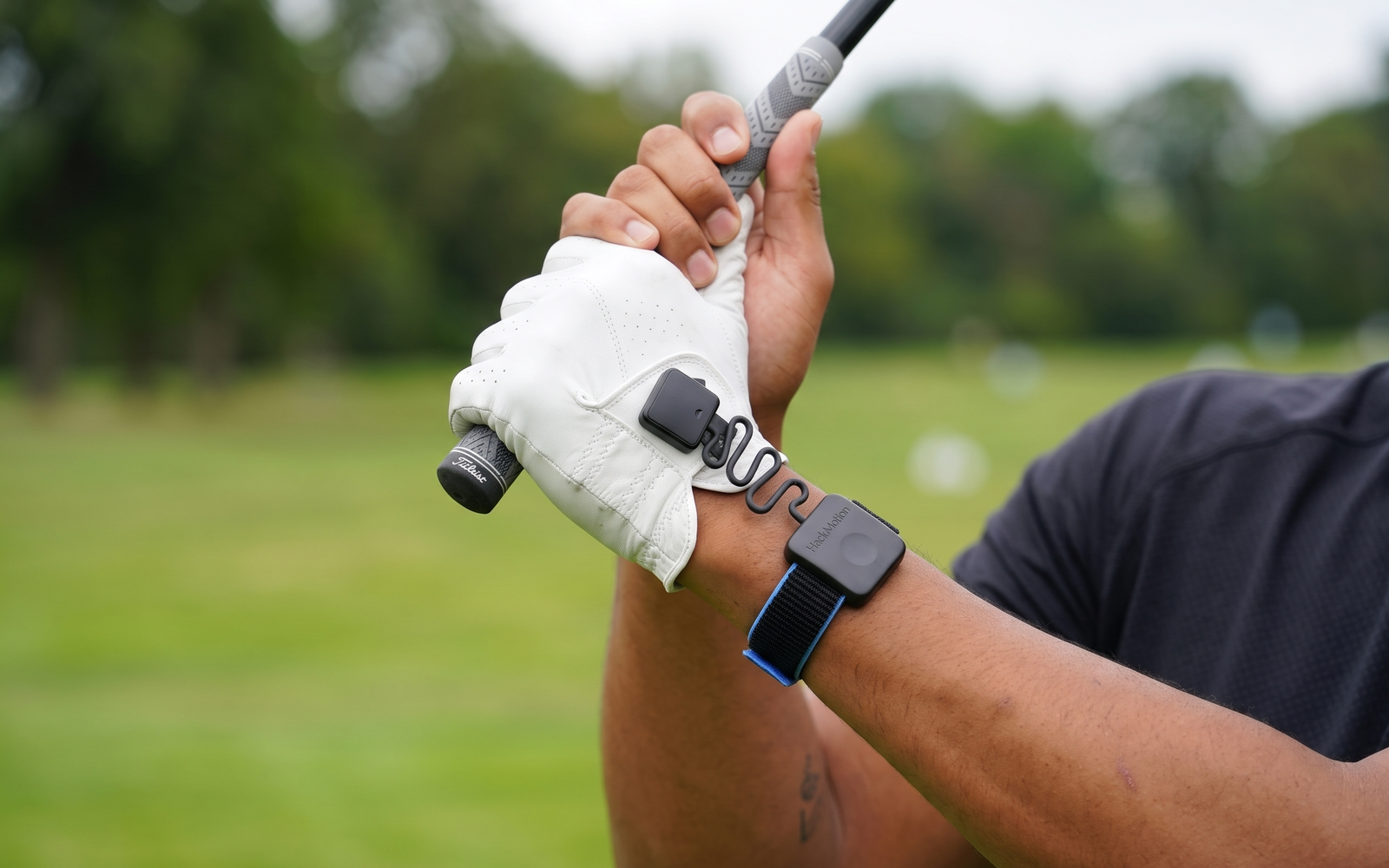
Ask any elite golf instructor what controls the clubface, and they will give you a one-word answer: the lead wrist. When high-handicappers slice the ball, flip at impact, or cast from the top, the mechanical root cause is almost always lead wrist extension (cupping). The HackMotion Wrist Sensor ($295.00 Core / $495.00 Plus / $985.00 Pro) is the only wearable device on the market that measures 3D wrist angles in real time to fix this flaw at the source.
Clipping onto the back of your golf glove with a lightweight IMU sensor pod, HackMotion tracks three critical rotational planes: flexion/extension (bowing vs. cupping), radial/ulnar deviation (cocking vs. uncocking), and lead wrist rotation. What makes it uniquely powerful on the range is its real-time audio biofeedback. You set your target wrist angle range in the app; during your backswing and downswing, the device emits a clean audio tone as long as your wrist stays in the square zone. If you cup your wrist and leave the face wide open, the tone cuts out. You immediately learn what a square clubface feels like without having to guess.
Why does it rank at 73/100 on our gift guide? It is a specialized, deep-dive analytical tool with a steep learning curve. While serious golfers and gear nerds will fall in love with the 3D graphs, casual weekend players can easily succumb to analysis paralysis. Furthermore, the entry-level “Core” model ($295) only measures putting and full-swing flexion/extension, while full clubface control analytics require stepping up to the $495 “Plus” model. But if your recipient is a dedicated range rat trying to break 80, it is tour-level coaching on their wrist.
📋 Key Gift Specs & Score Breakdown
Fairways (Why Gift It)
- Directly diagnoses and fixes the #1 mechanical cause of slices and casting: lead wrist cupping
- Instant audio biofeedback trains muscle memory on live range balls without looking at a phone
- No annual software subscription—unlike Arccos, all app features remain unlocked permanently
- Used and endorsed by top PGA instructors worldwide for tour-level wrist kinematics
Hazards (Watch Out For)
- Steep price tag ($295 entry, $495 for the recommended Plus model with clubface control)
- High technical complexity: casual golfers can easily become overwhelmed by raw degree numbers
- Requires careful calibration before every session to ensure accurate zero-degree baselines
7. Arccos Golf Smart Sensors (Gen 3+)
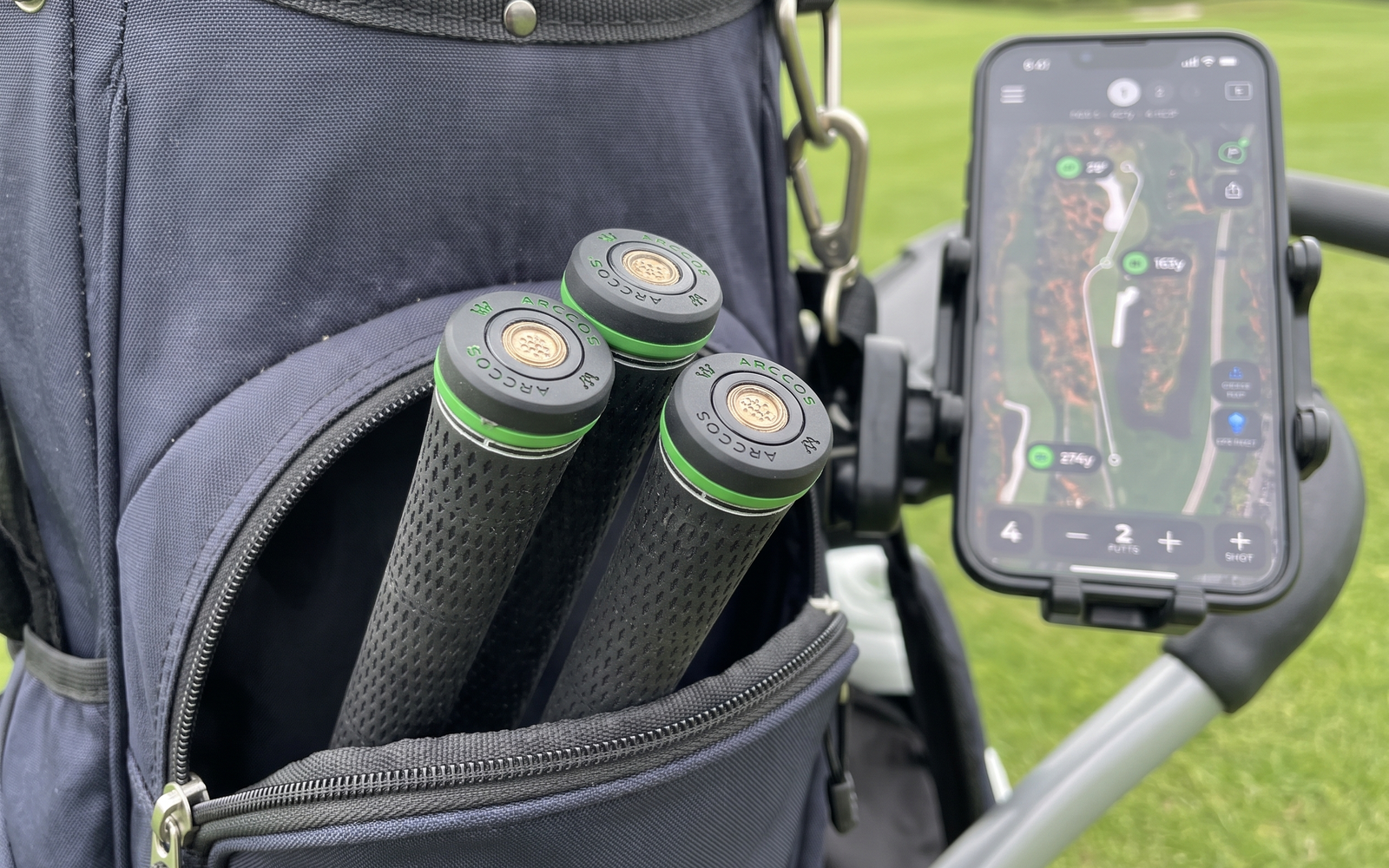
On paper, the Arccos Golf Smart Sensor Gen 3+ system ($199.99) sounds like the ultimate dream gift for any golf enthusiast. Fourteen ultra-lightweight screw-in sensors twist directly into the grip holes of your clubs. As you play your round, the sensors automatically detect every tee shot, iron approach, chip, and putt, syncing with your smartphone or Apple Watch to deliver comprehensive PGA Tour-level Strokes Gained analytics across every facet of your game.
When it works, the data is mesmerizing. Arccos eliminates the guesswork from club selection: it tells you your true “smart distance” for every iron accounting for wind and elevation, reveals that your driving accuracy is actually costing you 2.4 strokes per round against your handicap target, and acts as an AI caddie on over 40,000 mapped courses worldwide.
So why did Arccos score a 64/100 and receive our lowest Value score (10/25)? THE RECURRING $199/YEAR SUBSCRIPTION TRAP. While the hardware costs $199.99, that purchase only includes a short trial membership. Once that expires, the golfer must pay an ongoing $199.00 every single year just to use the software. If they don’t pay, the sensors become completely useless plastic screws. If you are buying this for someone as a holiday gift, you are essentially committing them (or yourself) to a recurring $16.50/month bill forever. For avid golfers who play 50+ rounds a year, the data might justify the price; for everyone else, it is a frustrating financial surprise.
📋 Key Gift Specs & Score Breakdown
Fairways (Why Gift It)
- Tour-caliber Strokes Gained analytics across Driving, Approach, Short Game, and Putting
- Automatic hands-free shot detection without manually logging clubs or tapping screens
- AI Caddie provides wind, elevation, and temperature-adjusted club yardages on 40,000+ courses
- Lightweight sensors (4.5g) screw easily into the grip vent holes of all 14 clubs
Hazards (Watch Out For)
- MANDATORY $199/YEAR SUBSCRIPTION: Gifting Arccos saddles the recipient with an ongoing annual bill
- Requires carrying your phone in your front lead pocket unless you buy the $149 Arccos Link belt clip
- Occasional missed tap-in putts or soft green-side bunker shots require post-round manual scorecard editing
8. Garmin Approach R10 Portable Launch Monitor ($599.99)
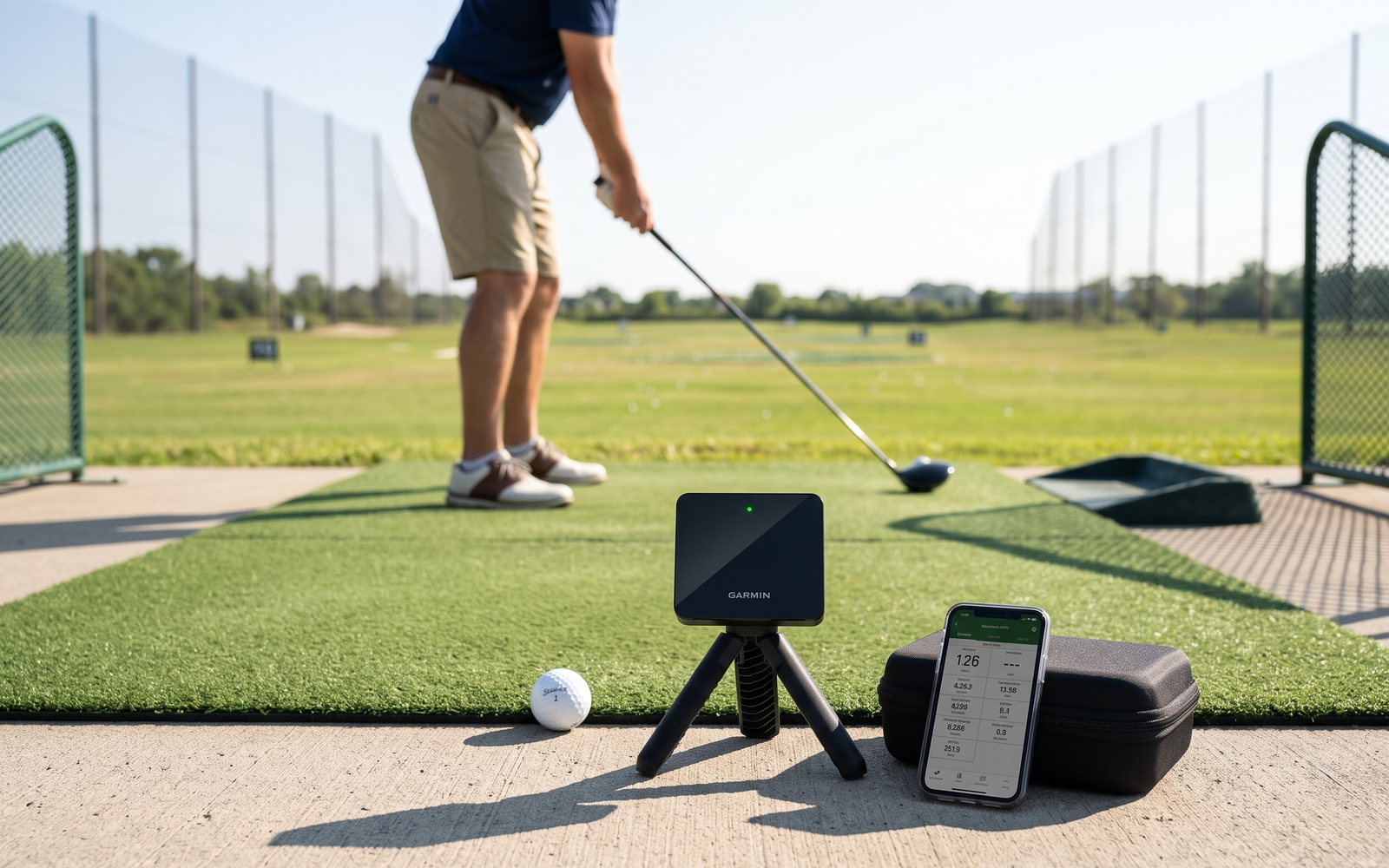
If the PRGR HS-130A is built for dead-simple speed numbers on a tiny screen, the Garmin Approach R10 ($599.99) is the gift that turns an ordinary driving range mat or backyard hitting net into a full virtual golf simulator. Weighing just 5.22 ounces on its own (7.79 ounces on its included magnetic tripod) and measuring a genuinely palm-sized 3.5″ × 2.8″ × 1.0″, the IPX7 water-resistant Doppler unit clips effortlessly to a golf bag pocket and delivers up to 10 hours of battery life per charge.
Pair it over Bluetooth with the Garmin Golf smartphone app (using the included bag phone mount clip) and free driving range mode immediately tracks over a dozen real metrics: clubhead speed, ball speed, club face angle, club path, angle of attack, smash factor, launch angle, carry distance, and dispersion patterns—with zero mandatory subscription required for driving range practice. Unlike pure optical systems or budget pocket radars that ignore shot curvature, the Approach R10 tracks ball flight shape outdoors and links automatically to swing video clips recorded on your phone.
Where it earns special holiday appeal is optional simulation: adding a Garmin Golf membership ($9.99/month or $99.99/year) unlocks Home Tee Hero across 43,000+ virtual courses worldwide, and the unit natively supports third-party platforms like E6 Connect and Awesome Golf. Just check room dimensions before gifting it to an indoor net owner: Garmin’s Doppler radar needs 6 to 8 feet behind the ball plus at least 8 feet of ball flight in front, making tight 10-foot spare bedrooms too cramped for indoor ball tracking.
📋 Key Gift Specs & Score Breakdown
Fairways (Why Gift It)
- Tracks 14+ club & ball flight metrics including face angle, club path, launch, and dispersion
- Free driving range mode works permanently out of the box with zero mandatory subscription
- Palm-sized 3.5″ unit with magnetic tripod, carry case, and phone clip fits any golf bag
- Optional $9.99/mo Home Tee Hero unlocks 43,000+ playable virtual courses + E6 Connect compatibility
Hazards (Watch Out For)
- Requires ~14–16 feet total depth (6–8 ft behind + 8 ft flight) for reliable indoor net use
- Indoor spin axis and spin rate are estimated unless using Titleist RCT foil-marked balls
Head-to-Head Specification & Value Matrix
Complete Category Comparison (All 8 Tested Models)
| Model | Holiday Price | Birdie Score | Dry Swings (No Ball)? | Mandatory App / Sub? | Primary Gift Superpower |
|---|---|---|---|---|---|
| The Stack System | $299.00 / $499.00 | 88/100 | ✅ Yes (Air/Net) | App required (iOS only); No extra sub yr 1 | Dynamic AI workouts tailored to daily fatigue |
| PRGR Launch Monitor (HS-130A) | $199.99–$229.99 | 86/100 | ✅ Yes (Air/Net/Ball) | ❌ None (Zero app, zero Wi-Fi, 4 AAA batteries) | Instant swing & ball speed under $250 |
| SuperSpeed Golf Speed Sticks PRO | $199.99 | 80/100 | ✅ Yes (Air/Net) | ❌ None (Free web video drills) | Tour-proven 3-club color-coded simplicity |
| Rypstick Speed Trainer | $199.00 | 79/100 | ✅ Yes (Air/Net) | App optional (Free video routines) | 8 weight combinations in a single golf bag stick |
| Blast Motion Golf Gen 3 | $174.99 | 78/100 | ✅ Yes (Carpet/Green) | App required (iOS/Android); ZERO sub fee | PGA Tour 2:1 putting tempo & face control |
| HackMotion Wrist Sensor | $295.00–$495.00 | 73/100 | ✅ Yes (Live Balls OK) | App required (iOS/Android); ZERO sub fee | Real-time audio biofeedback on lead wrist angles |
| Arccos Golf Smart Sensors (Gen 3+) | $199.99 + $199/yr | 64/100 | ❌ No (Live Play) | App required; MANDATORY $199/yr sub | Automated on-course Strokes Gained tracking |
| Garmin Approach R10 | $599.99 | 81/100 | ❌ Ball Impact Needed | App required (Free Range; optional $9.99/mo sim) | Palm-sized radar + 43,000+ Home Tee Hero sim courses |
Who Should (and Shouldn’t) Buy Which Gift
Buy With Confidence If Your Golfer…
- Wants real, measurable driver distance (+20–30 yards): Get The Stack System ($299.00) or the PRGR Launch Monitor + Rypstick bundle ($289.00). Both provide the structured neuromuscular training and verified radar feedback needed to gain clubhead speed safely.
- Hates smartphone apps and just wants instant numbers: Buy the PRGR Launch Monitor ($199.99). It turns on in two seconds, requires zero Bluetooth pairing, and gives instant swing speed and carry distance on any range mat or living room rug.
- Obsesses over putting and short game: Choose Blast Motion Golf Gen 3 ($174.99). It provides tour-caliber 2:1 tempo feedback without charging a single penny in recurring subscription fees.
- Fights a chronic, destructive over-the-top slice: Gift the HackMotion Wrist Sensor ($295.00) to diagnose lead wrist extension and deliver real-time audio pitch biofeedback, or add the Garmin Approach R10 ($599.99) to measure exact club path and face-to-path data on every range session.
Think Twice: Holiday Gift Traps to Avoid
- The $199/Year Subscription Trap (Arccos Golf): Unless your recipient explicitly asked for Arccos and understands that it requires an ongoing $199/year membership after the initial trial, do not buy it as a surprise gift. The hardware stops working if the annual subscription lapses.
- Android Users Eyeing The Stack System: The Stack System’s dynamic algorithm app is strictly iOS-only. If your golfer carries a Samsung Galaxy, Google Pixel, or any other Android smartphone, they cannot use The Stack. Buy the Rypstick ($199) or SuperSpeed ($199) instead.
- Speed Sticks Without a Radar: Never buy speed sticks (The Stack, SuperSpeed, or Rypstick) without ensuring the golfer owns a Doppler radar like the PRGR ($199.99). Swinging speed sticks without instant velocity feedback dramatically lowers training adherence and results.
Frequently Asked Questions
Can you really gain 10 mph of swing speed with overspeed training?
Yes. Independent scientific studies and our own testing at Birdie Breakdown confirm that committed golfers typically gain between 5 and 10 mph of clubhead speed within an 8- to 10-week training cycle. At a standard smash factor of 1.45 to 1.50, each additional 1 mph of clubhead speed equates to approximately 2.6 to 2.8 yards of total carry distance off the tee. That means a 6 mph gain produces 16 to 18 extra yards. However, gains are perishable: golfers must complete a maintenance session once per week during the playing season to preserve their neurological speed adaptations.
What is the difference between The Stack System, SuperSpeed, and Rypstick?
The difference comes down to hardware format and software intelligence. SuperSpeed ($199.99) uses three separate fixed-weight 45-inch clubs (Light, Medium, Heavy) with static online drills. Rypstick ($199.00) condenses eight weight settings into a single 45-inch club using three removable weights and a counterweight. The Stack System ($299.00) uses a single shorter 41.5-inch hybrid club with five interchangeable milled plates, paired with an AI-driven dynamic iOS app that adjusts every workout to your daily fatigue level. The Stack is the most technologically advanced; Rypstick is the most bag-friendly single club; SuperSpeed is the classic bulletproof 3-club set.
Does the PRGR Launch Monitor work without hitting a real golf ball?
Yes! This is the primary reason the PRGR HS-130A is our top-rated radar under $250. Unlike optical or high-end photometric launch monitors that require ball impact to register, the PRGR uses high-frequency Doppler radar. It accurately measures clubhead speed during dry swings through the air into a net or across living room carpet. When you do hit real golf balls, it simultaneously displays swing speed, ball speed, carry distance, and smash factor.
Does Blast Motion require a monthly or annual subscription?
No. Blast Motion Golf Gen 3 includes full access to its core training app, tempo metrics, face angle analysis, historical tracking, and video capture completely free with the hardware purchase ($174.99). There is an optional advanced tier for certified instructors, but everyday golfers and gift recipients enjoy permanent free access with zero recurring bills.
Why do golf radars like the PRGR or Garmin R10 sometimes read crooked or miss shots?
Nine times out of ten, radar tracking errors are caused by physical misalignment or insufficient ball-flight room. If a radar unit sitting behind the ball is angled just 2 to 3 degrees offline relative to your actual target line, straight shots will register as pushes or pulls on screen. Always place any standard alignment rod parallel to your target line behind the ball and aim your PRGR or Garmin Approach R10 square to it—and verify indoors that the Garmin R10 has 6 to 8 feet behind the tee plus at least 8 feet to the net.
What is the safest golf gift to buy if I don’t know the golfer’s exact specs?
The safest gifts are universal, ambidextrous tools that don’t depend on club flex, glove size, or handedness. The PRGR Portable Launch Monitor ($199.99) and Blast Motion Golf Gen 3 ($174.99) work identically for right-handed and left-handed players of all skill levels with zero setup risk. For bigger budgets, the Garmin Approach R10 ($599.99) pairs effortlessly with any golfer’s full bag indoors or at the driving range.
The Birdie Breakdown Speed & Tech Honor Roll
| Product | Category Award | Score | Holiday Price | Verdict |
|---|---|---|---|---|
| The Stack System | #1 Best Overall Speed System | 88/100 | $299.00 | Editor’s Choice |
| PRGR Launch Monitor (HS-130A) | Best Standalone Pocket Radar | 86/100 | $199.99 | Best Value |
| SuperSpeed Golf Speed Sticks PRO | Best 3-Club Overspeed Set | 80/100 | $199.99 | Proven Classic |
| Rypstick Speed Trainer | Best Single-Stick Adjustable Trainer | 79/100 | $199.00 | Bag Friendly |
| Blast Motion Golf Gen 3 | Best Putting & Tempo Sensor | 78/100 | $174.99 | Zero Sub Winner |
| HackMotion Wrist Sensor | Best Biomechanics Wrist Sensor | 73/100 | $295.00+ | Biofeedback Pick |
| Garmin Approach R10 | Best Sub-$600 Home Sim Monitor | 81/100 | $599.99 | Sim Favorite |
More Breakdowns & Guides You Might Like