Tour Striker Smart Ball Review: Is a $47 Inflatable Worth It?
Birdie Score
Price
$47
One-Putt Summary
The most honest $47 you'll spend on your golf game, if you can survive the first three sessions
Fairways (Pros)
- ✓ Binary drop-or-stay feedback requires zero interpretation — your body knows instantly
- ✓ Smash factor improved 1.17 → 1.25 in documented launch monitor testing with 1.21 carry-over after removal
- ✓ Lanyard design eliminates the most frustrating part of connection drill practice — chasing the ball
- ✓ Legitimate tour-level validation: Rose, McIlroy, Morikawa use it by choice, not contract
- ✓ Covers putting, chipping, pitching, and partial full swings — rare multi-use value
Hazards (Cons)
- ✗ First 2–3 sessions are genuinely brutal — expect thin shots, shoulder soreness, and ego damage
- ✗ Full driver swings are nearly impossible; this is primarily a partial-swing training aid
- ✗ $40–45 for an inflatable ball with a string — the price is defensible, but the sticker shock is real
- ✗ Does nothing for clubface orientation — a connected swing can still produce a slice
Best For
Mid-to-high handicappers (10–20 cap) battling arm-body disconnect, chicken wing finish, or inconsistent compression — and single-digit players who need a portable maintenance tool for their connection feels
What Is the Tour Striker Smart Ball?
Let’s be real for a second. The golf training aid market is littered with gadgets that promise to transform your game and end up gathering dust in your garage. A $40 inflatable ball on a string sounds like it belongs in that pile.
It doesn’t.
The Tour Striker Smart Ball has been quietly earning cult status on tour ranges and public driving ranges alike. Justin Rose. Rory McIlroy. Collin Morikawa. These aren’t paid ambassadors — they use it because it works. And after digging deep into hundreds of real user reviews, launch monitor data, and instructor feedback, here’s our no-nonsense verdict on whether it’s worth your money.
Key Takeaways
- ✓ Binary feedback: the ball drops or it doesn’t — no guesswork, no video review needed
- ✓ Documented smash factor improvement from 1.17 to 1.25 in independent testing
- ✓ Used by tour pros for swing maintenance, not just beginners looking for a fix
- ✓ Expect 2–3 frustrating range sessions before the breakthrough happens
- ✓ Best for 10–20 handicappers with arm-body disconnection issues
- ✓ At $40–45, it costs less than one lesson — and delivers unlimited feedback sessions
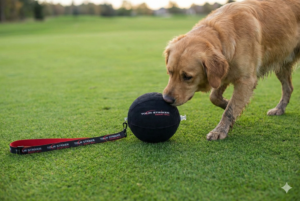
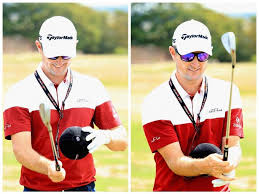
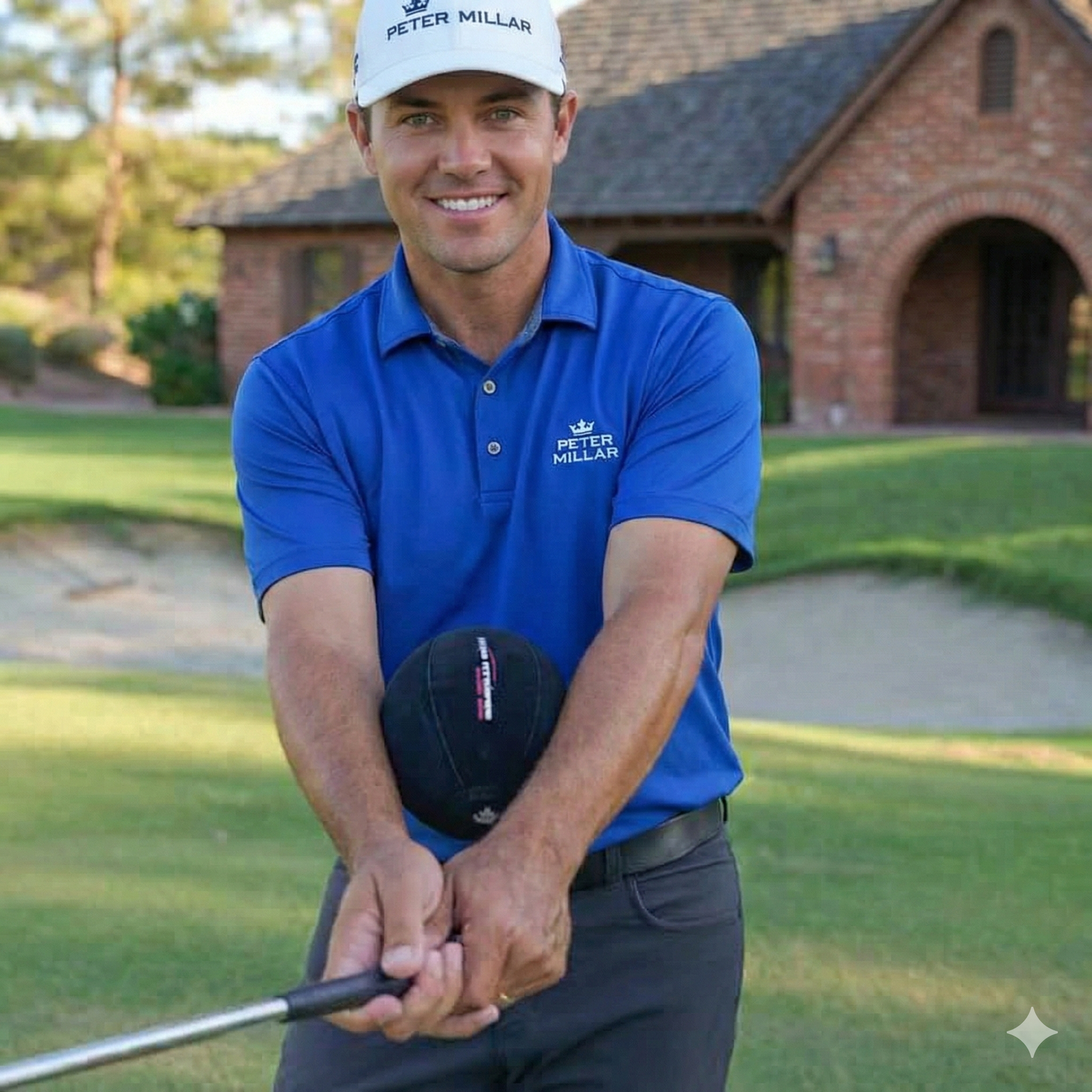
The Tour Striker Smart Ball is an inflatable PVC ball with an adjustable neck lanyard, designed to be squeezed between your forearms during the golf swing. The concept was developed by Martin Chuck — a Golf Magazine Top 100 instructor — and is built around one core biomechanical principle: when your arms and body move as a unit, you hit it better. Every time.
The problem it targets is arm-body disconnection — what instructors call the root cause of chicken wings, flipping, scooping, and the dreaded two-way miss. When your arms race ahead of your torso (or lag hopelessly behind it), consistent ball striking becomes a coin flip.
The Smart Ball’s solution is brilliantly simple: put something between your forearms that falls out the moment they separate from your body. No ambiguity. No instructor needed. Your body gets the message immediately.
It inflates to a size that fits between your forearms — adjustable by simply adding or releasing air — and the lanyard catches it when it drops so you’re not chasing it across the range every 30 seconds. Smart design for a simple product.
What Does Tour Striker Claim It Does?
According to Martin Chuck and Tour Striker Golf Academy, the Smart Ball:
- ✓ Promotes proper arm-body synchronization throughout the entire swing
- ✓ Eliminates the ‘chicken wing’ lead elbow breakdown after impact
- ✓ Builds a connected ‘triangle’ between your shoulders and hands
- ✓ Works for all clubs — driver through putter
- ✓ Creates lasting ‘phantom ball’ muscle memory that persists after the aid is removed
Those are the official claims. Here’s what actually happens when real golfers use it.
Effectiveness: Does It Actually Work?
Short answer: yes — with important caveats.
The Smart Ball delivers on its core promise of improving arm-body connection, and the data backs it up. In independent launch monitor testing, one tester’s smash factor improved from 1.17 at baseline to 1.25 while using the Smart Ball, then settled at 1.21 after removing it. That’s meaningful carry-over — not just a crutch effect. Swing path also shifted 2.7 degrees toward neutral for an outside-in slicer, which is a measurable fix for one of golf’s most common ball flight problems.
The ‘Phantom Ball’ Phenomenon Is Real
Users repeatedly report that after 20–30 focused practice swings, the physical sensation of squeezing the ball stays with them even after removing it. Your nervous system learns the connected feeling and starts replicating it autonomously. That’s not marketing fluff — that’s how motor learning actually works.
The wedge game improvements are particularly compelling. One golfer reported their 75-yard pitching wedge distance control went from 10-yard variance to ‘remarkably predictable’ consistency after three months of regular use. Another dropped from averaging two three-putts per round to 32 putts per round by using the Smart Ball for putting stroke training, forcing a pendulum motion and eliminating the flippy wrist action that plagues lag putting.
Where Effectiveness Gets Complicated
Where effectiveness gets complicated is with full swings and longer clubs. At 100% speed with a driver or fairway wood, most golfers can only maintain the ball for partial swings — what instructors call the ‘9-to-3’ window (hip height to hip height). That’s where 90% of the Smart Ball’s value lives. Full follow-throughs are physically difficult to complete with the ball in place, and power output typically drops to around 60% of normal. This isn’t a failure of the product — it’s how constraint-based learning works — but it means you need patience and realistic expectations.
What the Smart Ball Does NOT Fix
✗Clubface orientation: A perfectly connected swing can still leave the face open and produce a push or a slice
✗Grip pressure issues: The Smart Ball provides no grip feedback
✗Stance fundamentals: Setup flaws need to be addressed separately
✗Full driver swing range: Primarily a partial-swing training tool
Bottom line on effectiveness: if you have arm-body disconnect issues, the Smart Ball will expose them immediately and start fixing them. If your connection is already solid, you probably won’t notice much.
Effectiveness Score
Measurably improves arm-body connection, smash factor, and swing path — when used correctly
24/30
Build Quality & Durability: Functional, Not Flashy
This is where the Smart Ball gets its most valid criticism — and where honesty matters.
It is, fundamentally, an inflatable ball on a lanyard. The PVC construction is functional but not premium. The ‘Nerf-like’ aesthetics won’t impress anyone, and at $40–45, some golfers feel the materials don’t justify the price tag.
That said, the practical durability picture is more reassuring than the price-per-material math suggests. Professional coaches who have managed fleets of Smart Balls report failure rates of approximately 3–5% over several years of heavy use — typically the valve assembly or the lanyard attachment point under what one coach diplomatically described as ‘funky abuse.’ For normal practice use, these are not common failure points.
Tour Striker backs the product with a 90-day warranty against material and workmanship defects. Authorized dealers like BigHornGolfer offer a 30-day money-back guarantee, though a 10% restocking fee applies for standard returns (waived for exchanges).
The Durability Reality Check
✓ Genuine Design Wins:
The lanyard eliminates the most frustrating part of connection drill practice — chasing the ball. The adjustable inflation is also a meaningful feature: a slightly deflated ball creates a softer, more comfortable connection that works better for most adult body types and lets bigger-armed players actually get comfortable.
✗ Legitimate Concerns:
Some users report static shock issues with certain synthetic fabrics and occasional slow deflation over extended sessions. These are minor annoyances rather than deal-breakers, but worth knowing before you buy.
Build Specs at a Glance
| Material | Inflatable PVC with adjustable lanyard |
| Inflation | Adjustable via standard inflation needle |
| Warranty | 90-day manufacturer warranty |
| Return Policy | 30-day via authorized dealers (10% restocking fee) |
| Failure Rate | ~3–5% over years of heavy use (coach-reported) |
Build Quality Score
Functional inflatable design; durable enough but valve and lanyard issues reported over time
13/20
Ease of Use: Simple to Understand, Humbling to Execute
The Smart Ball is simple to understand and difficult to execute — at least initially.
✓ The Good: Plug-and-Play Setup
Setup takes about 30 seconds: inflate to comfortable tightness between your forearms, slip the lanyard around your neck, and start swinging. There’s no complicated assembly, no calibration, no app required.
“30 seconds to setup and the feedback starts immediately.” — Consistent user experience
✗ The Hard Part: The Actual Swing
First sessions are genuinely humbling. Expect thin shots, dropped balls, and soreness in your lead shoulder — a sign you’re recruiting muscles your old swing never used. This is the training aid working exactly as intended.
“My first range session was humbling. I hit more thin shots in 30 minutes than I did in the previous month. The ball fell out of my arm at least a dozen times. I looked like I was learning to play golf for the first time, and the guy in the bay next to me definitely thought I’d lost a bet.”
The learning curve compresses significantly with Martin Chuck’s instructional protocols, which come with the official product. These videos explain the why behind the aid and give you a structured practice framework rather than just handing you a ball and wishing you luck. This is a legitimate differentiator versus the Amazon knockoffs — without instruction context, the Smart Ball can be used incorrectly, which limits or even reverses its benefits.
For putting and chipping, ease of use improves dramatically. The aid feels more natural in the short game context, and improvements tend to show up faster than in the full swing.
The Practice Protocol That Works
The recommended practice method — 5–10 swings with the ball, 5–10 without, repeat — gives your nervous system time to process and integrate the new movement pattern. Most users hit their breakthrough moment somewhere in sessions 3–5.
Ease of Use Score
Simple concept, genuinely difficult execution — steep initial learning curve
13/20
Value for Money: Worth It vs. the $15 Amazon Knockoff?
Tour Striker Smart Ball
$40–45
Official product + protocols
Amazon Knockoffs
$3–15
Similar shape, no lanyard or protocols
Single Golf Lesson
$80–120
One hour of feedback
Here’s where the debate gets interesting, and we’re not going to dodge it.
At $40–45, the Tour Striker Smart Ball is more expensive than a $3–15 knockoff on Amazon. People have noticed this. Reddit threads exist comparing it to a beach ball with a string. Someone even pointed out you can buy a functionally similar product on Amazon for $15 and achieve the same basic constraint effect.
They’re not entirely wrong — and they’re missing the point entirely.
The value of the official Smart Ball is not in the PVC material. It’s in three things: the adjustable lanyard design (which generic balls don’t have), the adjustable inflation (which generic rigid alternatives can’t offer), and the instructional protocol access (which determines whether you use it correctly or just frustrate yourself for a month before giving up).
Think of it this way: the Smart Ball costs less than one private lesson with a PGA instructor. A single lesson gives you one hour of feedback. The Smart Ball gives you unlimited feedback sessions for the price of admission. One tester’s handicap dropped from 8.9 to 6 in four rounds after incorporating it properly into practice. At the rates decent instructors charge, the ROI math is very favorable.
The nuanced version: if you’re already well-versed in golf instruction and understand connection concepts intuitively, a cheaper alternative might serve you fine. If you need the full package — aid, instruction, and support — the official version earns its price.
Value for Money Score
At $40–45, pricier than a DIY knockoff, but the lanyard + protocols + adjustability justify it
18/25
Versatility: More Than Just a Full-Swing Aid
One of the Smart Ball’s genuine surprises is how many parts of the game it covers. Unlike most training aids that live and die by a single use case, the Smart Ball addresses arm-body connection across the full bag.
Real-World Applications
- ✓ Full swing partial arc training (the primary use case — hip to hip)
- ✓ Chipping and pitching plane work
- ✓ Putting stroke improvement (eliminates flippy wrist action)
- ✓ Pre-round warmup to groove connected feel
- ✓ Post-lesson reinforcement of instructor guidance
Versatility Score
Works for putting, chipping, pitching, and full swings — a rare multi-use training aid
4/5
Fairways & Hazards: The Honest Pros and Cons
Fairways (Strengths)
- ✓Binary drop-or-stay feedback requires zero interpretation — your body knows instantly
- ✓Smash factor improved 1.17 → 1.25 in documented launch monitor testing with 1.21 carry-over after removal
- ✓Lanyard design eliminates the most frustrating part of connection drill practice — chasing the ball
- ✓Legitimate tour-level validation: Rose, McIlroy, Morikawa use it by choice, not contract
Hazards (Limitations)
- ✗First 2–3 sessions are genuinely brutal — expect thin shots, shoulder soreness, and ego damage
- ✗Full driver swings are nearly impossible; this is primarily a partial-swing training aid
- ✗$40–45 for an inflatable ball with a string — the price is defensible, but the sticker shock is real
- ✗Does nothing for clubface orientation — a connected swing can still produce a slice
FAQ: Your Tour Striker Smart Ball Questions Answered
How long does it take to see results with the Tour Striker Smart Ball?
Can beginners use the Tour Striker Smart Ball?
Does the Tour Striker Smart Ball work for putting?
Can I use a cheap Amazon knockoff instead?
Is the Tour Striker Smart Ball suitable for full driver swings?
How do you inflate the Tour Striker Smart Ball?
Does Tour Striker offer a warranty or return policy?
What swing faults does the Tour Striker Smart Ball NOT fix?
Do tour pros really use the Tour Striker Smart Ball?
What handicap benefits most from the Tour Striker Smart Ball?
The Bottom Line: Who Should Buy the Tour Striker Smart Ball?
Best For:
Mid-to-high handicappers (10–20 cap) battling arm-body disconnect, chicken wing finish, or inconsistent compression — and single-digit players who need a portable maintenance tool for their connection feels.
Skip It If:
- ✗Your arms and body already move well as a unit — you’ll feel nothing
- ✗You have a very long, flowing backswing — the constraint may disrupt more than it helps
- ✗You expect instant gratification without discomfort (sessions 1–3 will be humbling)
- ✗Your grip or posture fundamentals are broken — fix those first, then come back
The Tour Striker Smart Ball is not magic, and it’s not a scam. It’s a genuinely effective training aid built around sound biomechanical principles, backed by real professional validation, and capable of delivering measurable swing improvements — provided you’re patient enough to push through the uncomfortable learning curve.
At $40–45, the price-to-material ratio invites criticism, but the total value package — lanyard design, adjustable inflation, and instructional protocol access — holds up better than the Reddit skeptics suggest. This costs less than one lesson and delivers unlimited feedback sessions. For mid-handicappers struggling with arm-body connection, that’s a compelling deal.
Go in with realistic expectations: your first few sessions will be humbling, your lead shoulder will be sore, and the ball will drop more times than you can count. That’s the product working. Stick with it through sessions 3–5, use the ‘hit with / hit without’ practice method, and you’ll find the connected feeling that tour players spend careers trying to build.
⛳ The 19th Hole: Final Verdict
The most honest $47 you'll spend on your golf game, if you can survive the first three sessions
Birdie Score: 72/100