The Strike Wedge Breakdown: Is It Worth the $69?
Birdie Score
Price
$69
One-Putt Summary
The Strike Wedge is a genuinely effective, no-batteries impact trainer that will expose and correct fat shots, thin shots, shanks, and swing path faults fast — but you're paying a premium for a piece of molded plastic, and a lot of the buzz around it comes from affiliate marketing rather than organic word-of-mouth.
Fairways (Pros)
- ✓ Delivers immediate, unambiguous feedback on fat, thin, heel, and toe contact
- ✓ One tool covers low point, swing path, shank correction, and driver launch angle
- ✓ No batteries, no app required to use it physically — just set it down and swing
- ✓ TPU build handles direct club contact without damage or deformation
- ✓ Works on grass, mats, indoor simulators, and home nets — genuinely a year-round tool
Hazards (Cons)
- ✗ Price draws consistent "overpriced" criticism versus DIY alternatives like a towel or door stopper
- ✗ Not anchored to the ground, so it shifts when struck, requiring mid-session resets
- ✗ Can interfere with launch monitor cameras/radar depending on placement
Best For
Golfers roughly in the 12–25 handicap range who chronically hit behind or thin the ball, struggle with an inconsistent low point, or want to correct a slice/hook path using external feedback instead of internal swing thoughts
The Strike Wedge Review: Does This $69 Impact Trainer Actually Fix Fat Shots?
An in-depth, no-nonsense breakdown of the TPU impact trainer taking over golf Instagram — scored across effectiveness, build quality, ease of use, value, and versatility.
🏌️ One-Putt Summary
The Strike Wedge is a genuinely effective, no-batteries impact trainer that will expose and correct fat shots, thin shots, shanks, and swing path faults fast — but you’re paying a premium for a piece of molded plastic, and a lot of the buzz around it comes from affiliate marketing rather than organic word-of-mouth.
At a Glance: Strike Wedge Scores
| Effectiveness | 24 | /30 |
| Build Quality & Durability | 15 | /20 |
| Ease of Use | 13 | /20 |
| Value for Money | 14 | /25 |
| Versatility | 5 | /5 |
| TOTAL | 71 | /100 |
Verdict: Solid, Honest Mid-Tier
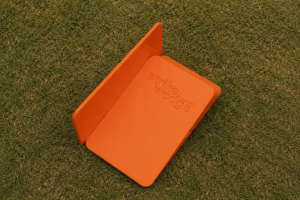
If you’ve chunked one too many chip shots this season, you’ve probably seen the Strike Wedge pop up in your Instagram feed. It’s the bright orange plastic block that promises to fix your fat and thin shots by literally getting in the way of your bad swing. Bold claim. So we dug through hundreds of verified buyer reviews, coach commentary, and forum threads to find out if it holds up — and where it falls short.
Short version: it works. It’s just not cheap, and it’s not magic.
What Is the Strike Wedge, and What Does It Claim to Do?
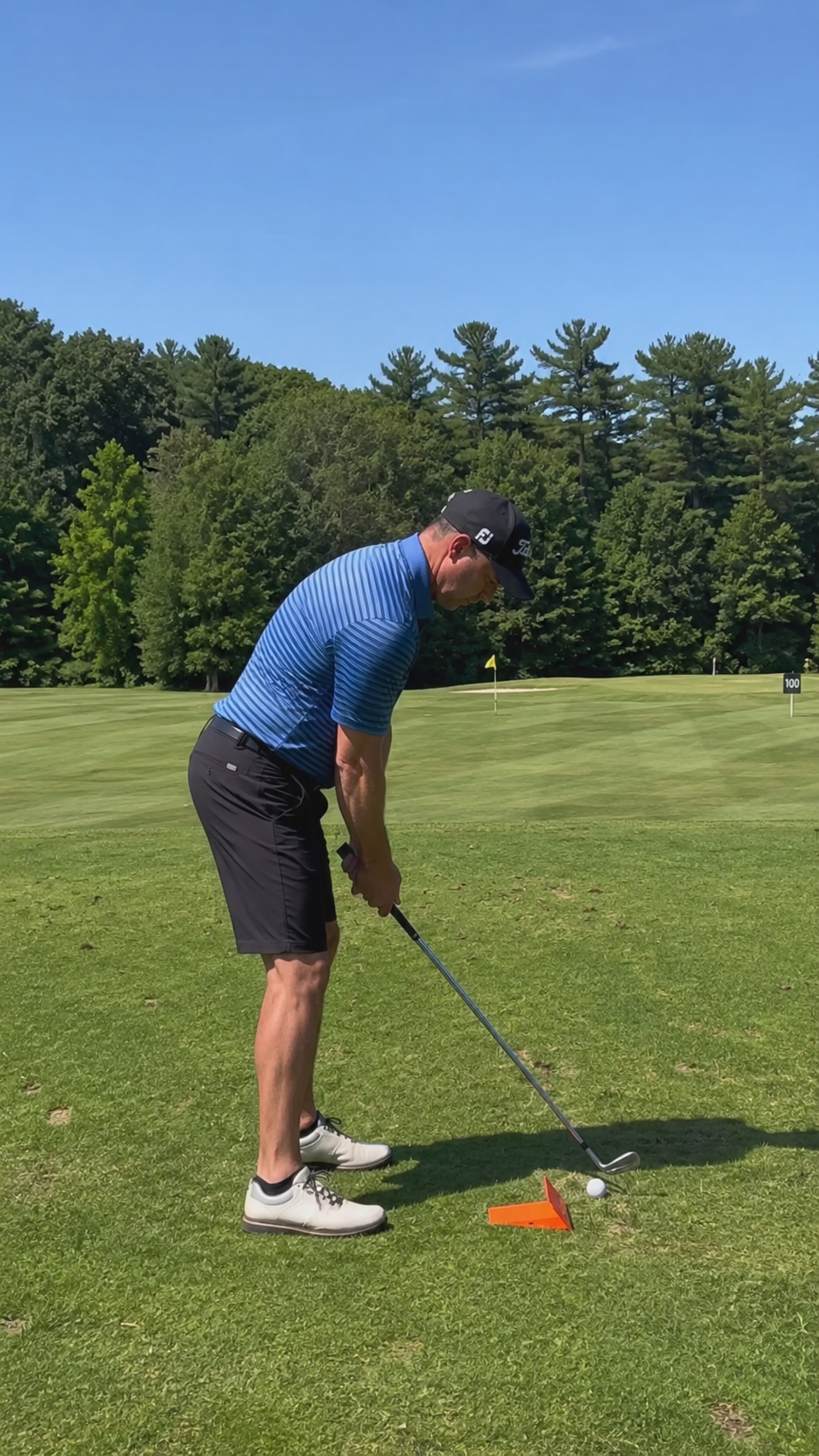
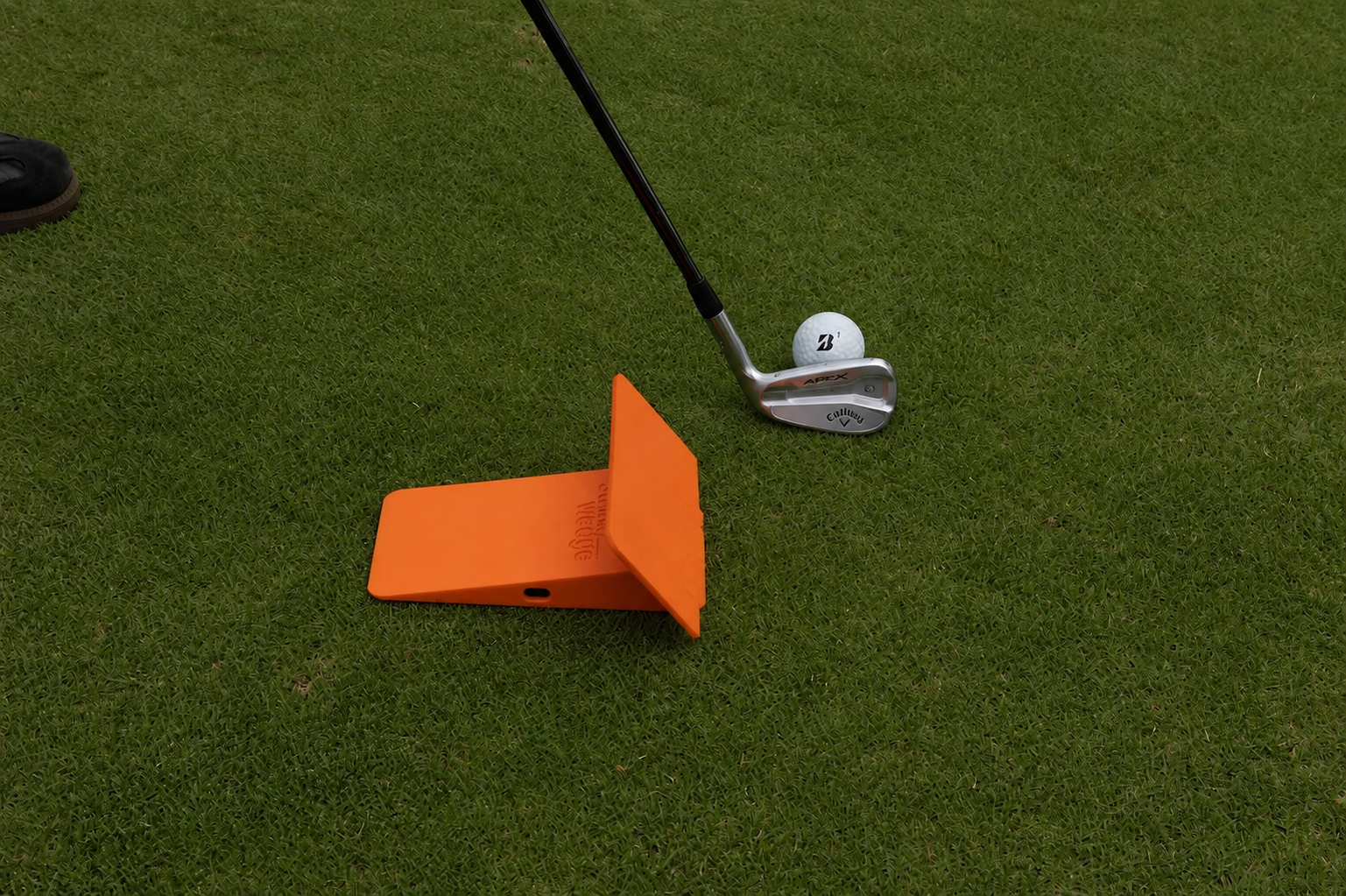
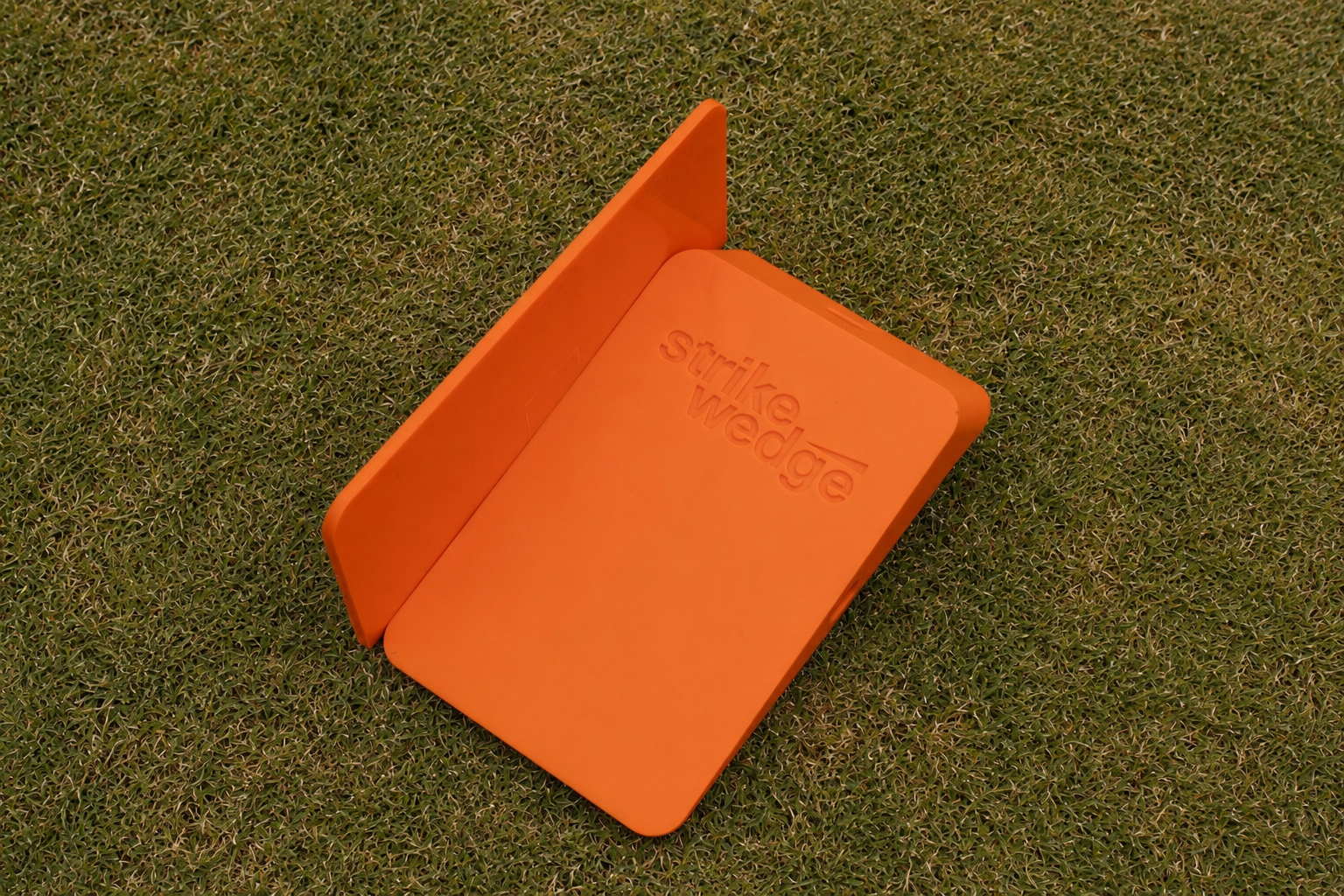
The Strike Wedge is a flexible thermoplastic polyurethane (TPU) training block that you set up near the ball to give you instant physical feedback on where your club actually enters the turf — not where you think it does. Attach the included wall or fin pieces and it also doubles as a swing path gate, helping you feel the difference between an over-the-top slice move and a too-far-inside hook move.
The core idea is simple and, frankly, kind of elegant: instead of asking you to think about five different swing positions, it gives your body one job — hit the ball without hitting the wedge. Golfers and coaches who use it describe this as “task-led” or “external focus” training, and it’s the same principle behind a lot of the best best golf training aids for fat and thin shots. You’re not managing a checklist mid-swing; you’re just trying not to clip a piece of plastic, and your body figures out the rest.
📊 The Numbers
According to verified buyer reviews on the manufacturer’s review hub, it’s earned a strong 4.7 out of 5 average across more than 200 reviews — a legitimately good number for a training aid in this price range.
One clarification worth making up front: some marketing language frames this as a “proper wrist use” trainer. Based on what actual users, coaches, and independent reviewers report, that’s not really what it does. This is fundamentally a low point, angle of attack, and swing path trainer — not a wrist-mechanics tool. If you’re specifically trying to fix casting, cupping, or an early release, a dedicated HackMotion Wrist Sensor or ProSENDR is going to give you more direct feedback than this will.
Where the Strike Wedge Is Designed to Help
- Chronic fat and thin contact with irons and wedges
- Inconsistent low point (bottoming out behind the ball)
- Heel and toe strikes, including shanks
- Over-the-top slices and too-inside hooks
- Driver launch angle and attack angle
- Chipping and short-game contact quality
Build Quality & Durability: Can It Take a Beating?
Golf training aids live a rough life — they get topped, thinned, and occasionally driven into the dirt at full speed. The Strike Wedge is built from flexible TPU, and across the community feedback we reviewed, that material choice holds up. Users and coaches — including some who use it constantly in lesson settings — describe it as robust and able to absorb direct club contact without deforming or damaging clubheads.
💡 An Accidental Durability Test
There’s an interesting data point buried in the forums: some golfers tried to save money by 3D-printing their own version using standard PLA plastic, and those knockoffs reportedly shattered on the first mishit. That’s actually a useful, if accidental, durability test — it suggests the manufacturer’s TPU construction isn’t just marketing fluff, it’s doing real structural work.
The one build-quality caveat that keeps surfacing: the block isn’t anchored to the ground, so hitting it during a drill causes it to shift, and you’ll need to reset your setup. Some golfers find this mildly annoying mid-session; others actually like it, since the “reset” forces a mental do-over instead of grooving a bad rep. There’s also a note that if you cram it loosely into a golf bag rather than storing it in the included case, the TPU can warp out of its flat shape over time — a minor but real storage requirement.
No pattern of outright material failure showed up in the reviews we found, and no complaints about damaged clubs either. For a tool that’s designed to get hit on purpose, that’s a solid track record.
Build Quality Score
Durable TPU construction holds up to repeated direct contact
Effectiveness: Does It Actually Fix Your Ball-Striking?
This is where the Strike Wedge earns its reputation. The single most consistent theme across coach reviews and verified buyer comments is that it exposes fat and thin contact immediately and helps golfers move their low point forward within just a handful of practice sessions.
One verified buyer — a 2-handicap golfer with 55 years of playing experience — described it as immediately revealing that “the bottom of my arc was off,” adding that after a couple dozen swings, his strike, low point, and short shots had improved noticeably. That’s not a beginner success story; that’s a low-single-digit player with decades of reps finding something new about their own impact position. That’s a meaningful signal.
Coaches who use it in lessons report similar results with students who chronically hit behind the ball — several describe it as one of the most useful impact-feedback tools they’ve incorporated, particularly for chipping and pitching, where clean, ball-first contact matters most. The wall attachment gets specific praise for shank and toe-strike correction, since it gives golfers a physical reference point for where the clubhead needs to travel through impact.
Where it’s less of a slam dunk: it offers no feedback at all on topped or skulled shots, since the clubhead simply passes over the block entirely. And if your issue is purely swing path with already-solid contact, some coaches note the benefit is smaller — you’re better served by a dedicated path aid at that point, as we found in our full Divot Board review. It’s also not built for very firm, slick range mats, where the block can slide when struck, forcing repeated resets that can disrupt your rhythm in a crowded practice session.
Bottom line on effectiveness: for the golfer this is built for — someone who chunks or thins shots and needs a forward low point — the feedback is fast, honest, and appears to transfer to real results. It is not a substitute for understanding your own swing fundamentals, and it works best paired with at least a basic grasp of ball-flight cause and effect. For more background, see our guide on how to fix a fat golf shot.
Effectiveness Score
Fast, honest feedback on fat, thin, and shank contact
Ease of Use: Plug-and-Play, With a Few Reset Quirks
No batteries, no app required to use it physically — just set it down and swing.
⚙️ Setup Friction Worth Knowing About
✓ What’s simple:
The block isn’t anchored to the ground, so hitting it during a drill causes it to shift, and you’ll need to reset your setup — some golfers find this mildly annoying mid-session; others actually like it, since the “reset” forces a mental do-over instead of grooving a bad rep.
✗ What slows you down:
It’s not built for very firm, slick range mats, where the block can slide when struck, forcing repeated resets that can disrupt your rhythm in a crowded practice session. It can also interfere with launch monitor cameras/radar depending on placement.
Ease of Use Score
Simple to set up; shifting and mat sensitivity cost it points
Value for Money: Is a $69 Plastic Block Worth It?
Here’s the part of the review where we’re not going to sugarcoat anything, because this is the single most common complaint in the entire community conversation around this product.
The Strike Wedge typically retails in the ballpark of $69, and pricing/currency details vary a bit by region — worth double-checking current pricing on the retailer’s site before you buy. Reddit threads specifically call it “ridiculously overpriced” for what is, at its core, a molded piece of plastic. And it’s a fair point: golfers in the same forums note that a folded towel, a rolled-up alignment stick, or a cheap rubber door stopper can replicate a good chunk of the low-point feedback for a few dollars.
What the Strike Wedge does that a towel doesn’t is consolidate multiple functions — path gates, strike-location walls, and low-point calibration — into one portable, durable package, along with access to instructional video content that walks you through setup for different clubs and faults. If you’re the kind of golfer who will actually use all of those functions regularly, that bundling has real value. If you’d only ever use it for the basic low-point drill, you’re paying a premium for features you won’t touch.
The honest verdict: this earns its price for golfers who practice often and will use its full range of drills — path work, shank correction, chipping, driver launch — not just golfers looking for a one-trick fat-shot fix.
Value Score
Earns its price for committed practitioners; steep vs. DIY alternatives
Versatility: More Than a One-Trick Fat-Shot Fix
One tool covers low point, swing path, shank correction, and driver launch angle. It works on grass, mats, indoor simulators, and home nets — genuinely a year-round simulator practice tool, not a single-drill gadget.
Versatility Score
Genuinely multi-functional across path, shank, chipping, and driver work
Fairways & Hazards
Fairways (Strengths)
- Delivers immediate, unambiguous feedback on fat, thin, heel, and toe contact
- One tool covers low point, swing path, shank correction, and driver launch angle
- No batteries, no app required to use it physically — just set it down and swing
- TPU build handles direct club contact without damage or deformation
- Works on grass, mats, indoor simulators, and home nets — genuinely a year-round tool
Hazards (Limitations)
- Price draws consistent “overpriced” criticism versus DIY alternatives like a towel or door stopper
- Not anchored to the ground, so it shifts when struck, requiring mid-session resets
- Can interfere with launch monitor cameras/radar depending on placement
- Marketed by some as a wrist trainer, but it’s really a low point/path/attack angle tool
- Independent, non-affiliate reviews (Amazon, GolfWRX, broad Reddit) are still thin
Who Should (and Shouldn’t) Buy the Strike Wedge
Best For:
Golfers roughly in the 12–25 handicap range who chronically hit behind or thin the ball, struggle with an inconsistent low point, or want to correct a slice/hook path using external feedback instead of internal swing thoughts. It’s especially strong for anyone practicing at home in a net or simulator over the winter, or for coaches who want a self-correcting tool for students between lessons. For a broader shortlist, see our roundup of the best training aids for mid-handicap golfers.
Think Twice If:
- You’re a low-single-digit player with already-consistent ball striking
- You only practice a few times a year
- Your primary goal is fixing wrist mechanics specifically (casting, cupping, chicken-wing release)
- You exclusively practice on very firm mats or crowded public ranges where retrieving a displaced block becomes a hassle
Final Scoring
| Category | Score | Max |
|---|---|---|
| Effectiveness | 24 | 30 |
| Build Quality & Durability | 15 | 20 |
| Ease of Use | 13 | 20 |
| Value for Money | 14 | 25 |
| Versatility | 5 | 5 |
| TOTAL | 71 | 100 |
A 71 lands this squarely in “solid, honest mid-tier” territory — not a gimmick, not a miracle. It does what it says for the right buyer, and the price and mild setup friction are what keep it from scoring higher.
The Bottom Line
The Strike Wedge does what it claims: it gives fast, honest, physical feedback that helps golfers who fat or thin the ball find a more consistent low point and better contact — and the versatility across path, shank, and driver work makes it more than a one-trick gadget. The catch is the price. At around $69, you’re paying a real premium over DIY alternatives like a towel or door stopper, and you should go in knowing that a chunk of the online buzz comes from affiliate-linked reviews rather than fully independent forums. If you’re a committed practicer dealing with fat or thin contact, it earns its keep. If you’re a casual range visitor hoping for a quick fix, save your money and grab a towel instead.
Want to see how it stacks up against similar tools? Check out our page comparing all golf impact and strike trainers.
Frequently Asked Questions
What is the Strike Wedge training aid and how does it work?
Does the Strike Wedge really fix fat and thin shots?
Is the Strike Wedge good for beginners, or only better players?
Can you use the Strike Wedge with a driver?
Does the Strike Wedge help with shanks?
Is the Strike Wedge worth the price compared to DIY alternatives like a towel or door stopper?
Does the Strike Wedge work on driving range mats?
Can the Strike Wedge interfere with a launch monitor?
Is the Strike Wedge a wrist trainer?
How long does it take to see results with the Strike Wedge?
⛳ The 19th Hole: Final Verdict
The Strike Wedge is a genuinely effective, no-batteries impact trainer that will expose and correct fat shots, thin shots, shanks, and swing path faults fast — but you're paying a premium for a piece of molded plastic, and a lot of the buzz around it comes from affiliate marketing rather than organic word-of-mouth.
Birdie Score: 69/100