The Birdie Cube Review (2026): Is This $79.99–$129 Swing Plane Block Worth It?
Birdie Score
Price
$79.99–$129.00 ($99.99 Retail)
One-Putt Summary
The Birdie Cube (76/100) replicates the Shotcraft B29 Blue Brick's heavy metal-core shallowing block layout for $69–$89 less and adds removable 0°–90° plastic rotary swivels, but fragile 6-segment bare fiberglass rods (requiring a DIY pool noodle), an inability to split in half for dual-station drills, and a contradictory 'unopened items' direct return policy keep it 18 points behind category leader the pathpal (94/100).
Fairways (Pros)
- ✓ Heavy 4.05-lb white polymer and exposed black steel-core base stays planted on driving range mats and indoor simulator turf without turf stakes
- ✓ Co-developed with 2023 Midwest PGA Teacher of the Year Kevin Ward and backed by 37 short drill clips via the top-plate QR code
- ✓ Fixed shallowing ports (DR 50°, 7i 60°, SW 65°, Inside Swing 20°, Wedge 60°) plus official left-handed wedge setups deliver immediate constraints-led path feedback
- ✓ Two removable black plastic Self-Adjust Angle rotary swivels (0°–90°) and a cross-connector clip allow custom plane angles beyond the 5 fixed ports
- ✓ At $79.99 direct promo ($99.99 at PGA TOUR Superstore, Nordstrom, and Walmart), it undercuts the nearly identical Shotcraft B29 Blue Brick ($169.00) by $69 to $89
Hazards (Cons)
- ✗ Bundled 6-segment (5-ferrule) bare black fiberglass rods droop at shallow angles and carry zero shaft foam—Birdie Cube's own tutorial page warns users to buy a DIY pool noodle to avoid club damage
- ✗ Single monolithic block cannot split in half for dual-station drills ('Double Birdie Cube Drill — Two Birdie Cubes Required' costs $159.98–$199.98 and weighs 8.10 lbs vs one split pathpal)
- ✗ Detachable plastic Self-Adjust Angle swivel turrets can twist in their sockets under vibration or crack on an errant toe strike
- ✗ Contradictory birdiecube.com return policy promises a '30-day trial' on the product page while the return tab restricts refunds to 'new, unopened items'
- ✗ Zero dedicated putting rail or stroke-length hash marks, and carrying a 4.05-lb block plus 5 loose plastic/foam accessories crowds a stand bag
Best For
Driving range mat grinders and indoor simulator golfers who want a heavy, pre-labeled shallowing block like the $169 B29 Blue Brick for $79.99–$99.99, don't mind sliding a DIY foam pool noodle over the bare 6-segment rods, and don't need a split two-piece station or dedicated putting rail.
The Birdie Cube Review (2026): Is This $79.99–$129 Swing Plane Block Worth It?
A forensic breakdown of the 4.05-lb metal-core alignment stick station co-developed with Kevin Ward, PGA: slot-by-slot B29 Blue Brick clone anatomy, removable plastic rotary swivels, 6-segment bare rod risks, and why it lands at 76/100.
🏌️ One-Putt Summary
The Birdie Cube ($79.99 direct promo; $99.99 at PGA TOUR Superstore, Nordstrom, and Walmart; $129.00 MSRP) takes the heavy metal-core shallowing block layout of the $169 Shotcraft B29 Blue Brick, adds two removable plastic Self-Adjust Angle rotary swivels (0°–90°), supports left-handed wedge setups, and trims $69 to $89 off the price. It delivers legitimate swing-plane barrier feedback on synthetic range mats without turf stakes. The catch: its 6-segment (5-ferrule) bare fiberglass rods droop and require a DIY foam pool noodle to avoid scratching your driver crown, the monolithic 4.05-lb block cannot split in half for dual-station drills (“Two Birdie Cubes Required”), and a contradictory “new, unopened items” return clause on birdiecube.com hold it to 76/100—five points behind the B29 Blue Brick (81/100) and 18 points behind category winner the pathpal (94/100).
At a Glance: The Birdie Cube Scores
| Effectiveness | 21 | /30 |
| Value for Money | 19 | /25 |
| Build Quality & Durability | 15 | /20 |
| Ease of Use | 17 | /20 |
| Versatility | 4 | /5 |
| TOTAL | 76 | /100 |
Verdict: Solid Budget Clone, Flawed Hardware Execution (76/100)
Walk down the line at any commercial driving range with synthetic hitting mats and you will see the same scene in every third bay. A golfer pulls two fiberglass alignment sticks from their bag, realizes there is no dirt to stake them into, tosses them flat at their toes where they barely help, and spends 45 minutes slicing 7-irons into the right net. Rubber range mats turn standard alignment sticks into floor trim unless you have a weighted base that holds them at an actual swing-plane angle.
That problem created the modern alignment-stick-holder category—led in our testing by the pathpal (94/100) and Clay Ballard’s Shotcraft B29 Blue Brick (81/100). Now a newer contender is showing up across Instagram feeds and big-box aisles: The Birdie Cube ($79.99 direct promo; $99.99 retail at PGA TOUR Superstore, Nordstrom, and Walmart; $129.00 list MSRP).
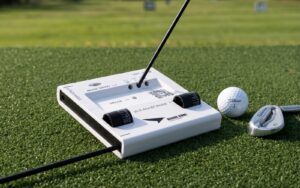
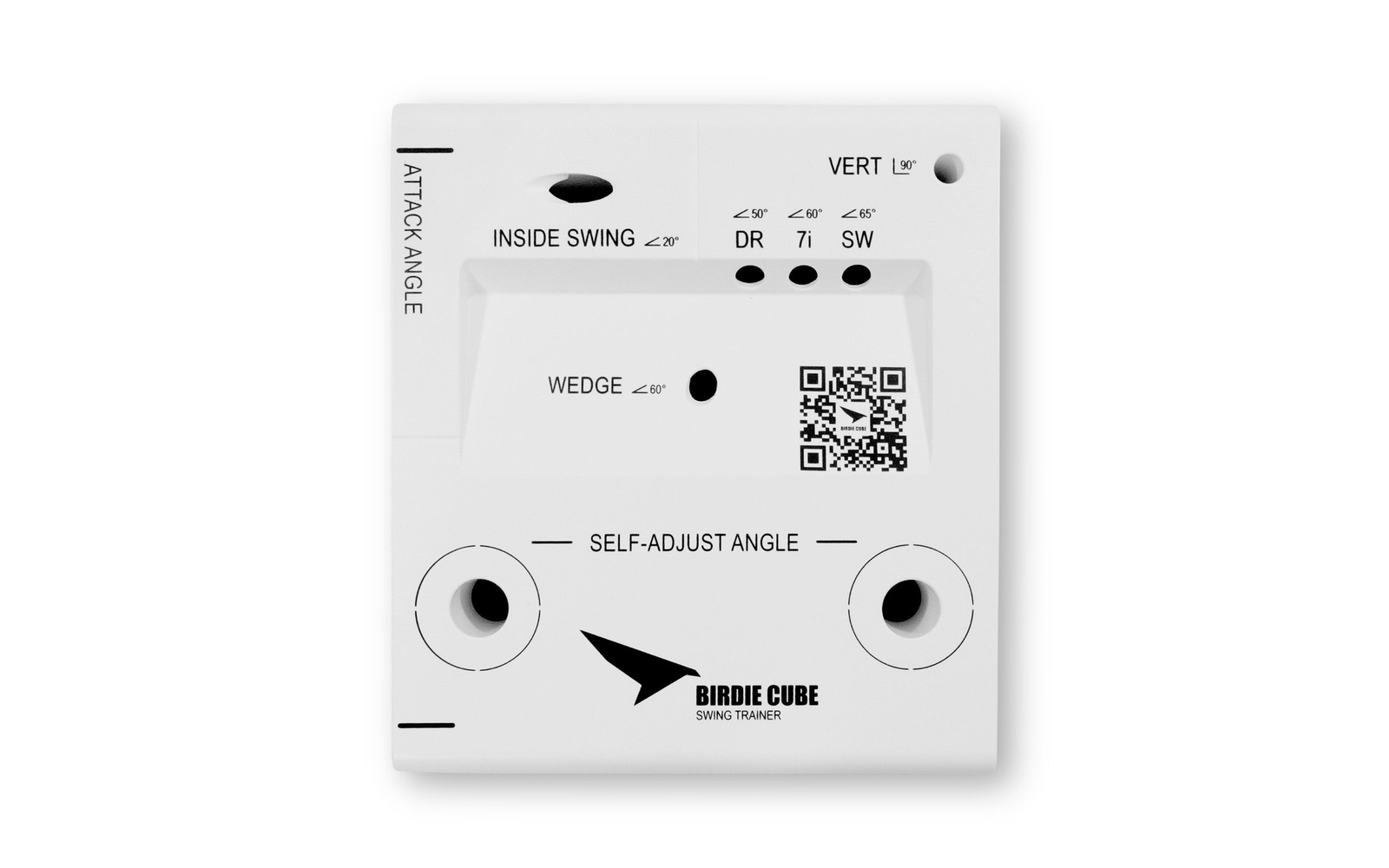
Set the Birdie Cube’s white top plate next to the $169 B29 Blue Brick and the layout is a near-slot-for-slot clone—right down to the upper-right shallowing trio, upper-left “Inside Swing” trough, center recessed wedge hole, middle-right QR code, and metal ballast core. Birdie Cube swapped the lower two fixed slots for removable black plastic rotary swivel turrets, bundled two 6-piece collapsible rods, and cut $69 to $89 off the Blue Brick’s price. Here is our honest breakdown of where that discount pays off—and where the hardware shortcuts bite back.
What Is the Birdie Cube, and What Does It Claim to Do?
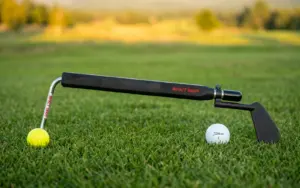
The Birdie Cube (also sold at retail as the Birdie Cube Golf Swing Trainer or Birdie Cube 12-in-1 Trainer by Birdie Golf) is a weighted, freestanding alignment stick station built for synthetic range mats, grass tees, and indoor simulator turf. By anchoring collapsible fiberglass rods at fixed or adjustable angles around your ball and body, it creates physical barriers that train an inside-out swing path, shallower downswing transition, centered hip rotation, and consistent attack angle.
Behind the product is Birdie Cube LLC, which filed the federal USPTO word mark application for BIRDIE CUBE (Serial No. 99873404) on June 9, 2026; there is no public granted utility patent on file. What gives the Birdie Cube real instructional legitimacy is its co-developer and on-camera coach: Kevin Ward, PGA—the 2023 Midwest Section PGA Teacher & Coach of the Year, a Titleist Performance Institute (TPI) certified instructor, a former University of Kansas golfer (winner of both the 2004 Kansas and Missouri Amateur Championships), and founder of The Golf Stable indoor training centers in Prairie Village, Kansas and Loch Lloyd Country Club in Missouri.
One quick name-collision watchout: do not confuse The Birdie Cube swing trainer with TrueBirdie’s silicone “Birdie Cube” simulator bungee-tee anchor or the Sun Mountain Kube travel bag.
📋 Hardware Specifications & Official Pricing
Forensic Clone Alert — The B29 Blue Brick Blueprint: Anyone who has tested Clay Ballard’s Shotcraft B29 Blue Brick ($169.00, 81/100) will recognize the Birdie Cube’s top plate immediately. Birdie Cube replicated the Blue Brick’s upper-right three-hole shallowing bank, upper-left oval Inside Swing slot, dead-center recessed wedge hole, middle-right QR code placement, side ground-level bores, and metal-core sandwich weight. Neither block can split in half for two-station drills—a foundational limitation that keeps both bricks behind our 94/100 category winner, the pathpal ($110 solo / $130 Pro Pair), which separates via keyed interlocking dovetails into two independent 9-inch stations.
Forensic Top-Plate Anatomy: The Birdie Cube vs. Shotcraft B29 Blue Brick
| Top-Plate / Side Zone | Shotcraft B29 Blue Brick ($169.00 · 81/100) | The Birdie Cube ($79.99–$129.00 · 76/100) | Engineering Verdict |
|---|---|---|---|
| Upper-Right Shallowing Bank | 3 angled ports labeled SHALLOWING: DR · 6i · SW along the upper-right ledge | 3 angled ports in the exact same upper-right ledge labeled ∠50° DR · ∠60° 7i · ∠65° SW | Near-1:1 layout copy; swaps 6i for 7i and prints degree numbers. |
| Upper-Left Path Slot | Oval angled bore labeled INSIDE SWING | Oval angled bore in the exact same upper-left spot labeled INSIDE SWING ∠20° | Verbatim position and label copy with a 20° callout added. |
| Center Recessed Wedge Port | Center hole labeled WEDGE IMPACT POSITION (angled exclusively for right-handed golfers) | Center hole in a recessed well labeled WEDGE ∠60° (plus official left-handed wedge setting via the rotary swivels) | Direct structural adaptation—and Birdie Cube explicitly supports left-handed wedge setups via its tutorials and swivels. |
| Middle-Right QR Code | Printed QR code below the shallowing trio (SCAN FOR DRILLS, 27 Clay Ballard clips) | Printed QR code in the exact same quadrant linking to birdiecube.com/pages/tutorials (37 Kevin Ward clips) | 1:1 layout copy linking to the instructor drill library. |
| Vertical 90° Post Port | Right-edge vertical hole (WEDGE LAUNCH ANGLE / 90° post) | Upper-right corner circular hole labeled VERT ∟90° | Identical functional 90° post port moved to the upper-right corner. |
| Side Ground-Level Holes | Edge-drilled horizontal ground alignment ports + SQUARE DIVOTS / ANGLE OF ATTACK | Left vertical wall carries ATTACK ANGLE sight-lines + 2 horizontal ground holes (“Train Track” / “Double Barrel”) | Same parallel ground-rail concept for foot line, ball position, and path tracks. |
| Lower Left & Right Corners | 2 fixed vertical-plane slots molded into the solid polymer housing | Replaced with 2 circular sockets (— SELF-ADJUST ANGLE —) accepting removable black plastic rotary swivels (0°–90°) | Primary mechanical difference: adds custom angles at the cost of detachable plastic parts that can twist or crack. |
| Base & Weight Architecture | Medium slate-blue polymer upper over dark coated metal bottom plate (8.5″ × 5.5″ × 1.5″, ~3.0 lbs) | Two-piece white ABS shell sandwiching an exposed black metal ballast core (~8.27″ × 7.5″ × 1.35″ slab, 4.05 lbs) | Same metal-sandwich concept, but Birdie Cube adds 1.05 lbs of extra bag weight. |
The 6 Core Birdie Cube Drill Setups & Port Angles
1. Club-Matched Shallowing (DR 50° / 7i 60° / SW 65°)
Slide a rod into the upper-right bank matching your club—50° for driver, 60° for mid-irons, or 65° for wedges. Routing your clubhead underneath the suspended stick cures an over-the-top cast immediately.
2. Inside Swing 20° Low-Gate
The upper-left INSIDE SWING ∠20° oval bore angles a rod low behind the ball along your takeaway and delivery corridor, flagging an inside-roll takeaway or outside cast.
3. Wedge 60° Shaft-Lean Station (+ Left-Handed Setup)
The dead-center WEDGE ∠60° well trains keeping your hands ahead of the clubhead on chips and pitches, and Birdie Cube’s tutorial library includes a dedicated “Lefties: Left handed wedge setting” configuration so left-handed golfers aren’t left out.
4. Vert 90° Hip-Sway & Head-Wall Post
Inserting a stick straight up into the upper-right VERT ∟90° port (or pairing it with the black plastic cross-connector clip) sets a vertical barrier beside your hip or head to stop lateral sway.
5. Self-Adjust Angle Turrets (0°–90° Dial)
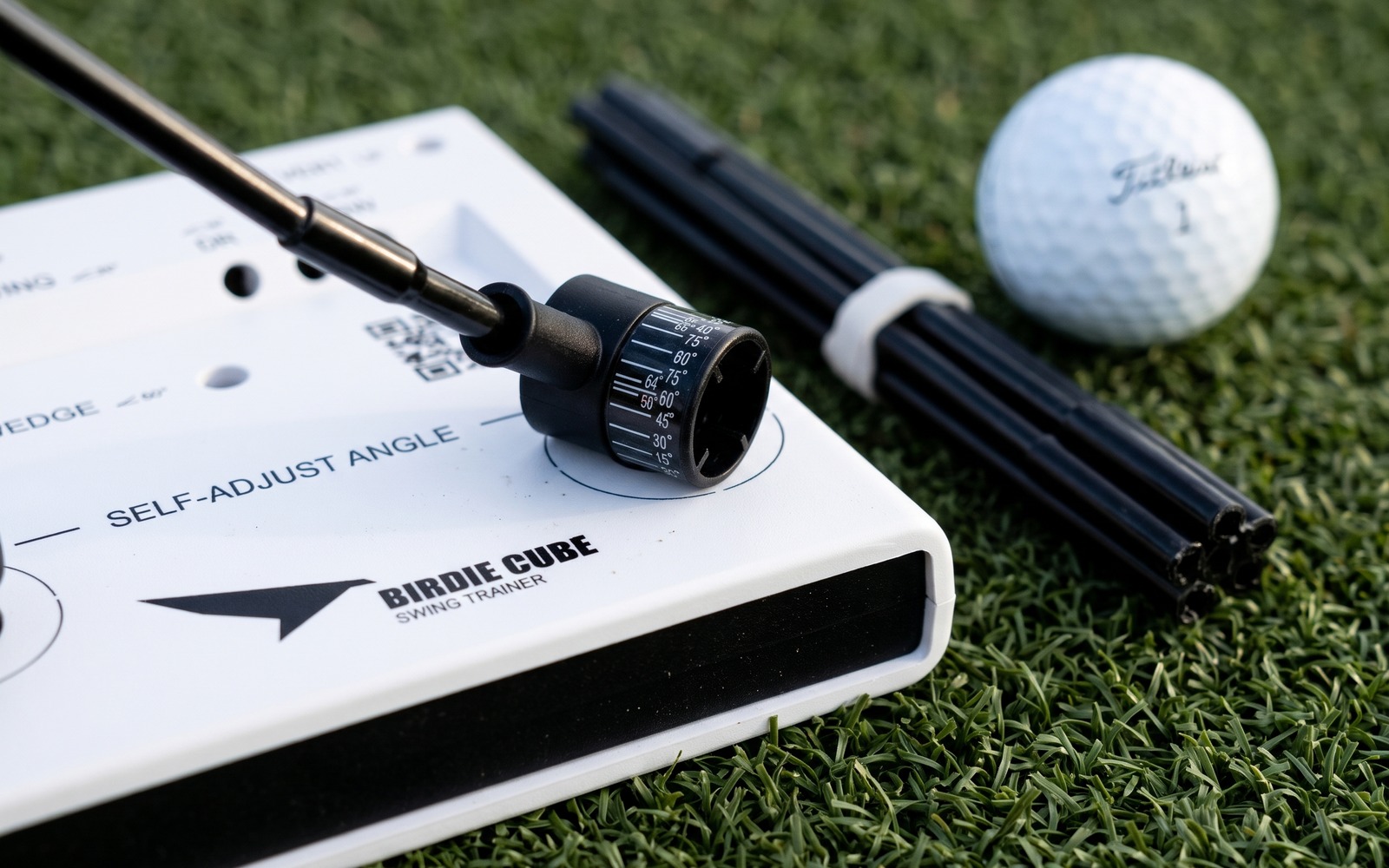
Pop the two black plastic rotary turrets into the lower SELF-ADJUST ANGLE sockets to dial in nine printed degree marks (0°, 15°, 30°, 45°, 56°, 60°, 64°, 75°, and 90°).
6. Left-Wall “Train Track” Attack Angle Rails
Two horizontal ground holes on the left side wall sit beneath printed ATTACK ANGLE sight-lines, holding parallel rods flat along the turf for railroad-track clubhead path and ball-position checks.
Build Quality & Durability: Heavy 4.05-Lb Metal Core vs. Fragile 6-Segment Rods & Plastic Swivels
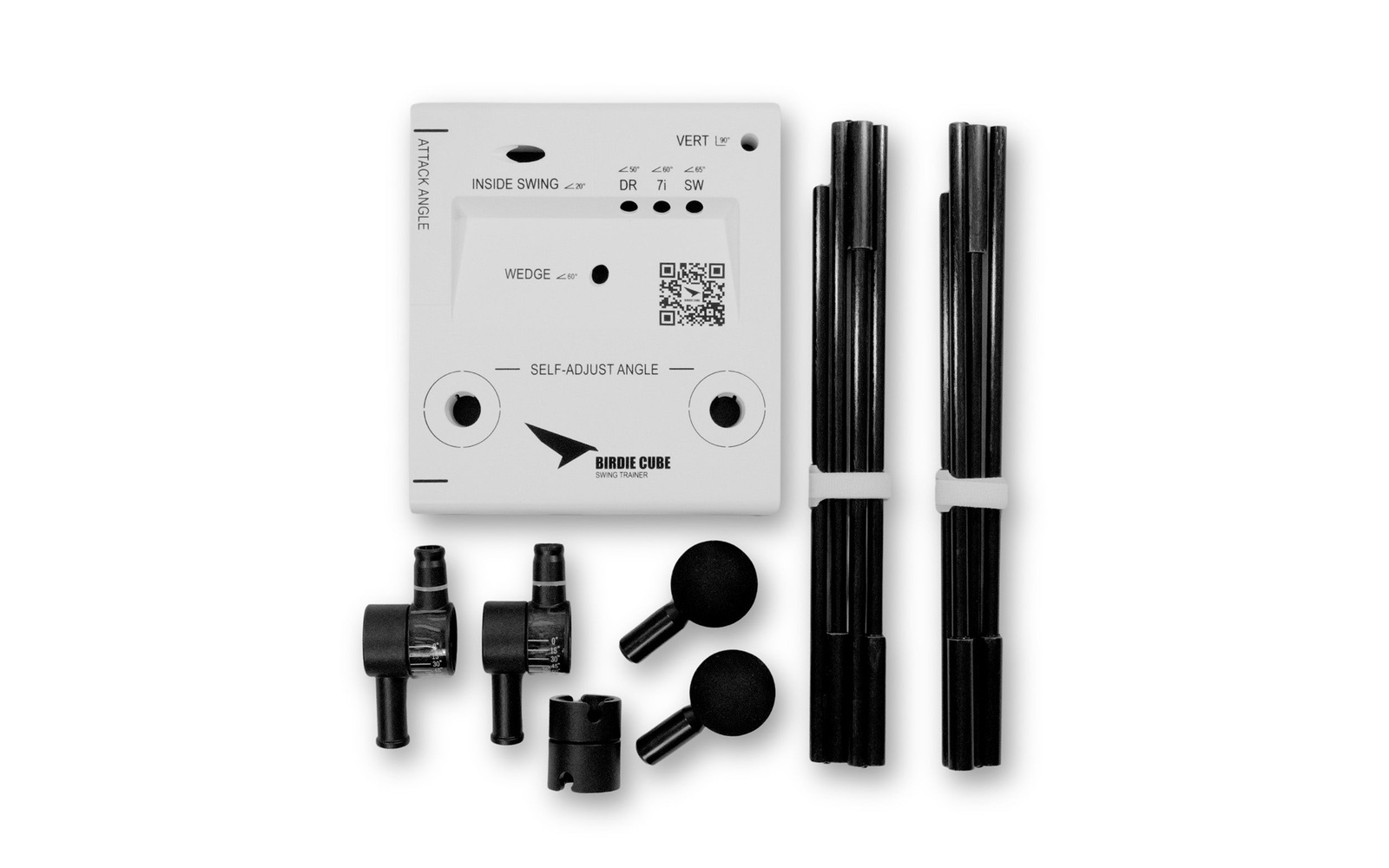
Pull the Birdie Cube base out of its brown kraft box (UPC 0199874645698) and your first impression is pure mass. By sandwiching a thick, exposed black steel ballast plate between a two-piece white injection-molded ABS polymer shell, Birdie Cube pushed total weight to 4.05 lbs (1.84 kg)—making it 35% heavier than the Shotcraft B29 Blue Brick (~3.0 lbs) and 62% heavier than the pathpal (~2.5 lbs total, or 1.25 lbs per split 9-inch half).
On a synthetic range mat or indoor garage simulator floor, that 4.05-lb footprint (~8.27″ × 7.5″ × 1.35″ flat slab, rising to 3.15″ tall with rotary swivels installed) stays planted without budging. The problem isn’t the weighted block—it’s the flimsy accessories plugged into it.
⚠️ The 6-Segment Bare Fiberglass Rod & “Pool Noodle” Warning: Why Durability Gets 15/20
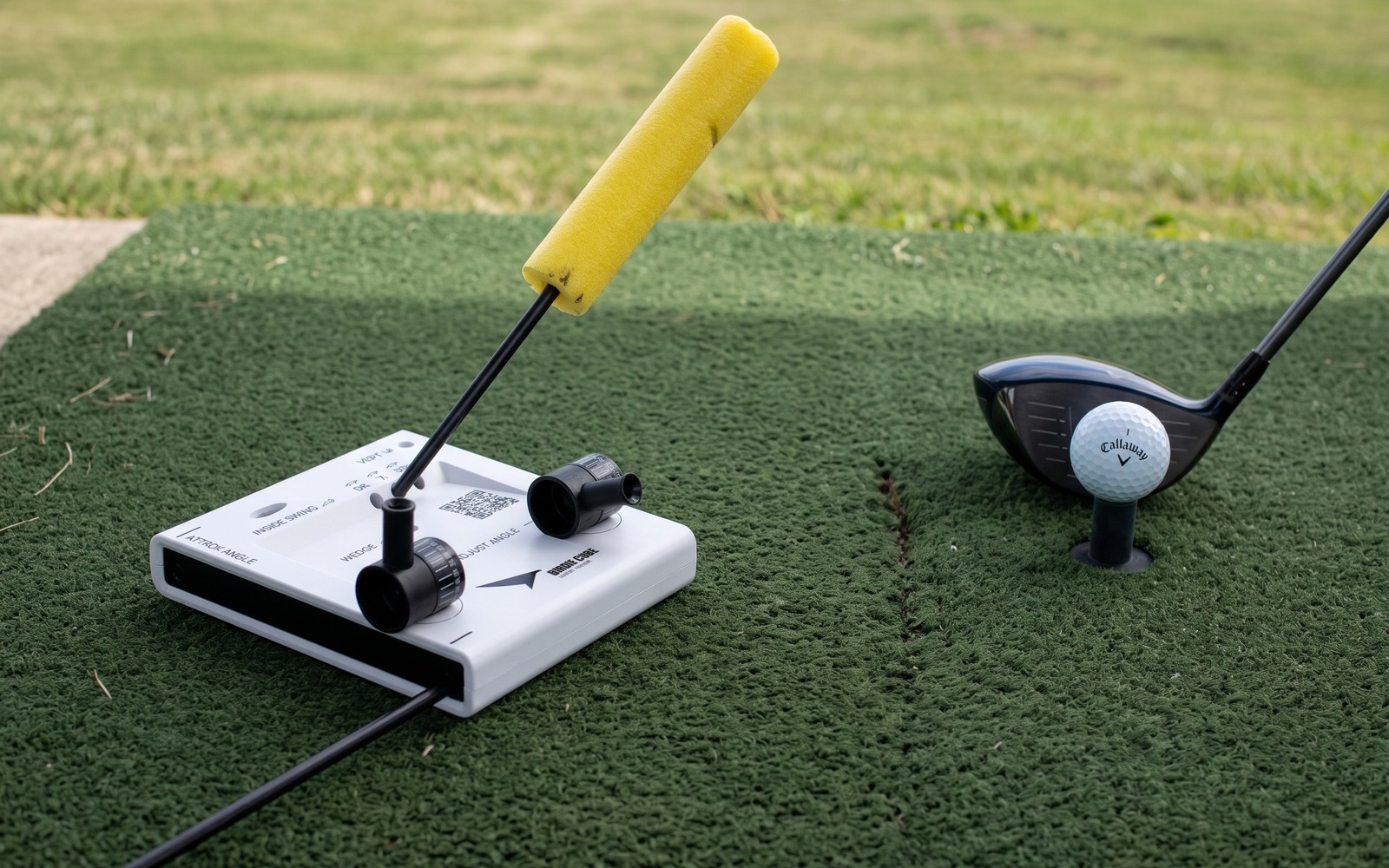
To cram two alignment sticks inside an 8.27-inch box, Birdie Cube chopped each black fiberglass rod into six short segments joined by five thin metal coupling ferrules. Every extra ferrule adds joint play, causing noticeable cantilever droop at 20° or 50°. Worse, the shafts are bare black fiberglass with zero protective foam sleeve—only two tiny push-on black foam tip balls. On birdiecube.com/pages/tutorials, the company posts an explicit warning: “IMPORTANT: Those who are new to using Birdie Cube should start by using a foam tube (aka pool noodle) on the rods. This will protect the rods from being struck during the learning phase. Always avoid striking the alignment sticks or base unit, as this may damage clubs or cause injury.”
Three Hardware Vulnerabilities That Hold Build Quality to 15/20
- 5 Ferrules Per Stick + Bare Fiberglass Over Your $600 Driver Crown: Compare Birdie Cube’s 6-segment bare rods against The Arrow ($35 standalone pair, or bundled inside the $130 pathpal Pro Pair). The Arrow uses three rigid 16-inch fiberglass sections (two ferrules instead of five) and wraps the upper 16-inch strike zone in a thick, matte-black 360° protective foam sleeve. With the Birdie Cube, 95% of the shaft is exposed fiberglass and metal ferrules—meaning one over-the-top driver swing without a DIY pool noodle can gouge a carbon driver crown or snap a joint.
- Detachable Black Plastic Swivel Turrets That Twist or Crack on Contact: The two removable black plastic SELF-ADJUST ANGLE rotary swivels (0°, 15°, 30°, 45°, 56°, 60°, 64°, 75°, and 90°) press into shallow sockets and rely on friction detents. Mat vibration or a grazing shaft tap can twist the turret off line mid-session, and an errant iron toe strike risks cracking the protruding plastic collar—unlike the solid molded ports on the pathpal or B29 Blue Brick.
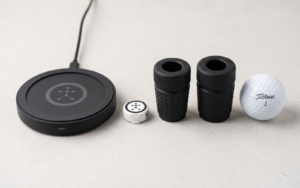
- The 17-Piece Loose-Parts Rattling Problem: Packing up means stowing 1 heavy 4.05-lb block, 2 loose plastic swivels, 2 tiny push-on foam tip balls, 1 small cross-connector clip, and 12 shock-corded rod segments in your bag pocket. Lose one plastic swivel in twilight range grass and half your custom-angle system is gone.
💡 Pro Tip: Never Swing a Driver Under the Bare Black Rods Without Full-Shaft Padding
Before setting up the ∠50° DR or INSIDE SWING ∠20° drill with a driver or wood, slip a slit foam pool noodle over the rod or swap in The Arrow 360° padded collapsible sticks ($35). Never trust the tiny black foam tip ball alone—clubhead contact almost always happens 6 to 14 inches down the shaft over an exposed metal ferrule.
Build Quality & Durability Score
Rock-solid 4.05-lb metal-core slab, docked 5 points for droopy 5-ferrule bare fiberglass rods (requiring a DIY pool noodle) and vulnerable plastic swivel turrets
Effectiveness: Does the Birdie Cube Actually Fix an Over-the-Top Slice?
Once you slide a foam noodle over the rod and set the 4.05-lb block on a range mat, the Birdie Cube earns a solid 21 out of 30 for Effectiveness—matching the B29 Blue Brick (21/30) because constraints-led motor learning works. Giving your brain a physical stick along the ∠60° 7i port or INSIDE SWING ∠20° bore forces your body to shallow the club and route from the inside without overthinking mechanics.
Where Kevin Ward’s Design Beats the B29 Blue Brick: On the Shotcraft B29 Blue Brick, the center WEDGE IMPACT POSITION bore is incompatible with left-handed golfers. By contrast, Birdie Cube’s official product listing notes “(Works for lefties too)” and birdiecube.com/pages/tutorials includes a dedicated “Lefties: Left handed wedge setting” clip alongside 37 concise drills on the official @BirdieCube YouTube channel.
The Monolithic Block Trap: “Double Birdie Cube Drill — Two Birdie Cubes Required”
Why does the Birdie Cube stop at 21/30 while the pathpal scores 28/30? Because a single ~8.27-inch block cannot separate into two stations.
Many of the best full-swing and short-game drills require two independent bases spaced 18 to 36 inches apart—such as pairing an angled plane stick behind the ball with a vertical hip-sway post at your lead hip, building an entry-and-exit swing path gate, or setting a split putting gate. Scroll to the 12th video on Birdie Cube’s official tutorials page and you will see the limitation spelled out verbatim: “Double Birdie Cube Drill — Two Birdie Cubes Required.”
Buying two Birdie Cubes for dual-station drills costs $159.98 at the $79.99 direct promo price (or $199.98 at $99.99 retail) and puts 8.10 lbs of metal-core bricks in your bag. By contrast, a single pathpal ($110 solo / $130 Pro Pair with two padded Arrow sticks) splits down the middle via keyed interlocking dovetails into two independent 9″ × 4″ × 1.5″ stations (1.25 lbs each) right out of one box.
Only 5 Molded Fixed Angles Without the Plastic Swivels
Without the detachable plastic turrets, the Birdie Cube’s solid top plate molds only 5 discrete fixed angles—20°, 50°, 60°, 65°, and 90°—leaving a 30-degree gap between 20° and 50° with no solid molded ports for 30°, 35°, 40°, or 45°. Compare that to the pathpal, which molds 14 slip-proof fixed ports (20°–75° in 5° steps plus dual 90° posts) and 6 ground-level 0° tunnels directly into solid polymer.
🛠️ How to Set Up the “Inside Swing 20°” Drill Without Developing a Push-Hook
When using the upper-left INSIDE SWING ∠20° bore to fix a slice, place the ball 4 to 5 inches outside the projected tip of the angled stick—not directly underneath it. Putting the ball too close to the 20° rod forces an extreme +8° to +10° in-to-out path that trades your slice for a toe-hook.
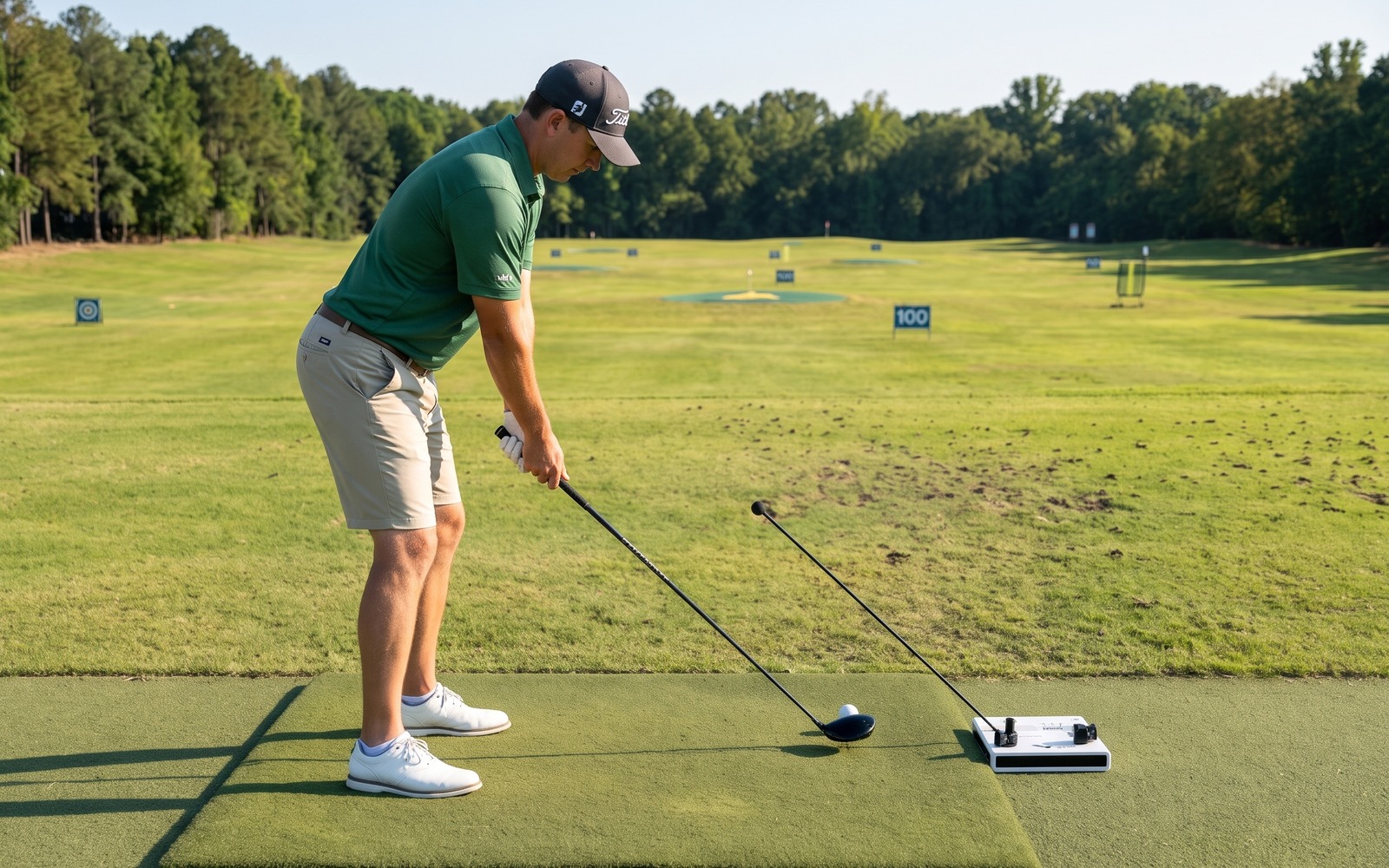
Effectiveness Score
Matches B29 Blue Brick (21/30) for mat shallowing and supports left-handed wedge setups, but cannot split in half for dual-station gates without buying a second 4.05-lb unit
Ease of Use: Drop-and-Hit Mat Convenience vs. Bag Bulk and Storefront Friction
In a range bay, the Birdie Cube is simple to deploy: set the 4.05-lb block on the mat, snap the shock-corded rod together, slide it into a labeled port (∠50° DR, ∠60° 7i, or ∠65° SW), and swing. Scanning the top-plate QR code opens birdiecube.com/pages/tutorials with 37 short clips (15–45 seconds each) filterable by All, Full Swing, Short Game, or Putting.
⚙️ Daily Setup & Portability Friction Worth Knowing About
✓ What’s simple:
Zero turf staking required on range mats or indoor simulator floors; printed degree callouts on both the top plate and rotary turrets; works for both right-handed and left-handed golfers (with dedicated lefty tutorial clips); instant QR access to 37 short video drills.
✗ What slows you down:
Assembling and breaking down two 6-segment rods (10 ferrule joints total) while tracking 2 loose plastic swivels, 2 tiny foam tip balls, and 1 cross-connector clip; carrying a 4.05-lb brick in a stand bag; and packing a separate DIY foam pool noodle to protect your driver.
Surface-by-Surface & Environment Compatibility Guide
| Practice Environment | Compatibility | Real-World Setup Notes |
|---|---|---|
| Commercial Driving Range Mats | ✅ Excellent | The 4.05-lb weighted metal-core slab sits flat and stable on synthetic range turf without sliding or tipping. |
| Indoor Home Simulator / Garage Turf | ✅ Excellent | Great for indoor mats where staking is impossible; always slip a foam pool noodle over the bare rods indoors. |
| Natural Grass Range Tees | ✅ Very Good | Works cleanly on flat grass tees, including the left-side ATTACK ANGLE parallel ground-rod “Train Track” setup. |
| Walking / Carry Stand Bags | ⚠️ Heavy & Rattly | At 4.05 lbs plus 5 loose plastic/foam parts and 12 rod sections, it adds noticeable dead weight to a carry bag. |
| Putting Green Practice | ⚠️ Basic Only | Left-wall ground holes hold two parallel floor sticks, but there is no 70° putting rail, no stroke hash marks, and no split gate. |
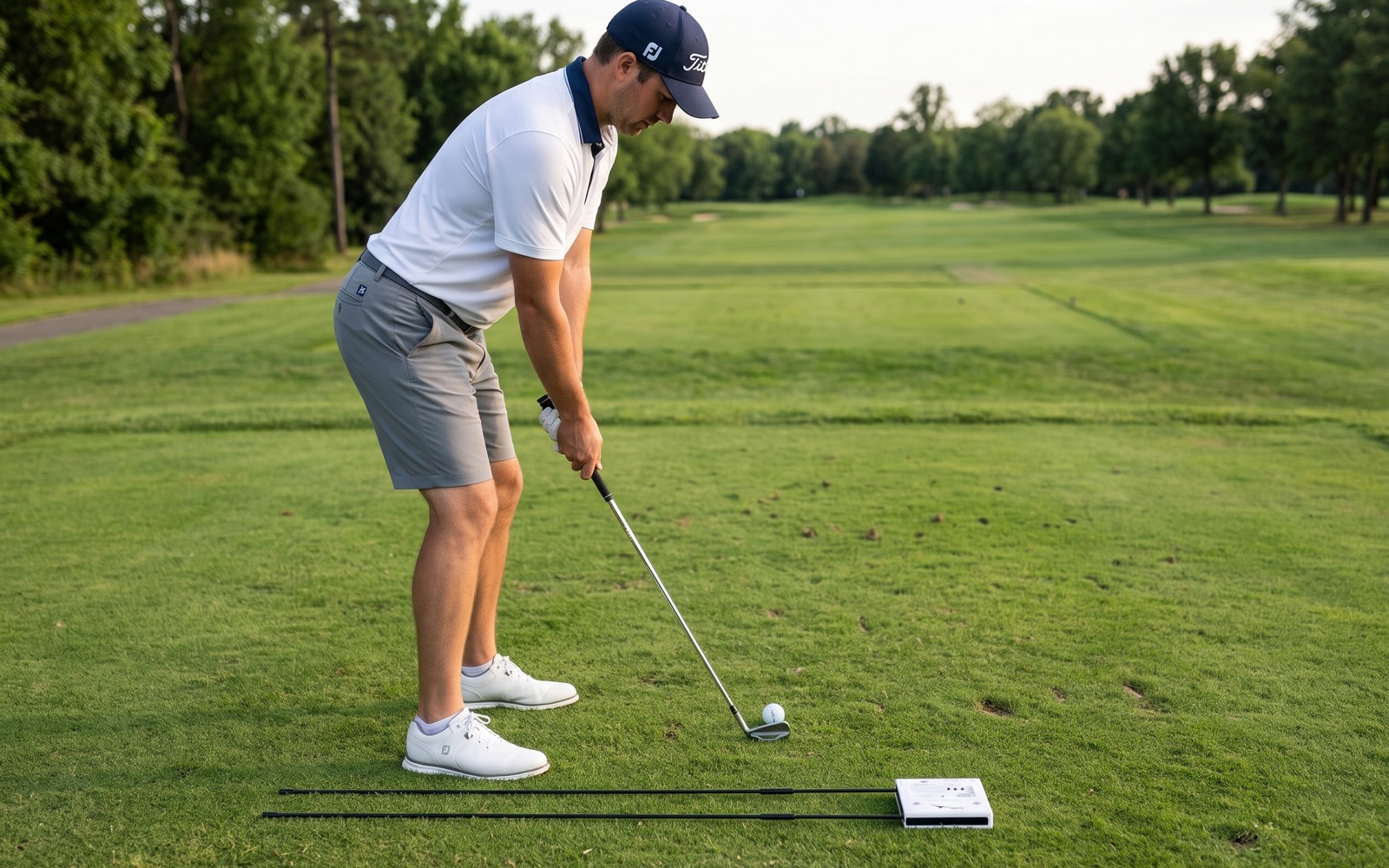
Ease of Use Score
Drop-and-hit mat stability, right/left-handed compatibility, and 37 quick QR clips, docked 3 points for 4.05-lb bag weight, 5-ferrule rod assembly, and loose plastic parts
Value for Money: 4-Channel Pricing ($69.99–$129.00) & The Contradictory Return Policy
Value is the Birdie Cube’s biggest advantage over the $169 Shotcraft B29 Blue Brick—and also where our live audit uncovered four different price tiers across official and retail channels plus a contradictory direct return policy:
- Official List MSRP ($129.00): Listed as the compare-at price on birdiecube.com.
- Direct Promo Price on birdiecube.com ($79.99 + Free Shipping): The top banner claims “Save $50! Only $79 + FREE Shipping!”, while the cart charges $79.99 ($49.01 off $129.00).
- Hidden 18Birdies Partner Page ($69.99 + Free Shipping): A live partner URL on the same store (birdiecube.com/products/the-birdie-cube-18birdies-collab) sells the identical kit for $69.99.
- Major Retail Channels ($99.99): Regular retail is $99.99 at PGA TOUR Superstore (SKU 2000000064447 / Style #BC1101), Nordstrom (Item #8028729), and Walmart (Item #1154563820).
🔍 Consumer Alert: Contradictory Return Policy & Storefront Rough Edges on birdiecube.com
On the main birdiecube.com product page, the description promises: “Try Birdie Cube, the best golf swing trainer, for 30 days. If you don’t see improvement in your contact and consistency, send it back for a full refund.” Directly underneath, the Shipping & Return accordion states: “You may return most new, unopened items within 30 days of delivery for a full refund” and notes refunds can take up to four weeks. You cannot “try” a golf training aid for 30 days without opening the box.
Our November 2026 audit also flagged D2C storefront rough edges: the homepage title tag reads “Birdie Cube Spring Trainer”, the product page renders a visible Shopify code error (Liquid error (snippets/scoder-sticky-add-to-cart line 163): Could not find asset snippets/icon-cart.liquid) and unedited demo widgets ("Example product title $19.99"), the Terms of Service leaves an unedited [LINK] token, and support lists only a free Gmail address (birdiecubebiz@gmail.com) with no phone or street address. Ordering from PGA TOUR Superstore or Nordstrom at $99.99 gives you clear retail return protection.
At $79.99 direct ($99.99 retail), the Birdie Cube undercuts the Shotcraft B29 Blue Brick ($169.00) by $69 to $89, earning 19 out of 25 for Value. Still, as shown in our 2026 Alignment Stick Holder & Swing Plane Guide, spending $10 to $30 more for the pathpal ($110 solo / $130 Pro Pair with two 360° padded Arrow sticks) gets you a split two-station base, 14 fixed ports, 3 putting tools, and real driver protection.
Head-to-Head Value Comparison: The Birdie Cube vs. Top Alignment Stick Holders & Swing Plane Stations
| Training Aid | Verified Price (Nov 2026) | Weight & Base Footprint | Angle & Station Architecture | Verdict vs. The Birdie Cube |
|---|---|---|---|---|
| the pathpal (Birdie Score: 94/100 🏆) |
$110 solo · $130 Pro Pair (w/ 2 padded Arrow sticks) · $185 Complete System (Free U.S. Shipping) | ~2.5 lbs total (1.25 lbs per 9″ half); 18″ × 4″ × 1.5″ assembled | Splits into 2 independent 9″ stations; 14 fixed ports (20°–90°) + 6 ground tunnels + 3 putting tools | 18 points higher: splits in half for dual-station drills, 14 slip-proof molded ports, 360° driver-safe Arrow foam, and 1.55 lbs lighter. |
| Shotcraft B29 Blue Brick (Birdie Score: 81/100) |
$169.00 retail (~$129 w/ promo funnel; Free U.S. Shipping; 60-day guarantee) | ~3.0 lbs; 8.5″ × 5.5″ × 1.5″ monolithic block | 11 fixed drill setups (DR/6i/SW shallowing, Inside Swing, righty-only Wedge Impact); 2 bare 44″ rods | The original blueprint Birdie Cube copied: 1.05 lbs lighter with a real 60-day guarantee, but $69–$89 pricier and incompatible with lefty wedge drills. |
| Tour Aim 3.0 (Birdie Score: 79/100) |
$79.95 Base · $124.95 w/ 3 Sticks · $149.95 Bundle | Lightweight curved polymer plate; fits inside golf bag | Aim & parallel alignment plate + 2 central swing-plane angles + putting gate | Lighter in the bag and cleaner for aim/putting lines, though less stable on uneven mats than a heavy metal-core block. |
| The Birdie Cube (Birdie Score: 76/100) |
$79.99 direct ($129 MSRP; $69.99 18Birdies link; $99.99 at PGATSS, Nordstrom & Walmart) | 4.05 lbs; ~8.27″ × 7.5″ × 1.35″ slab (3.15″ tall w/ swivels) | Monolithic block; 5 fixed angles (20°, 50°, 60°, 65°, 90°) + 2 ground holes + 2 plastic rotary swivels (0°–90°) | Cheaper way to get the Blue Brick layout + left-handed wedge support, held back by bare 6-segment rods, no split base, and D2C return fine print. |
| EyeLine Speed Trap 2.0 (Birdie Score: 76/100) |
$99.95 – $120.00 | Polycarbonate base plate (roughly the size of a large hardcover book) + soft foam rods | Soft foam rods frame club path & low point on turf or mats | Ties at 76/100: foam rods are 100% club-safe on contact, but it cannot hold full-length overhead swing-plane sticks. |
| Stryper SwingMate (Birdie Score: 76/100) |
~$115.00 – $134.00 | CNC-machined anodized aluminum base plate (0.93 kg) + 5 fiberglass rods (1.7 kg total kit) | 2 spring-loaded ratcheting rod-holder hinges with 10° markers | Ties at 76/100: CNC-machined anodized aluminum base and spring-loaded ratcheting hinges, though pricier (~$115–$134) than the Birdie Cube. |
| The Swing Plate (Birdie Score: 74/100) |
$115.00 – $140.00 | 1.76 lbs (standard) / 3.3 lbs (Dual Pro, 1.5 kg) cold-rolled steel base | Hand-adjustable arm from 0° to 90° (Dual Pro has two arms); wrench included | All-metal cold-rolled steel durability, but adjusting the arm takes longer between clubs and alignment sticks are sold separately. |
| Swing Plane Perfector (Birdie Score: 68/100) |
$269.00 | ~1.0 lb precision aluminum construction (fits in golf bag pocket) | Degree-marked adjustable angle selector; lifetime guarantee | Elite ~1-lb aluminum build and lifetime guarantee, but $269.00 is catastrophic value for a single-turret holder. |
Value for Money Score
Undercuts the $169 B29 Blue Brick by $69–$89 with rods included, but requires a DIY pool noodle, needs 2 units ($160–$200) for split drills, and has contradictory direct return terms
Versatility: Full-Swing & Wedge Workhorses, Zero Dedicated Putting Architecture
The Birdie Cube earns 4 out of 5 on Versatility. For full-swing and wedge practice on range mats or grass tees, it covers driver shallowing (∠50° DR), mid-iron plane control (∠60° 7i), wedge transitions (∠65° SW), low takeaway gates (INSIDE SWING ∠20°), shaft-lean rehearsal (WEDGE ∠60°), vertical hip/head walls (VERT ∟90° + cross-connector), custom rotary angles (0°–90°), and ground-level “Train Track” rails (left-wall ATTACK ANGLE holes).
It loses its fifth point for two structural gaps: first, zero dedicated putting architecture—despite a “Putting” filter on birdiecube.com/pages/tutorials, there is no ~70° putter-shaft plane rail, no stroke-length hash marks, and no split start-line gate like the pathpal. Second, it cannot split in half for two-station full-swing setups. And if your primary miss is fat turf contact rather than swing plane, pair your path work with a dedicated strike mat from our 2026 Ball-Striking & Low-Point Guide, such as The Divot Board or The Strike Wedge.
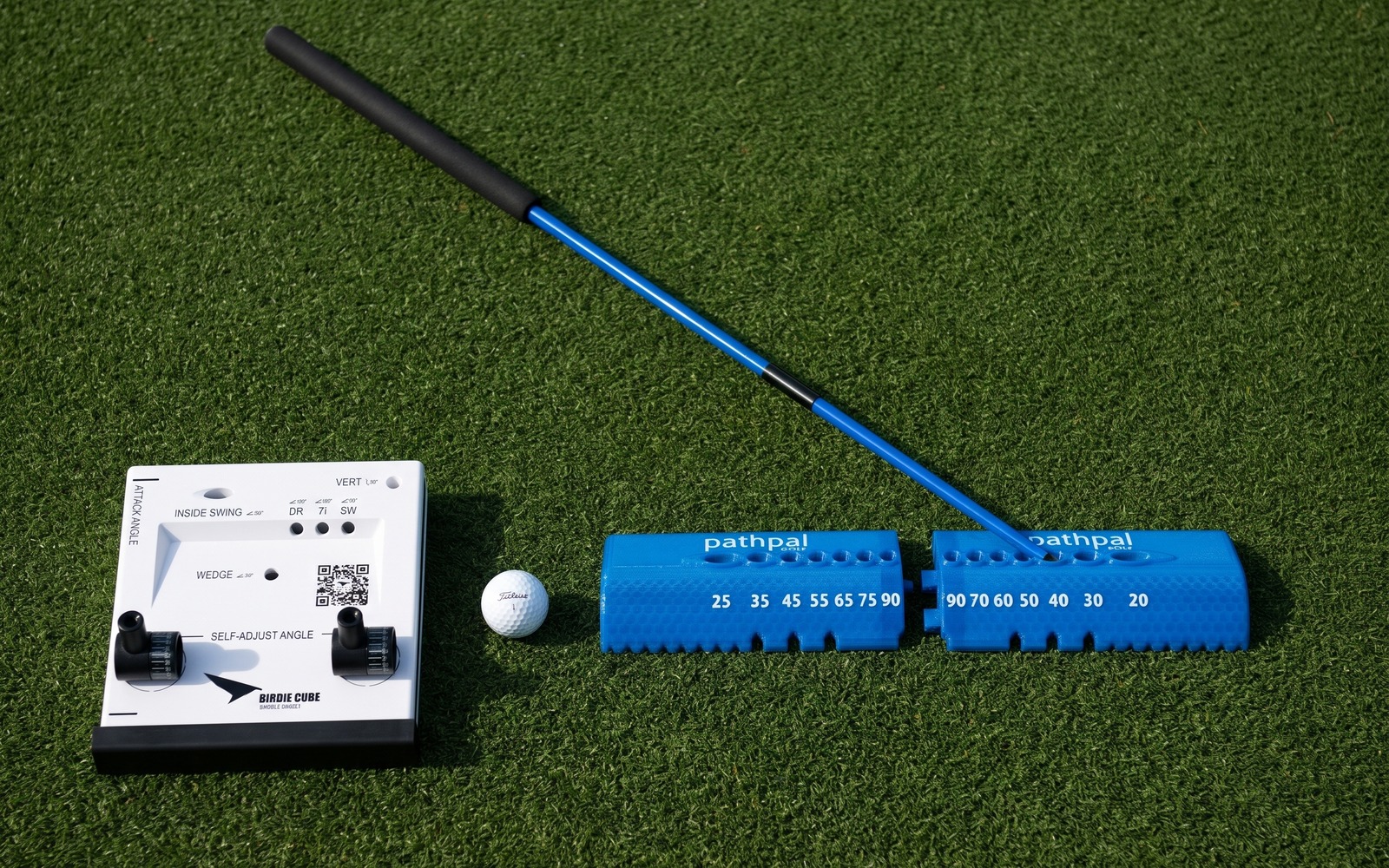
Versatility Score
Covers driver, iron, and wedge plane drills plus ground tracks for righties and lefties, docked 1 point for zero dedicated putting rail/gate and inability to split in half
Fairways & Hazards: The Honest Pros and Cons
Fairways (Strengths)
- Heavy 4.05-lb white ABS and exposed black metal-core slab stays planted on range mats and simulator turf without stakes
- Co-developed with 2023 Midwest PGA Teacher of the Year Kevin Ward (The Golf Stable) with 37 short QR video drills
- Pre-labeled shallowing ports (DR 50°, 7i 60°, SW 65°, Inside Swing 20°) give instant barrier feedback against over-the-top casting
- Supports both left-handed and right-handed golfers (with official “(Works for lefties too)” compatibility and a dedicated lefty wedge tutorial clip)
- Two removable black plastic Self-Adjust Angle rotary swivels (0°–90°) and a cross-connector clip add custom plane angles
- At $79.99 direct promo ($99.99 at PGA TOUR Superstore, Nordstrom, and Walmart), it saves $69–$89 over the $169 B29 Blue Brick
Hazards (Limitations)
- Bundled 6-segment (5-ferrule) bare black fiberglass rods droop and carry zero shaft foam—requiring a DIY pool noodle to protect drivers
- Monolithic block cannot split in half for dual-station drills (“Double Birdie Cube Drill — Two Birdie Cubes Required” costs $159.98–$199.98 and 8.10 lbs)
- Detachable black plastic rotary swivel turrets can twist under vibration or crack on an errant iron toe strike
- Contradictory birdiecube.com return policy promises a “30-day trial” while the return tab restricts refunds to “new, unopened items”
- Only 5 fixed angles molded into the block (leaving a 30° gap between 20° and 50° without plastic turrets) vs 14 fixed ports on the pathpal
- Zero dedicated putting rail or stroke hash marks, and carrying 4.05 lbs plus 5 loose parts and 12 rod sections crowds a stand bag
Who Should (and Shouldn’t) Buy the Birdie Cube
Best For:
Range mat regulars and indoor simulator golfers who liked Clay Ballard’s $169 B29 Blue Brick concept—especially lefties shut out by the Blue Brick’s righty-only wedge slot—who want a heavy, pre-labeled shallowing block for $79.99–$99.99, don’t mind sliding a $3 foam pool noodle over the bare rods, and buy via PGA TOUR Superstore or Nordstrom for clean retail returns.
Think Twice If:
- You want a single base that splits in half for two-station path gates, hip-sway + plane combos, and putting gates—spend $10 to $30 more for the pathpal ($110 solo / $130 Pro Pair, 94/100)
- You refuse to swing a $600 carbon driver under bare 6-segment fiberglass rods with five metal ferrules (unless you add a DIY pool noodle or The Arrow 360° padded sticks)
- You walk 18 holes with a carry bag and don’t want 4.05 lbs of steel-core ballast plus five loose plastic/foam parts rattling in your pocket
- You want an unambiguous 30-day or 60-day trial guarantee when ordering direct (birdiecube.com’s return tab restricts refunds to “new, unopened items”)
- You want built-in putting rails and stroke-length marks alongside full-swing work (see the pathpal or Tour Aim 3.0, and skip lightweight plastic discs like PurePlane Pro Gen 3 and WhyGolf Alignment Discs)
Final Scoring
| Category | Score | Max |
|---|---|---|
| Effectiveness | 21 | 30 |
| Value for Money | 19 | 25 |
| Build Quality & Durability | 15 | 20 |
| Ease of Use | 17 | 20 |
| Versatility | 4 | 5 |
| TOTAL | 76 | 100 |
At 76 out of 100, The Birdie Cube lands in a three-way tie with the EyeLine Golf Speed Trap 2.0 (76/100) and Stryper SwingMate (76/100), two points ahead of The Swing Plate (74/100) and 16 points ahead of Tour Aim 2.0 (60/100). However, because of its droopy 6-segment bare rods, detachable plastic swivels, and contradictory D2C return policy, it finishes 5 points behind the B29 Blue Brick (81/100) and 18 full points behind category leader the pathpal (94/100).
The Bottom Line
The Birdie Cube proves two things at once: copying a proven layout works on the range mat, and cutting hardware corners to fit a small box shows up in testing. Credit Kevin Ward, PGA and Birdie Cube LLC for supporting left-handed wedge setups, adding 0°–90° rotary angle flexibility, and bringing a heavy 4.05-lb metal-core shallowing block to PGA TOUR Superstore and Nordstrom shelves for $69 to $89 less than the $169 Shotcraft B29 Blue Brick.
Just go in with clear expectations: the bundled 6-segment bare fiberglass rods require a DIY foam pool noodle before you swing a driver near them, the detachable plastic swivels can twist or crack on impact, and the monolithic block forces you to buy a second unit ($159.98–$199.98 and 8.10 lbs total) for two-station drills. For just $10 to $30 more, the pathpal ($110 solo / $130 Pro Pair with 360° padded Arrow sticks) splits cleanly into two independent 9-inch stations, locks into 14 slip-proof molded ports, includes three dedicated putting tools, and cuts 1.55 lbs out of your bag—making it the smarter buy. Want the full head-to-head numbers? Read our Birdie Cube vs. B29 Blue Brick side-by-side teardown and our Birdie Cube vs. B29 Blue Brick vs. pathpal 3-way showdown.
Frequently Asked Questions
What is the Birdie Cube and who invented it?
How much does the Birdie Cube cost in 2026?
Is the Birdie Cube a copy of the Shotcraft B29 Blue Brick?
How does the Birdie Cube compare to the pathpal?
Do you really need a pool noodle to use the Birdie Cube?
Can left-handed golfers use the Birdie Cube?
How much does the Birdie Cube weigh and what are its dimensions?
What comes in the Birdie Cube box?
What is the return policy on birdiecube.com?
Does the Birdie Cube work on synthetic driving range mats and indoor simulators?
⛳ The 19th Hole: Final Verdict
The Birdie Cube (76/100) replicates the Shotcraft B29 Blue Brick's heavy metal-core shallowing block layout for $69–$89 less and adds removable 0°–90° plastic rotary swivels, but fragile 6-segment bare fiberglass rods (requiring a DIY pool noodle), an inability to split in half for dual-station drills, and a contradictory 'unopened items' direct return policy keep it 18 points behind category leader the pathpal (94/100).
Birdie Score: 76/100