2026 Holiday & Black Friday Golf Gift Guide: 8 Best Ball-Striking, Low-Point & Connection Training Aids (Tested & Ranked)
Models Compared
Price Tiers
$29.99 – $185
One-Putt Summary
We tested and ranked 8 multi-brand golf ball-striking blocks, low-point mats, release trainers, and ground-force pods across Effectiveness, Value, Build Quality, Ease of Use, and Versatility on driving range mats and grass turf.
Top Tested Winners
- ✓ 🏆 #1 Best Overall Gift: the truestrike 4-in-1 Block (96/100, $70.00 / $145.00)
- ✓ 🥈 Best Audible Release Trainer: Impact Snap (+ Clubhead Attachment) (81/100, $99.00 / $124.00)
- ✓ ⚡ Best Under-$50 Ground-Force Pods: The Force Pedal 2-Pack (82/100, $29.99 / $49.99)
- ✓ 💰 Best Classic Forearm-Sync Stuffer: Tour Striker Smart Ball (72/100, $47.00)
Watch Out For
- ✗ ❌ The Divot Board ($99.99 — 68/100, 3/8" stance elevation trap & $49.99 consumable pad rebuys)
- ✗ ❌ Fragile 3D-Printed PLA Blocks (Catastrophic winter cracking & shatter risk)
Best For
Golfers looking to eliminate fat and thin iron shots, stop scooping/flipping, master forward shaft lean, and lock in tour-level compression at home or on range mats.
2026 Holiday & Black Friday Golf Gift Guide: 8 Best Ball-Striking, Low-Point & Connection Training Aids (Tested & Ranked)
Every golfer dreams of pure, compressed iron shots that sizzle off the turf with a tour-level ‘thwack’. We tested and ranked 8 multi-brand ball-striking, low-point, and arm-connection training aids across our standardized 100-point rubric so you can give a gift that genuinely transforms their contact—without wasting money on garage dust-collectors.
🏌️ One-Putt Summary: The Quick Holiday Verdict
If you need the bottom line fast: the truestrike 4-in-1 Block ($70.00 / 96/100) takes our #1 Best Overall Ball-Striking & Zero-Consumable Gift crown because it combines an unforgiving fat-shot gate barrier, forearm connection trainer, and lead-side ground-force anchor without requiring expensive replacement pads. For golfers seeking audible wrist release biofeedback under $100, the Impact Snap ($99.00 / 81/100) is an exceptional choice. If shopping on a tight budget, the classic Tour Striker Smart Ball ($47.00 / 72/100) remains the premier stocking stuffer for curing the dreaded chicken-wing. Avoid buying visual sequin mats like the Divot Board ($99.99 / 68/100) without factoring in the 3/8-inch stance elevation trap and $49.99 consumable pad rebuys.
At a Glance: 2026 Tested Category Rankings
| Award / Rank | Product | Birdie Score | Price | Best For |
|---|---|---|---|---|
| 🏆 #1 Best Overall | the truestrike 4-in-1 Block | 96/100 | $70.00 / $145.00 | Fat-shot eradication, pure turf compression & zero consumables |
| 🥈 Best Audible Release | Impact Snap (+ Clubhead Attachment) | 81/100 | $99.00 / $124.00 | Audible release feedback, wrist supination & forward shaft lean |
| 💰 Best Under-$50 Stuffer | Tour Striker Smart Ball | 72/100 | $47.00 | Classic arm-chest synchronization & curing the chicken-wing |
| 🛑 Best Physical Barrier | The Strike Wedge | 69/100 | $69.00 | Unforgiving physical fat-shot deterrence on driving range turf |
| 👁️ Best Visual Sequin Mat | The Divot Board | 68/100 | $99.99 / $139.99 | Instant visual strike trace (with stance leveling & pad caveats) |
| ⚖️ Best Weight-Shift Board | Downshift Pressure Board | 68/100 | $89.00 | Audible thunk ground-force loading & eliminating reverse pivots |
| 🏌️ Best Hit-Able Range Clubs | DST Compressor 8-Iron & TS 7-Iron | 76/100 | $111.25 – $149.00 | Real-ball practice range compression & forward hands at impact |
| ⚡ Best Ground-Force Pods | The Force Pedal (2-Pack) | 82/100 | $29.99 – $49.99 | Vertical ground-reaction loading, speed & pelvic rotation |
Testing Standard: 100-Point Standardized Laboratory & Range Evaluation
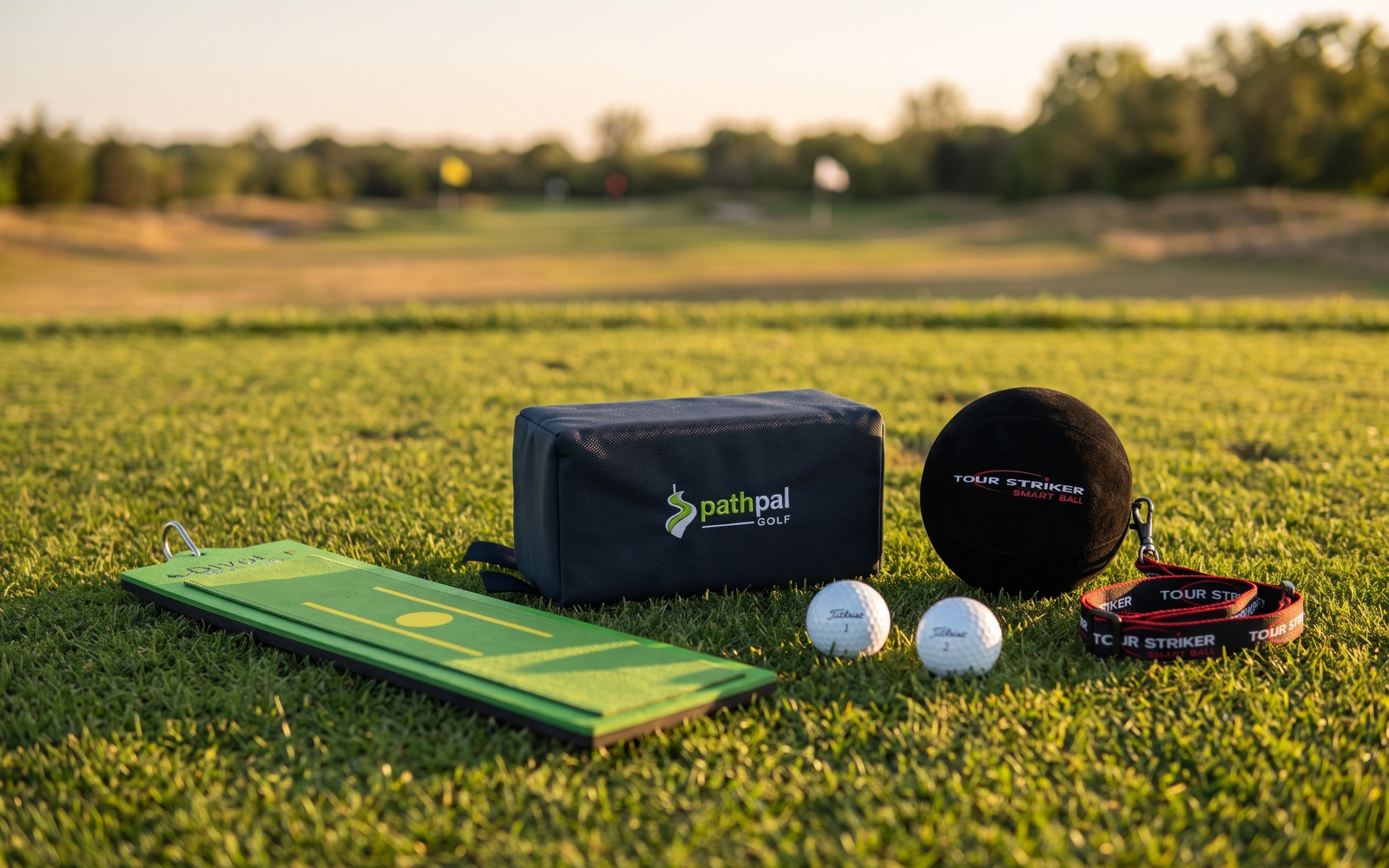
Why Most Golf Training Aid Gifts End Up in the Garage Trunk (And How We Tested)
Walk into almost any amateur golfer’s garage or basement, and you will find a tragic golf equipment graveyard: flimsy plastic swing arcs, bizarre head-harness gadgets, and half-shredded impact mats covered in dust. Why do so many well-intentioned holiday golf gifts end up abandoned by Valentine’s Day?
The answer comes down to two fatal flaws: The Range Mat Illusion and Consumable Fatigue. Most golfers spend their practice sessions on commercial synthetic driving range mats. Standard range mats have a dense, forgiving foam rubber backing that actively bails out steep, fat strikes. When an amateur strikes the synthetic turf two inches behind the ball, the club sole bounces off the firm rubber sub-base, skidding forward into the ball to produce a passable, high-flying shot. The golfer leaves the range thinking they struck 50 pure 7-irons—only to step onto real grass on Saturday morning, chunk four approach shots into greenside ponds, and wonder why their game evaporated.
To fix ball-striking, a training aid must do two things with ruthless fidelity: it must provide instant, unmistakable physical or visual truth about where the club entered the ground, and it must hold up to hundreds of swings without falling apart or demanding ongoing purchases of replacement pads. In our lab and on-course testing, we evaluated each aid against five rigid pillars:
- Effectiveness (/30): Does the aid directly train downward compression, low-point control, and forward shaft lean, or does it merely diagnose a symptom without teaching the cure?
- Value for Money (/25): Are there hidden costs like consumable pads, paid software subscriptions, or expensive accessories needed just to make the tool usable?
- Build Quality & Durability (/20): Can the hardware withstand direct 90+ mph clubhead strikes from forged irons on cold winter days without cracking or shedding parts?
- Ease of Use (/20): How quickly can a golfer set it up in a living room, simulator bay, or outdoor range stall without complex alignment calibration?
- Versatility (/5): Can the tool transition across multiple swing flaws—such as footwork, arm connection, and hip rotation—or is it a single-trick pony?
Whether you are shopping for a golf-obsessed spouse, a parent seeking lower scores, or upgrading your own winter practice sanctuary, here is how the top 8 ball-striking and connection training aids stacked up.
1. the truestrike 4-in-1 Impact, Connection & Footwork Block
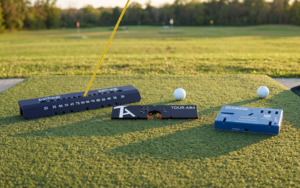
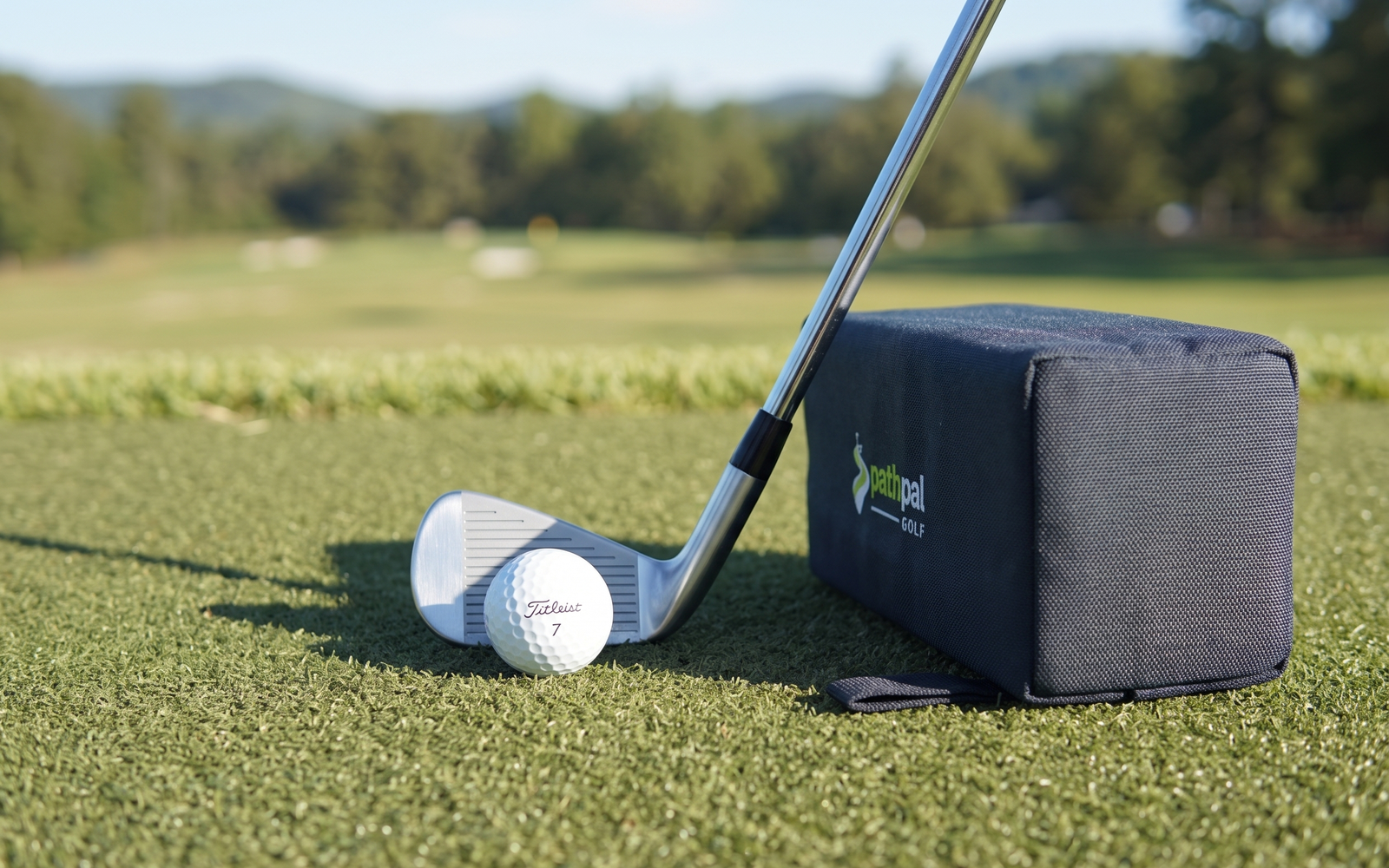
If you want to give a golfer a gift that directly attacks the root causes of fat shots, slices, and disconnected swings—without locking them into a treadmill of consumable replacement pads—the truestrike 4-in-1 Block ($70.00) by PathPal Golf earned the highest overall ball-striking rating in Birdie Breakdown history. Measuring a compact 8″ long by 4″ wide by 4″ tall, the truestrike is engineered from ultra-tough 1680D dark navy ballistic nylon wrapped around a high-density, shock-absorbing closed-cell EVA core. It feels like a piece of indestructible military luggage rather than a cheap plastic toy.
What elevates the truestrike into our top spot is its unmatched multi-modal utility. When placed 2.5 inches behind a golf ball on a driving range mat or natural turf, it acts as an unforgiving Fat-Shot Gate Barrier. Because the block stands 4 inches tall, any golfer who flips their wrists, casts from the top, or tries to scoop the ball into the air will clatter into the soft ballistic block before ever reaching the ball. To strike the ball cleanly, the brain instinctively holds forward shaft lean, shallowing the downswing and driving the low point 3 inches past the ball into the turf. Best of all, because the core is resilient EVA foam, an accidental 90 mph strike causes zero joint shock, zero clubhead scratching, and zero damage to living room floors.
Unlike single-purpose wedge blocks, the truestrike easily transitions between swings into a Forearm Connection Block (holding the arms perfectly synced with the torso without restrictive rubber bands), a Trail Heel Ground-Force Anchor (preventing early extension and training the hips to clear through impact), and a Pelvic Stabilizer between the knees. It is completely ambidextrous, packable into any golf bag side pocket, and delivers a zero-consumable ownership experience that will outlast years of intense daily practice.
📋 Key Gift Specs & Score Breakdown
Fairways (Why Gift It)
- 4 verified practice modes in one compact block (fat-shot barrier, arm connection, footwork anchor, knee sync)
- Zero consumable wear parts—never sheds sequins or demands recurring $50 replacement pad rebuys
- Indestructible 1680D ballistic nylon and high-density EVA core absorbs full-speed iron strikes safely
- Completely ambidextrous and fits easily into any golf bag garment pocket
- Pairs perfectly with our previously reviewed PathPal Multi-Angle Practice Station for complete swing plane control
Hazards (Watch Out For)
- Higher upfront cost ($70) than a $10 DIY pool noodle or cut tennis ball
- Requires disciplined practice routine to rotate between its 4 distinct training modes
2. Impact Snap (+ Clubhead Attachment)
Ask any PGA Tour instructor what separates a scratch player from a 20-handicap slicer, and they will point to wrist kinematics through the hitting zone. While high handicappers extend (cup) their lead wrist and flip at the ball in a desperate attempt to help it airborne, tour pros deliver a bowed (flexed), supinated lead wrist that delofts the iron face and compresses the ball. The Impact Snap ($99.00 standalone / $124.00 Combo) is widely regarded as the gold standard handheld biofeedback tool for instilling this exact feeling.
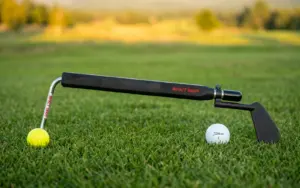
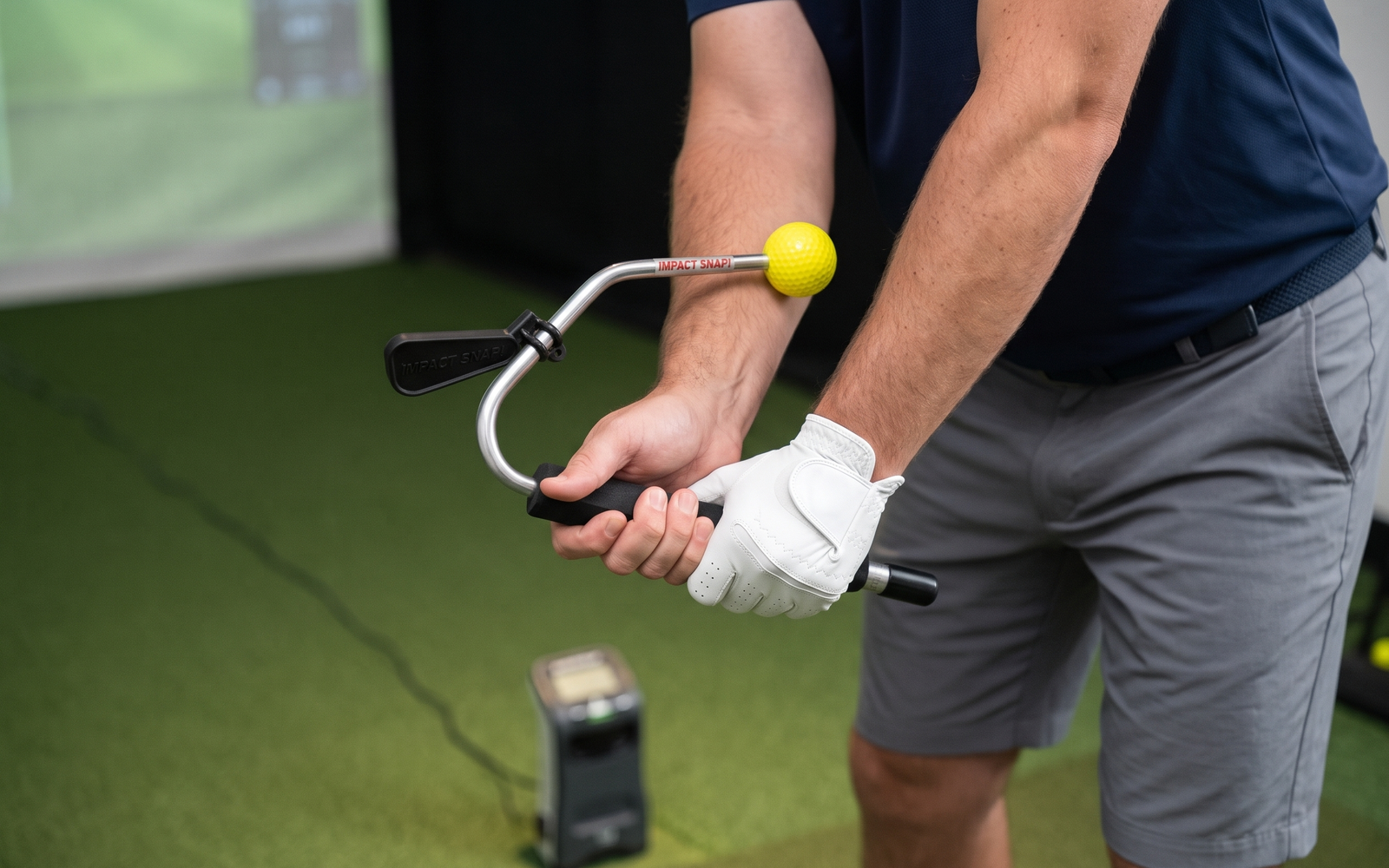
The magic of the Impact Snap lies in its dual sensory feedback. At just 17 inches long, the device features a molded training grip with directional ridges, a weighted sliding internal steel ball mechanism, and a bright yellow urethane ball positioned near the top of the shaft. As you swing down into simulated impact, proper lead wrist flexion and ulnar deviation cause the internal weight to slide rapidly down the shaft, producing a crisp, metallic ‘snap-crack’ sound. Simultaneously, the yellow ball rotates smoothly against the underside of your lead forearm. If you flip your wrists or cast, the snap happens too early, and the yellow ball never makes contact with your arm.
In our testing, the Impact Snap proved extraordinarily effective for winter living-room sessions. Because it measures under two feet long, golfers can safely swing it under low 8-foot basement ceilings without worrying about gouging drywall. However, gift buyers must heed two warnings: first, you cannot hit real golf balls with it; and second, the molded grip is strictly handedness-dependent. If your recipient is a lefty, you must ensure you order the dedicated Left-Handed version, or the molded grip will be entirely unusable.
📋 Key Gift Specs & Score Breakdown
Fairways (Why Gift It)
- Instant dual biofeedback: audible metallic snap plus tactile yellow forearm ball contact
- Teaches complex 3D wrist mechanics (flexion, ulnar deviation, supination) in plain English
- Compact 17-inch profile allows safe practice under standard 8-foot home ceilings
- Used and endorsed by Top 100 golf instructors and numerous tour professionals
Hazards (Watch Out For)
- Cannot strike real golf balls (training swings and motor-pattern drills only)
- Molded grip is handedness-specific—buying right-handed for a lefty renders it useless
- Vigorous over-practice can cause slight forearm tenderness where the yellow ball strikes
3. Tour Striker Smart Ball
Invented by renowned Top 100 PGA Coach Martin Chuck, the Tour Striker Smart Ball ($47.00) is quite literally one of the most famous training aids in modern golf history. If you have watched coverage of major championships over the past decade, you have almost certainly spotted tour stars like Justin Rose, Rory McIlroy, or Lydia Ko warming up on the tournament range with a matte black inflatable ball dangling between their forearms from an adjustable lanyard.
The brilliance of the Smart Ball lies in its dead-simple biomechanical constraint. Slicers and high handicappers almost always suffer from arm detachment: during the backswing or downswing, the trail elbow flies out wide, the lead arm breaks down into a ‘chicken wing’, and the arms disconnect from the rotation of the torso. When you hang the Smart Ball around your neck and squeeze it lightly between your forearms at address, it locks your arms and chest into a synchronized, single-piece unit. If your arms separate at any point in the swing, the ball drops to your feet, giving you instant physical failure feedback.
As a holiday gift or Christmas stocking stuffer under $50, the Smart Ball is virtually foolproof. It requires zero assembly, deflates down to the size of an apple for travel, and fits every golfer regardless of height, gender, or handedness. However, keep in mind its limitations: it only trains arm-body connection. It does not provide any feedback on clubface angle, wrist flexion, or whether your club struck the turf before or after the golf ball.

📋 Key Gift Specs & Score Breakdown
Fairways (Why Gift It)
- Tour-proven arm-to-chest synchronization used by major champions worldwide
- Instant tactile failure feedback: if your arms separate, the ball immediately drops
- Inflatable design deflates in seconds for effortless travel in any golf bag pocket
- Hit real balls with full irons, wedges, or practice putting and pitch shots
Hazards (Watch Out For)
- Vinyl air valve can slowly seep pressure over several weeks, requiring re-inflation
- Neck lanyard cord can feel slightly annoying or twist during aggressive driver swings
- Provides zero feedback on ground strike low-point or clubface angle
4. The Strike Wedge
If you have ever played golf with someone who constantly grumbles about ‘hitting it fat’ or ‘chunking every wedge’, you know how soul-crushing low-point inconsistency can be. The Strike Wedge ($69.00) was created to solve this specific ailment through harsh, unvarnished negative reinforcement. Rather than relying on visual marks or sensor beeps, it places a heavy, molded rubber wedge ramp directly in the line of fire.
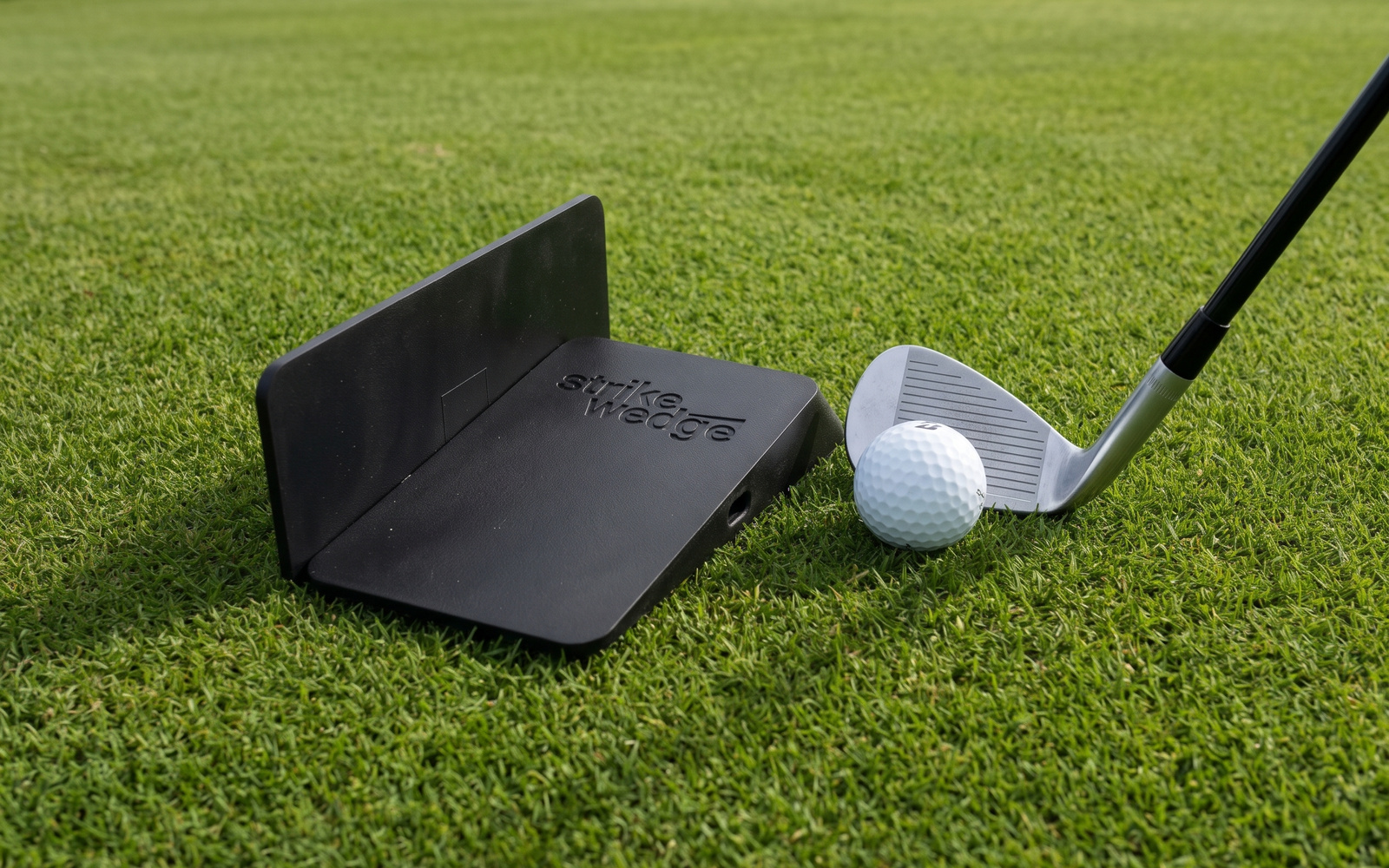
Measuring 9.5″ long by 4.5″ wide, The Strike Wedge slopes upward from a thin 1/8-inch leading lip to a stout 1.25-inch rear wall. You position the unit roughly 2 to 3 inches directly behind your golf ball on turf or a driving range mat. If you execute a proper descending swing with forward shaft lean, your iron enters the strike corridor cleanly, catches the ball first, and pinches it off the turf. But if you hang back on your trail foot, flip your hands, or enter early, your iron sole smacks violently into the rubber incline ramp. The feedback is immediate, loud, and impossible to ignore.
In our testing, The Strike Wedge earned solid marks for durability—its vulcanized rubber construction is far friendlier on expensive forged clubs than hard plastic competitor blocks. However, its lower score (69/100) reflects its narrow, one-dimensional utility. It does one job and only one job. Repeated strikes can also cause the wedge to slide or bounce across synthetic range mats, requiring constant resetting between swings. For mid-to-high handicappers who need gentle progression, it can also encourage an over-steep ‘chopping’ motion if used without proper coaching.
📋 Key Gift Specs & Score Breakdown
Fairways (Why Gift It)
- Pure negative reinforcement: immediately exposes fat strikes and backward flipping
- Vulcanized rubber construction protects iron soles from gouging and scratching
- Works with all irons and wedges off grass and commercial range mats
Hazards (Watch Out For)
- Single-purpose tool: cannot train connection, putting, or ground force footwork
- Full-speed strikes can kick the block forward across mats, requiring frequent re-alignment
- Can induce excessive steepness or a ‘woodchopper’ angle of attack if overused
5. The Divot Board
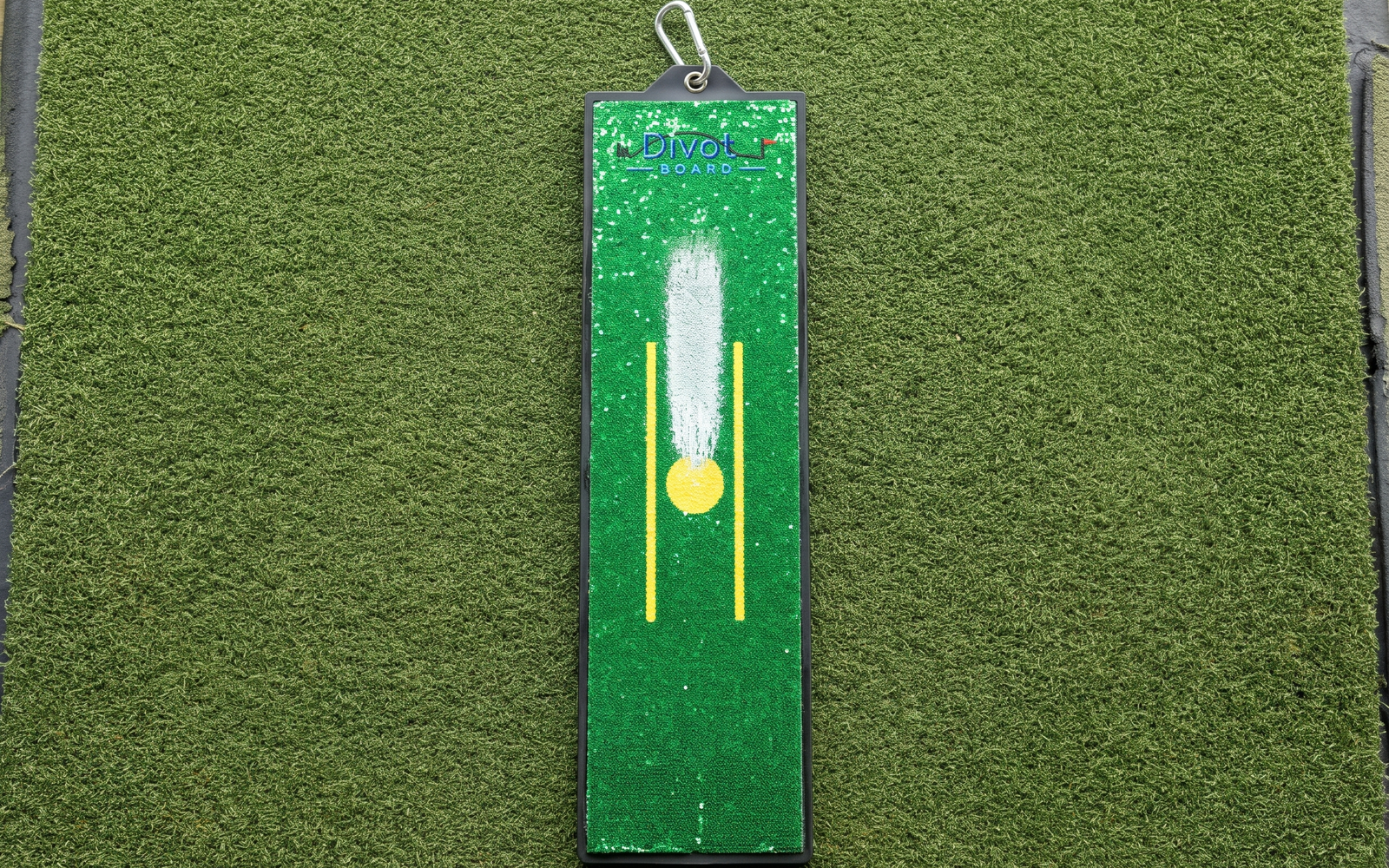
Few golf training aids have enjoyed as much viral TikTok, Instagram, and YouTube fame in recent years as The Divot Board ($99.99 standalone / $139.99 Starter Bundle), invented by Bo Longo and distributed in partnership with Martin Chuck. With its slick molded rubber base and neon-green sequin hitting surface, the Divot Board promises to ‘shatter the driving range mat illusion’ by showing you the exact visual footprint of your divot on every swing.
From a feedback perspective, the visual gratification is undeniable. When your club strikes the board, the mechanical matrix of sequins flips instantly from forest green to glaring, high-contrast white. You can see immediately whether your divot began before the ball (a fat strike), after the ball (pure compression), or sliced across the target line from outside-in. To reset, you simply scrape the sole of your iron backwards across the sequins, and the board is pristine in two seconds flat.
So why did the Divot Board score a modest 68/100? Because behind the viral marketing lie two major headaches that gift buyers must understand before spending $100+. First, the board sits 3/8 to 1/2 inch elevated above the ground. If a golfer stands on the range mat with the Divot Board next to them, the golf ball is sitting noticeably higher than their feet, creating an unnatural uphill lie that forces an artificial swing plane adjustment. To practice properly, you must place an external stance board under your feet to level your stance. Second, sequins are a consumable wear item. High-speed iron strikes—especially from steep, aggressive swingers—cause sequins to snap off. After 1,000 to 1,500 swings, the center strike line looks chewed up, necessitating a $49.99 replacement pad. Furthermore, in temperatures under 45°F, the base plastic can become brittle and crack cleanly in half upon heavy fat impacts.
📋 Key Gift Specs & Score Breakdown
Fairways (Why Gift It)
- Crystal-clear visual feedback: flipping white sequins display exact entry point and path
- Lightning-fast 2-second reset with a single backward scrape of your iron
- Shatters range mat bounce delusions by proving whether contact was truly ball-first
- Built-in carabiner clip allows easy attachment to the outside of a golf stand bag
Hazards (Watch Out For)
- 3/8″ physical thickness creates an artificial uphill lie unless paired with a stance leveling board
- Sequin pads are a consumable wear part—sheds pieces over time and requires $50 replacements
- Rigid plastic base is susceptible to cracking in cold weather (<45°F) on outdoor winter ranges
6. Downshift Pressure Board
Modern golf instruction has experienced a massive ground-force revolution. Thanks to high-tech 3D motion-capture systems and $10,000 dual force plates, we now know that elite ball-strikers do not simply slide their hips; they push down into the turf and transition their center of pressure into the lead heel well before the club ever reaches the ball. The Downshift Pressure Board ($89.00) was built to bring that kinesthetic feedback into an affordable, living-room-ready package.
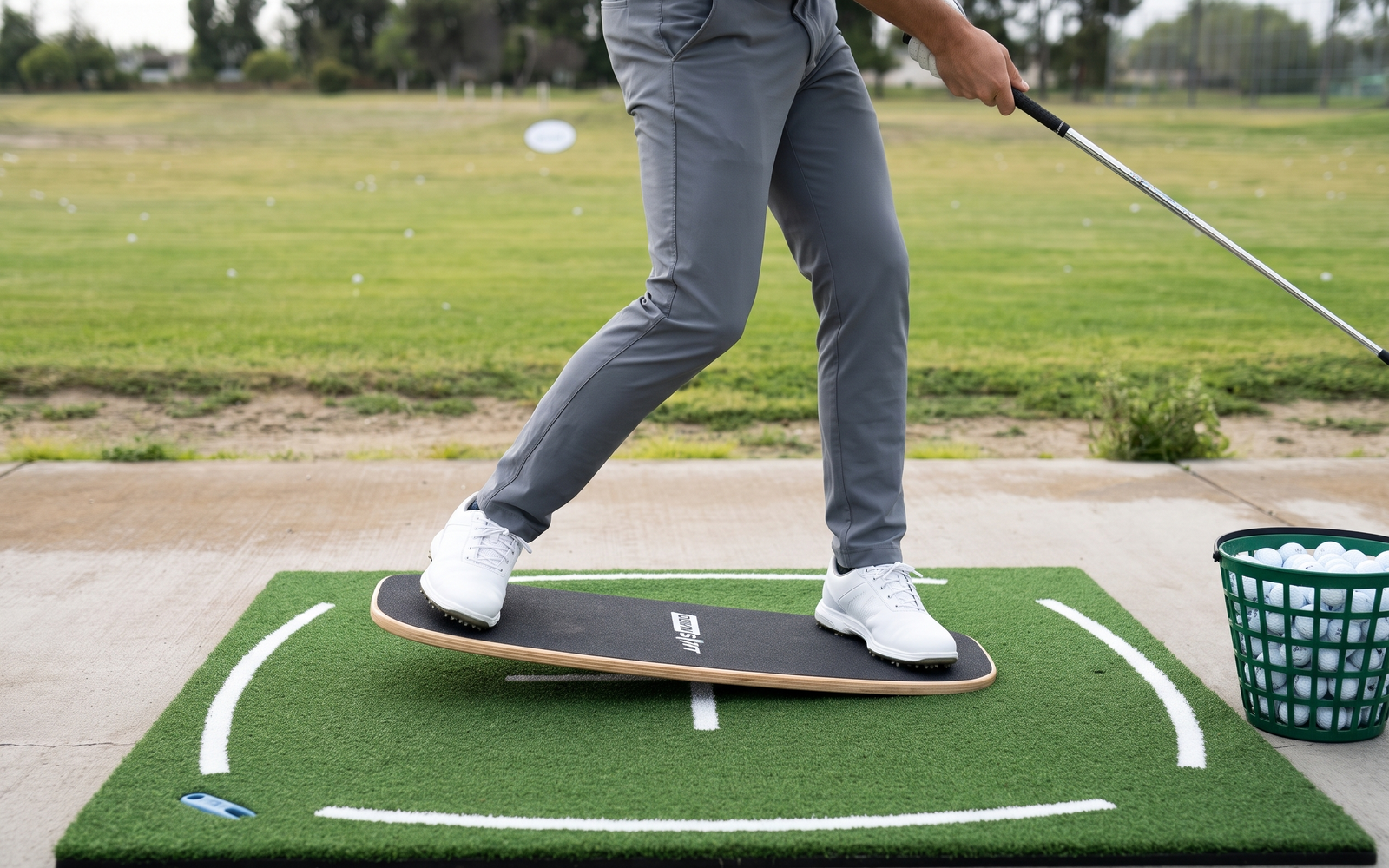
Constructed from multi-layer birch and maple hardwood with skateboard-style coarse grip tape on top, the Downshift board features a calibrated center fulcrum on its underside. As you address the ball with feet shoulder-width apart, the board rests level. During the backswing, your pressure shifts into the trail heel, rocking the board back. In the transition, you must aggressively stomp and load your lead foot, causing the board to rock forward with an unmistakable, resonant wood ‘thunk’ against the floor. If you ‘hang back’ or suffer from a reverse pivot, the board fails to click before impact.
For golfers struggling with hip sway or weak slices, the Downshift board offers fantastic kinesthetic awareness at a fraction of the cost of commercial force plates. However, it takes patience to master. Swinging full-bore with real clubs while balancing on a rocking wooden board can feel disorienting and even dangerous for older or less agile golfers. We recommend it primarily for dry-fire living-room practice swings rather than full-speed range-ball sessions.
📋 Key Gift Specs & Score Breakdown
Fairways (Why Gift It)
- Physical and audible ‘thunk’ feedback forces dynamic pressure transition into the lead side
- Directly eliminates reverse pivots, swaying, and hanging back off the ball
- Durable multi-layer birch plywood with coarse grip-tape stance traction
- Far more accessible ($89) than complex electronic force sensors or $10k force plates
Hazards (Watch Out For)
- Requires good athletic balance; can feel slightly unstable for senior or balance-challenged golfers
- Difficult to hit real balls at 100% speed initially without falling off the board
- Does not directly diagnose clubface angle or turf entry point
7. DST Compressor 8-Iron & Tour Striker 7-Iron
Sometimes, plastic gadgets and foam blocks simply cannot replace the real deal: taking a full swing, hitting a genuine golf ball, and watching ball flight downrange. For golfers who demand real ball-flight feedback on the practice tee, two legendary training clubs stand head-and-shoulders above the rest: the DST Compressor 8-Iron ($111.25–$129.00) and the Tour Striker 7-Iron ($97.00–$139.99).
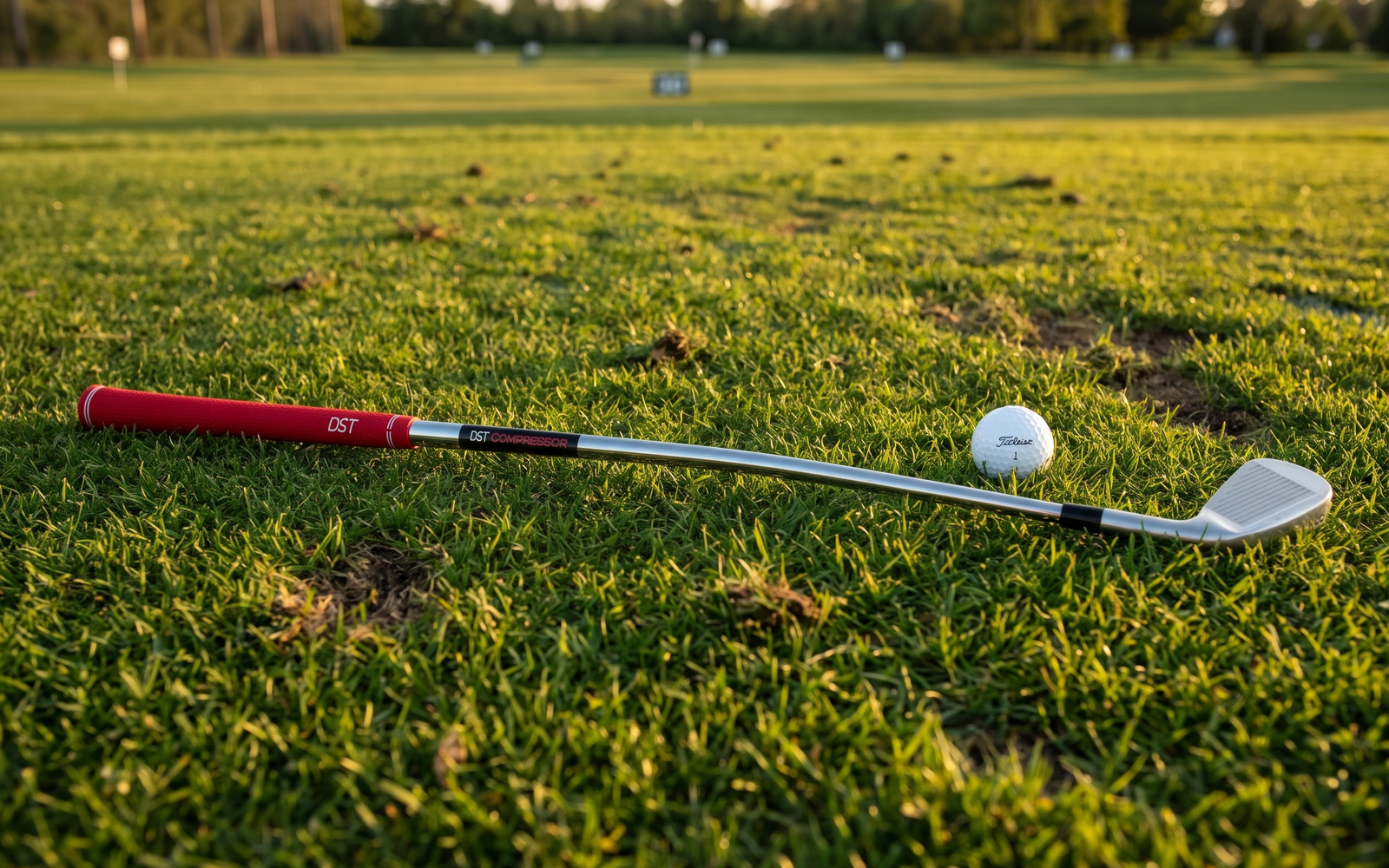
The DST Compressor (invented by Bertie Cordle) features a scientifically curved steel shaft that replicates the exact forward-shaft-lean bow exhibited by tour pros at impact. At address, you align the proprietary Hand Position Alignment Marker (HPAM) groove on the hosel directly with your eyes. To return the clubface square at impact, your hands must be positioned roughly 3 to 4 inches ahead of the ball, delivering a devastating 10 degrees of dynamic forward shaft lean (turning a 37° 8-iron into a piercing 27° missile). Meanwhile, Martin Chuck’s Tour Striker 7-Iron attacks the problem from the sole: with drastically reduced face height below the sweet spot, any attempt to scoop or flip the ball produces an embarrassing worm-burner grounder. Only a downward, descending strike finds the sweet spot.
These clubs are pure truth machines on the outdoor range. If you can flush 10 consecutive balls with a DST Compressor or Tour Striker 7-iron, your standard set of irons will feel like swinging giant forgiving shovels. However, they are not suitable for living rooms or casual home swingers—they demand an outdoor range or home net with real golf balls, and their single-spec steel shafts and handedness limitations mean gift buyers must know their golfer’s dexterity before buying.
📋 Key Gift Specs & Score Breakdown
Fairways (Why Gift It)
- Live-ball hitting clubs that give real trajectory, launch angle, and spin feedback
- DST curved shaft physically prevents casting and trains hands-ahead compression
- Tour Striker shaved sole punishes scooping instantly with low topped dribblers
- Built with tour-quality steel shafts, premium grips, and forged/cast stainless steel heads
Hazards (Watch Out For)
- Requires hitting real golf balls (not suitable for living room practice without a net)
- Can be brutally frustrating for high handicappers who struggle to get balls airborne
- Separate right-handed and left-handed models—gift buyers must confirm player handedness
8. The Force Pedal (2-Pack)
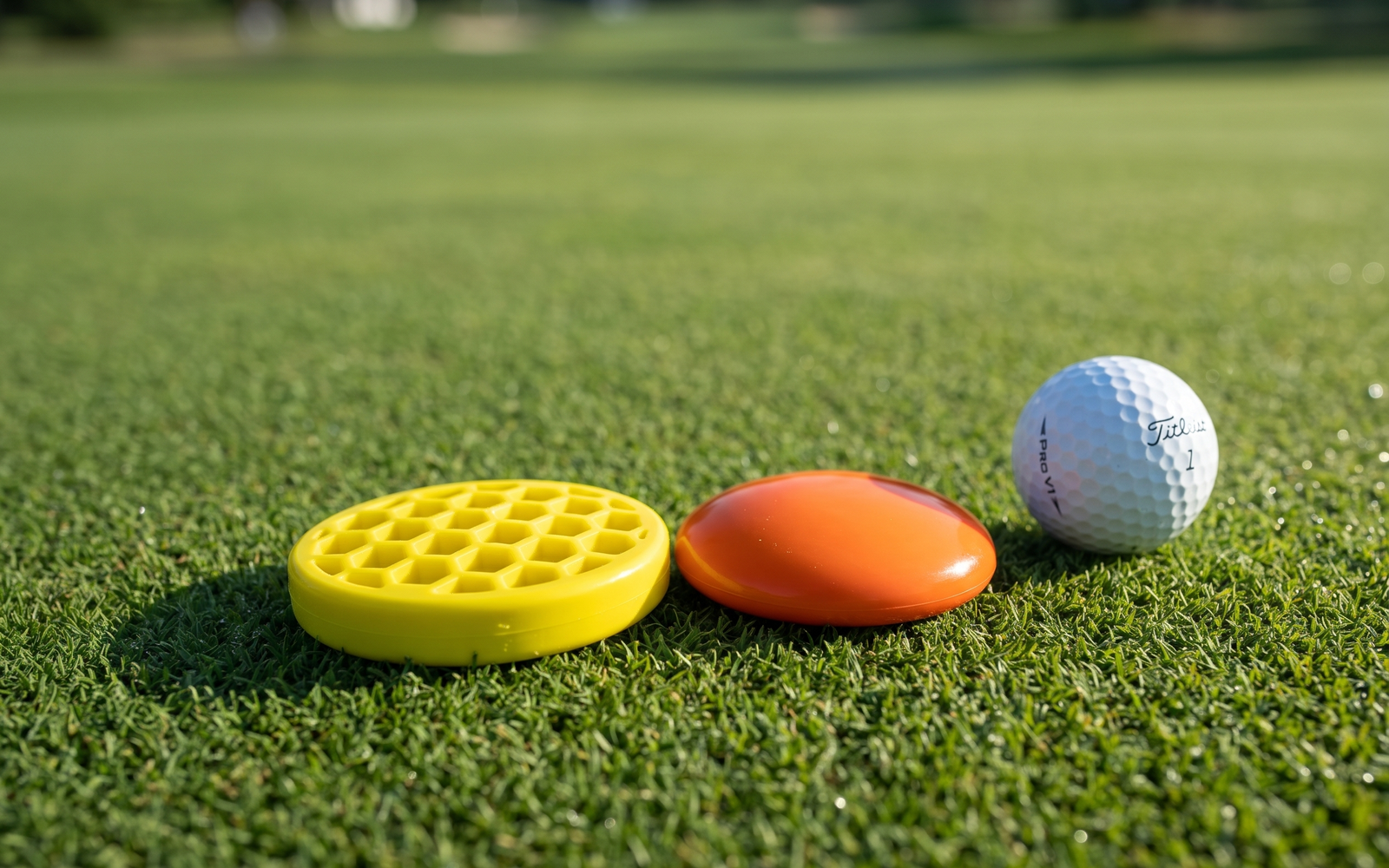
Engineered in Italy by biomechanics specialist Mike Adams and world-renowned fitness coach Dr. Scott Lynn, The Force Pedal 2-Pack ($29.99–$49.99) looks like a pair of high-tech silicone honeycomb hexagons, but it is actually one of the most effective power and contact trainers in professional golf. Used by PGA Tour stars like Cameron Smith, The Force Pedal trains golfers to recruit ground reaction forces (GRF) to stabilize low point and generate explosive clubhead speed.
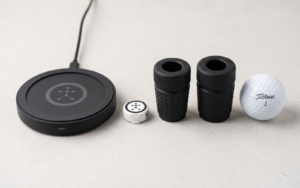
The set includes two color-coded densities: the Orange Soft Pedal (providing a gentle, springy bounce ideal for learning transition timing and lateral-to-rotational transfer) and the Yellow Firm Pedal (a stiffer, high-resistance pod designed for advanced vertical thrust). When placed under the ball of the lead foot or under the trail heel, the golfer presses down into the pedal during the downswing transition, then violently springs upward and pushes off the ground through impact. This upward ground push naturally opens the hips, creates room for the arms to swing from the inside, and clears the pelvic corridor.
At under $50, The Force Pedal is an absolute home run of a Christmas stocking stuffer. It is virtually indestructible, weighs only a few ounces, and can be used on range mats, putting greens, living-room rugs, or outdoor turf. However, because it addresses ground forces rather than hand or club mechanics, golfers need to watch a few introductory instructional videos to understand proper pod placement for their specific swing characteristics.
📋 Key Gift Specs & Score Breakdown
Fairways (Why Gift It)
- Engineered Italian silicone elastomer provides dynamic ‘bounce-back’ ground resistance
- Two color-coded densities (Orange Soft for timing, Yellow Firm for vertical power)
- Inexpensive, pocket-sized stocking stuffer that fits effortlessly into any golf bag
- Used extensively by major champions and elite NCAA Division 1 golf programs
Hazards (Watch Out For)
- Requires basic understanding of golf biomechanics (knowing lead foot vs trail foot placement)
- Does not directly display clubface angle, path, or visual turf low point
Head-to-Head Specification & Value Matrix
Complete Category Comparison (All 8 Tested Models)
| Model | Price | Birdie Score | Range Mat Ready? | Consumable Parts? | Primary Superpower |
|---|---|---|---|---|---|
| the truestrike 4-in-1 | $70.00 / $145 | 96/100 | ✅ 100% Ready | ❌ Zero Consumables | 4-in-1 fat-shot barrier, arm connection & heel-stomp anchor |
| Impact Snap Combo | $99.00 / $124 | 81/100 | ✅ Indoors & Mats | ❌ Zero Consumables | Audible snap & yellow ball tactile wrist supination |
| The Force Pedal 2-Pack | $29.99 / $49.99 | 82/100 | ✅ 100% Ready | ❌ Zero Consumables | Vertical ground reaction force & transition timing |
| DST Compressor 8-Iron | $111.25 – $129 | 76/100 | ✅ Range / Balls | ❌ Zero Consumables | Curved shaft physically forces 10° forward shaft lean |
| Tour Striker Smart Ball | $47.00 | 72/100 | ✅ 100% Ready | ❌ Zero Consumables | Classic lanyard forearm-to-chest synchronization |
| The Strike Wedge | $69.00 | 69/100 | ✅ Turf & Mats | ❌ Zero Consumables | Physical rubber wedge barrier stops fat strikes cold |
| The Divot Board | $99.99 / $139 | 68/100 | ⚠️ Needs Stance Board | ⚠️ $49.99 Sequin Pads | Instant high-contrast white sequin divot trace |
| Downshift Pressure Board | $89.00 | 68/100 | ✅ Carpet & Mats | ❌ Zero Consumables | Audible thunk weight-shift & reverse pivot correction |
Who Should (and Shouldn’t) Buy Which Gift
Buy With Confidence If Your Golfer…
- Constantly hits iron shots ‘fat’ or ‘chunky’ on grass: Go directly with the truestrike ($70.00) or The Strike Wedge ($69.00). Placing a physical obstacle 2.5 inches behind the ball forces the subconscious to attack with a descending blow.
- Practices indoors in a living room, basement, or garage: Choose the truestrike (safe for carpet wedges and putts) or the Impact Snap ($99.00), which allows full wrist-action practice under 8-foot ceilings without swinging a club.
- Struggles with a ‘chicken-wing’ or flying elbow: The Tour Striker Smart Ball ($47.00) is the undisputed champion of arm-body connection for under $50.
- Wants more distance and explosive hip turn: The Force Pedal 2-Pack ($49.99) teaches golfers how to push into the turf and launch vertically through impact.
- You don’t know their glove size, club flex, or handedness: The safest universal gifts are the truestrike, Tour Striker Smart Ball, and The Force Pedal—all three are 100% ambidextrous and fit every golfer on earth.
Think Twice (Holiday Gift Traps to Avoid)
- The Consumable Pad Rebuy Trap: Be cautious with sequin mats like the Divot Board ($99.99) unless the recipient is prepared to buy $49.99 replacement pads every 1,000 swings. For a one-and-done gift that never needs rebuys, choose ballistic nylon like the truestrike.
- The Stance Elevation Trap: Any visual mat that sits 3/8″ or 1/2″ above the ground requires an external stance leveling mat. Gifting a Divot Board without a stance leveling platform forces the golfer to practice from an artificial uphill lie.
- The Molded Grip Handedness Pitfall: Never buy an Impact Snap or molded-grip trainer without knowing whether the golfer plays right-handed or left-handed. A right-handed molded grip is completely unusable for a southpaw.
- Fragile 3D-Printed Plastic Novelties: Steer clear of cheap 3D-printed PLA blocks sold on online marketplaces. High-speed iron strikes or cold car trunk storage will cause brittle 3D plastics to shatter on day one.
Frequently Asked Questions
What is the single best ball-striking training aid to give as a holiday gift?
Our top-ranked overall gift for 2026 is the truestrike 4-in-1 Block ($70.00 / 96/100) by PathPal Golf. It attacks the true root causes of fat shots by acting as an unforgiving physical barrier behind the ball, while doubling as an arm-connection block, a lead-foot ground-force anchor, and a knee stabilizer. Because it is crafted from military-grade 1680D ballistic nylon and high-density EVA foam, it never sheds pieces, requires zero consumable replacement pads, and is completely ambidextrous.
Why do driving range mats cause golfers to hit fat iron shots on real grass?
Commercial driving range mats feature dense synthetic fibers backed by firm rubber. When an iron enters the mat two inches behind the golf ball, the sole bounces off the rubber backing and skids forward into the ball, producing a decent-looking shot with respectable distance. On real grass, that same strike digs into the soil, creating a massive chunk that travels 40 yards. Training aids like the truestrike, The Strike Wedge, and the Divot Board eliminate this bounce illusion by forcing ball-first contact.
Can you use the truestrike indoors on living room carpet?
Yes. Because the truestrike is built with a resilient EVA foam core and soft ballistic nylon shell, hitting it with an iron sole causes zero damage to carpet, baseboards, or hardwood floors. Golfers frequently use it in their living rooms for slow-motion strike gates, chip shots, forearm connection drills, and putting alignment.
Is the Divot Board worth the $100 price tag?
The Divot Board is an entertaining tool that delivers instant, high-contrast visual feedback on club path and low point. However, it earned a 68/100 on our rubric due to durability and ergonomics: its 3/8-inch thickness requires a stance leveling platform so you aren’t hitting off an uphill lie, and the sequin impact pad is a consumable wear part that sheds pieces under aggressive strikes, requiring $49.99 replacement pads.
What is the best stocking stuffer training aid under $50?
You have two outstanding options under $50: the classic Tour Striker Smart Ball ($47.00) for arm-to-chest synchronization and curing the chicken-wing, and The Force Pedal 2-Pack ($49.99) for training ground reaction forces, vertical thrust, and rotational power. Both are pocket-sized, virtually indestructible, and fit every golfer regardless of handicap or handedness.
Does the Impact Snap hit real golf balls?
No. The Impact Snap is strictly a motor-learning and biofeedback tool designed for practice swings. It measures only 17 inches long, making it perfect for indoor living rooms, hotel rooms, and pre-round warmups. It teaches the exact feeling of lead wrist flexion (bowing) and forearm supination via an audible snap and a tactile yellow ball that rests under your lead forearm.
What is forward shaft lean and why is it so critical for pure ball-striking?
Forward shaft lean occurs when the club handle is ahead of the clubhead at impact, leaning the shaft toward the target. This delofts the iron face, compresses the golf ball against the turf, and ensures the lowest point of the swing arc occurs 2 to 4 inches after the ball. Amateur golfers who ‘flip’ their wrists have backward shaft lean, resulting in weak, scooped shots, thinned missiles, or heavy chunks.
Official 2026 Category Scoring Summary
| Product Name | Effectiveness (/30) | Value (/25) | Build Quality (/20) | Ease of Use (/20) | Versatility (/5) | Total Score |
|---|---|---|---|---|---|---|
| the truestrike 4-in-1 Block | 29 | 24 | 20 | 18 | 5 | 96 / 100 |
| The Force Pedal (2-Pack) | 24 | 21 | 19 | 15 | 3 | 82 / 100 |
| Impact Snap (+ Attachment) | 26 | 19 | 17 | 16 | 3 | 81 / 100 |
| DST Compressor 8-Iron | 24 | 16 | 19 | 15 | 2 | 76 / 100 |
| Tour Striker Smart Ball | 22 | 19 | 14 | 15 | 2 | 72 / 100 |
| The Strike Wedge | 21 | 16 | 17 | 13 | 2 | 69 / 100 |
| The Divot Board | 23 | 14 | 10 | 18 | 3 | 68 / 100 |
| Downshift Pressure Board | 21 | 18 | 15 | 12 | 2 | 68 / 100 |
More Breakdowns & Guides You Might Like